
Introduction
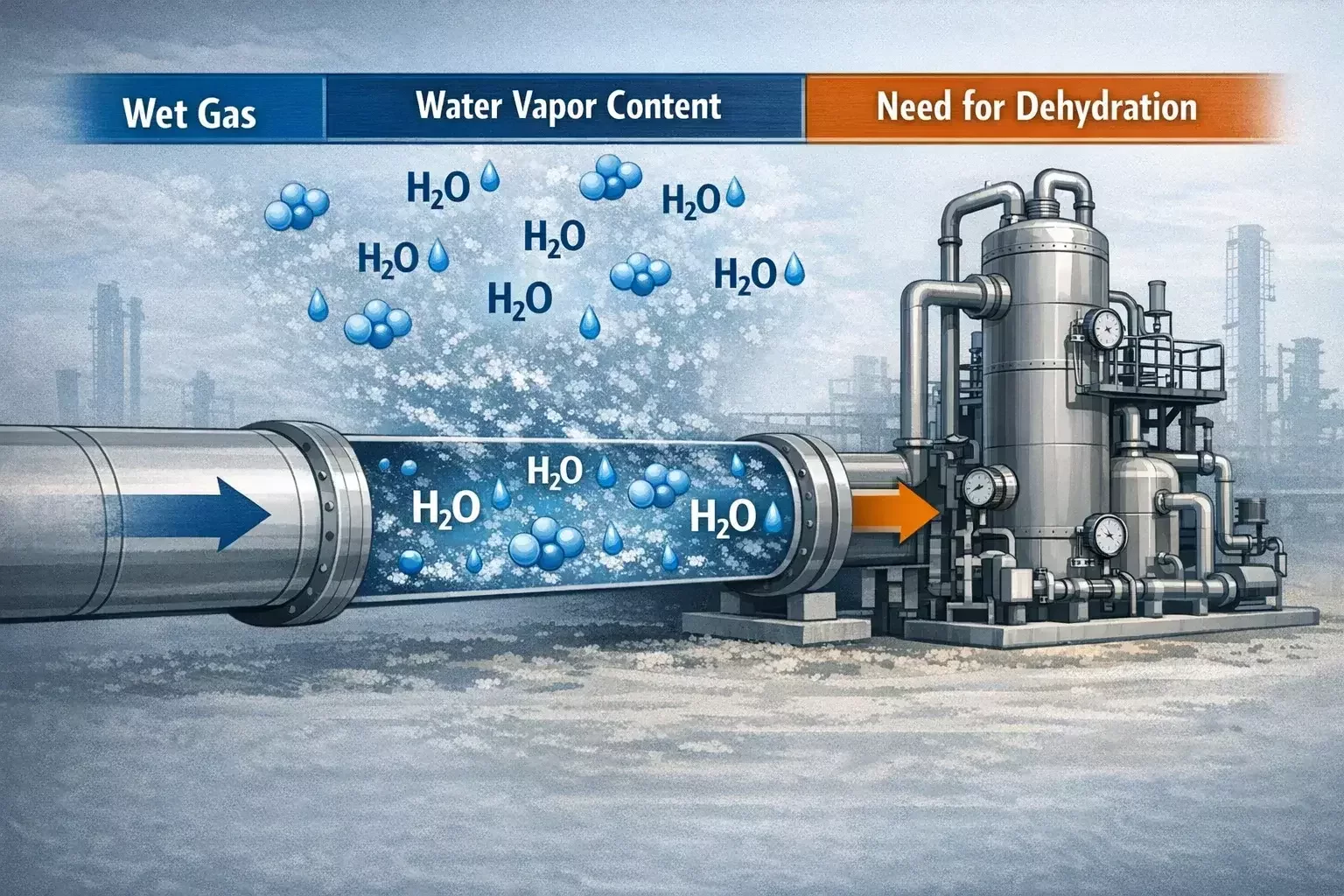
In oil and gas operations, controlling moisture is not just a matter of efficiency—it is essential for maintaining system integrity and ensuring uninterrupted production. The presence of water vapor in natural gas streams can lead to serious operational challenges, including hydrate formation, corrosion, and pipeline blockages.
To address these issues, the industry relies on specialized chemical solutions that can effectively remove moisture from gas systems. Among these, Tri Ethylene Glycol (TEG) has become one of the most widely used and trusted compounds.
Known for its strong hygroscopic properties and stability under demanding conditions, TEG plays a critical role in gas dehydration processes. Its ability to absorb water efficiently and be regenerated for repeated use makes it a cornerstone in modern oilfield operations.
Understanding the use of Tri Ethylene Glycol is therefore essential for anyone involved in upstream and midstream gas processing systems.
What is Tri Ethylene Glycol (TEG)?
Tri Ethylene Glycol (TEG) is a colorless, odorless, viscous liquid belonging to the glycol family. Chemically, it is a polyether compound with strong affinity for water, which makes it highly effective as a dehydrating agent.
TEG is characterized by:
• High boiling point
• Low volatility
• Strong hygroscopic nature
• Thermal stability
These properties allow it to absorb water from gas streams and then be regenerated through heating, enabling continuous reuse in industrial systems.
Why Moisture Control is Critical in Gas Systems
Natural gas, as it comes from the reservoir, contains varying amounts of water vapor. If not removed, this moisture can create significant operational problems.
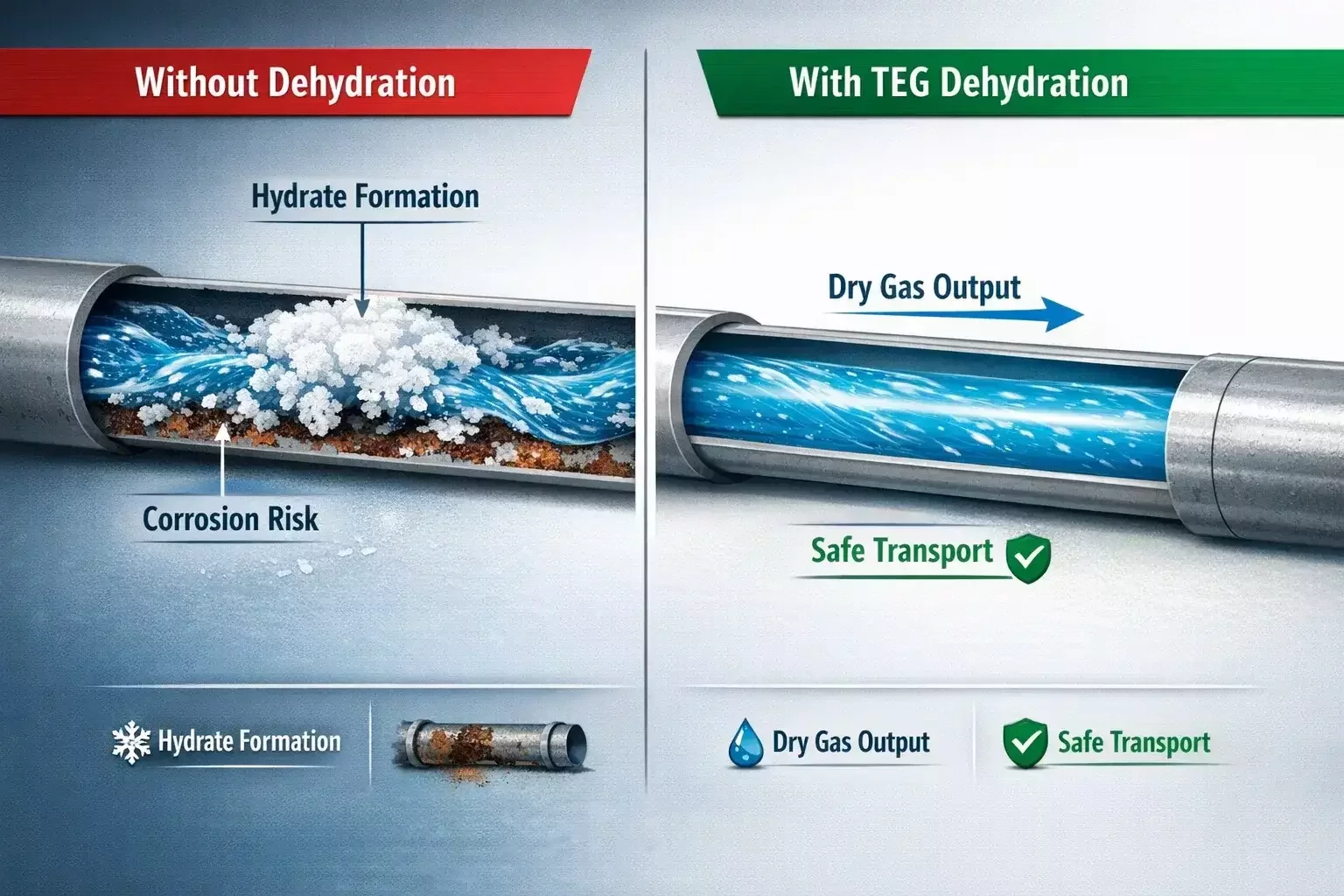
One of the most serious risks is gas hydrate formation. Under high pressure and low temperature conditions, water combines with hydrocarbons to form solid hydrates. These ice-like structures can block pipelines and disrupt flow.
Moisture also contributes to corrosion, especially in the presence of gases like CO₂ and H₂S. This can damage pipelines, valves, and processing equipment.
Additionally, water content affects gas quality and can lead to non-compliance with pipeline specifications.
Effective dehydration is therefore essential to ensure safe, efficient, and reliable gas transport.
How Tri Ethylene Glycol Works
The primary function of TEG is to absorb water vapor from natural gas.
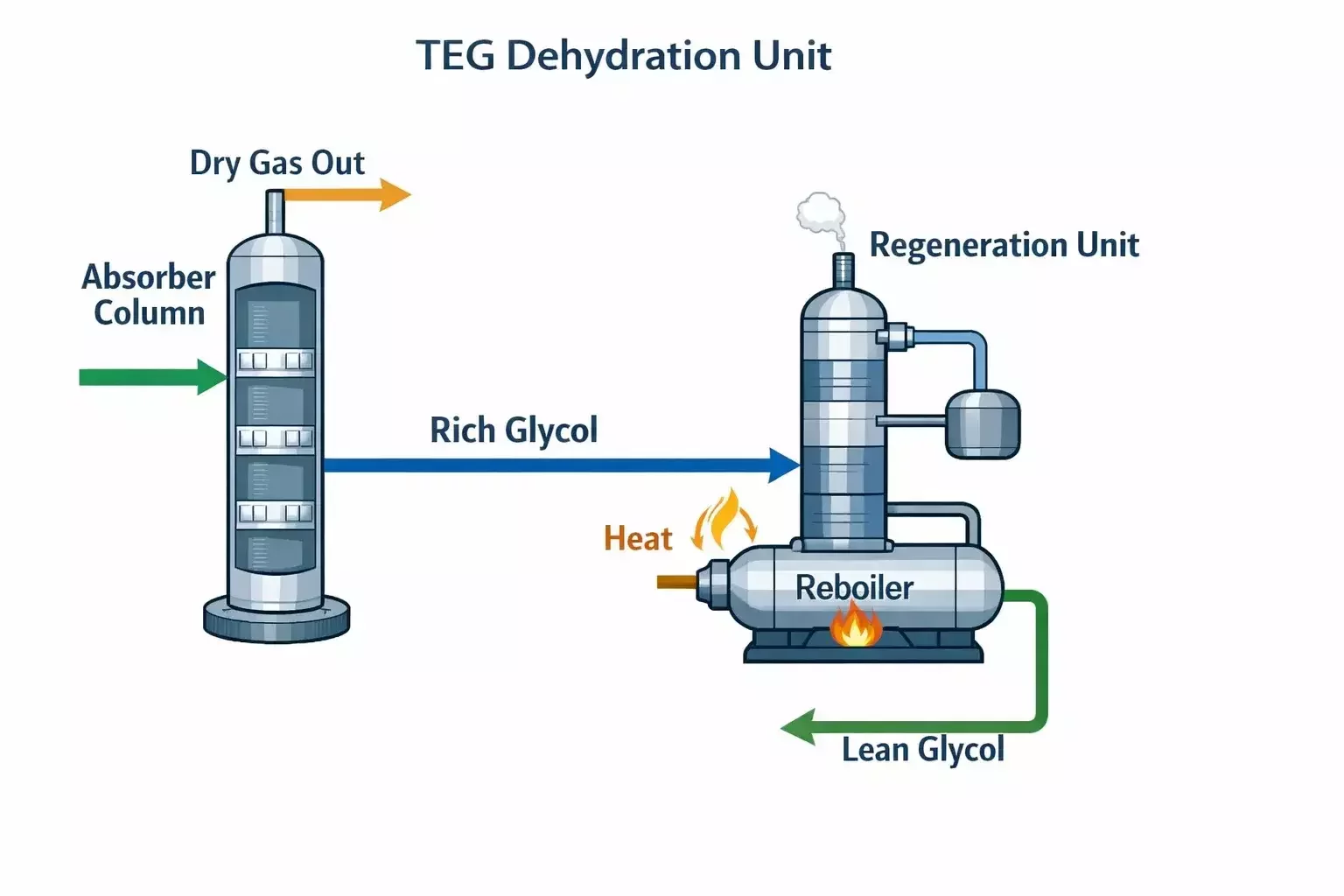
In a typical gas dehydration unit, wet gas is brought into contact with TEG in an absorber column. Due to its hygroscopic nature, TEG absorbs water vapor from the gas stream.
The now “rich” glycol, containing absorbed water, is then sent to a regeneration unit where it is heated. This process removes the absorbed water, restoring the glycol to its original “lean” state.
The regenerated TEG is then recycled back into the system, creating a continuous dehydration loop.
Key Applications of TEG in Oil and Gas
While gas dehydration is its primary application, TEG is used in several other areas within the oil and gas industry.
In natural gas processing, it ensures that gas meets pipeline and sales specifications by reducing water content.
In midstream operations, it protects pipelines from hydrate formation and corrosion.
In certain production systems, TEG helps maintain fluid stability and supports smooth processing.
Its versatility and efficiency make it a critical component in both upstream and midstream operations.
Advantages of Using TEG
Tri Ethylene Glycol offers several advantages that make it the preferred choice for dehydration systems.
It provides high water absorption capacity, allowing efficient removal of moisture even at low concentrations. Its thermal stability enables repeated regeneration without significant degradation.
TEG systems are also cost-effective due to their ability to be reused, reducing overall chemical consumption.
Furthermore, its compatibility with gas processing systems ensures reliable performance across a wide range of operating conditions.
From Chemical to System: How TEG Works in Practice
While Tri Ethylene Glycol (TEG) is a powerful dehydrating agent, its real effectiveness depends on how it is used within a properly designed system. Gas dehydration is not just about chemical absorption—it is a continuous process involving contact, separation, regeneration, and recirculation.
A well-designed TEG dehydration unit ensures maximum moisture removal, efficient glycol recovery, and consistent system performance under varying operating conditions.
Basic Components of a TEG Dehydration System
A typical TEG dehydration system consists of several interconnected units that work together to remove water from natural gas.
Absorber (Contactor Column)
The dehydration process begins in the absorber column, where wet gas enters from the bottom and flows upward. Lean TEG (dry glycol) is introduced from the top and flows downward.
As the gas and glycol come into contact, TEG absorbs water vapor from the gas. This counter-current flow maximizes contact efficiency and ensures effective moisture removal.
By the time the gas exits the top of the column, it is significantly dehydrated and ready for further processing or transportation.
Rich Glycol Handling System
After absorbing water, the glycol becomes “rich” and must be processed before reuse.
The rich glycol leaving the absorber contains:
• Absorbed water
• Dissolved hydrocarbons
• Trace impurities
Before regeneration, it typically passes through flash tanks and filters to remove gases and contaminants. This step improves the efficiency of the regeneration process and protects system components.
Regeneration Unit
The regeneration unit is the heart of the TEG system.
In this unit, rich glycol is heated to remove absorbed water. The heating process vaporizes the water, leaving behind lean glycol that can be reused.
The regeneration system usually includes:
• Reboiler for heating glycol
• Stripping column to enhance water removal
• Condenser to recover water vapor
The goal is to restore glycol to a high level of dryness, ensuring it can effectively absorb moisture in the next cycle.
Glycol Circulation System
Once regenerated, lean glycol is cooled and pumped back into the absorber column.
This continuous circulation loop allows TEG to be reused multiple times, making the system both efficient and cost-effective.
Proper circulation control ensures consistent contact between gas and glycol, which is essential for maintaining dehydration performance.
Key Design Parameters in TEG Systems
The performance of a TEG dehydration system depends on several critical design and operating parameters.
Gas Flow Rate and Composition
The volume and composition of gas determine how much water needs to be removed. Higher flow rates require larger systems or increased glycol circulation to maintain efficiency.
Temperature and Pressure Conditions
Gas temperature and pressure directly influence water vapor content and absorption efficiency.
Higher pressure generally improves dehydration efficiency, while temperature must be carefully controlled to optimize glycol performance.
Glycol Concentration (Purity)
The dryness of lean glycol is one of the most important factors in system performance.
Higher glycol purity allows for greater water absorption capacity, resulting in more effective dehydration.
Contact Efficiency
The design of the absorber column, including tray or packing type, affects how well gas and glycol interact.
Better contact leads to improved mass transfer and higher dehydration efficiency.
Process Optimization Strategies
To achieve optimal performance, TEG systems must be carefully managed and continuously optimized.
Maintaining High Glycol Purity
Ensuring effective regeneration is critical for maintaining glycol performance. This may involve optimizing reboiler temperature and stripping efficiency.
Controlling Circulation Rate
The rate at which glycol is circulated must match gas flow conditions. Too little circulation reduces efficiency, while excessive circulation increases operational cost.
Minimizing Losses and Contamination
Proper filtration and separation systems help prevent glycol degradation and loss. Contaminants such as hydrocarbons can reduce performance if not properly managed.
Heat Integration and Energy Efficiency
TEG regeneration requires significant energy input. Optimizing heat exchange systems and reducing energy losses can improve overall system efficiency.
Challenges in TEG System Design
Despite its effectiveness, TEG dehydration systems face several operational challenges.
High temperatures during regeneration can lead to glycol degradation if not properly controlled. Foaming and contamination can affect absorption efficiency.
In addition, environmental and emission considerations require careful handling of vent gases and waste streams.
Addressing these challenges requires a combination of proper design, monitoring, and maintenance.
From Design to Field Reality
While Tri Ethylene Glycol (TEG) systems are carefully engineered, their real performance is tested in field conditions where variables are constantly changing. Gas composition, temperature, pressure, and contamination levels can vary significantly, making dehydration a dynamic and ongoing process.
In such environments, TEG systems must not only perform efficiently but also adapt to changing conditions. This requires continuous monitoring, proper maintenance, and optimization strategies to ensure consistent dehydration performance.
Field Applications of TEG Systems
TEG dehydration systems are widely used across upstream and midstream oil and gas operations, particularly in natural gas processing.
In upstream production facilities, TEG units are used to remove water vapor from gas streams directly at the wellhead or gathering systems. This ensures that gas can be transported safely without the risk of hydrate formation.
In midstream operations, TEG systems play a crucial role in conditioning gas before it enters pipelines. Meeting pipeline specifications for water content is essential to prevent operational issues and ensure compliance with industry standards.
In gas processing plants, TEG is used as a primary dehydration step before further treatment processes such as sweetening or liquefaction.
These applications highlight the versatility and importance of TEG in maintaining efficient gas operations.
Operational Challenges in TEG Systems
Despite their reliability, TEG systems face several challenges in real-world operations.
Glycol Contamination
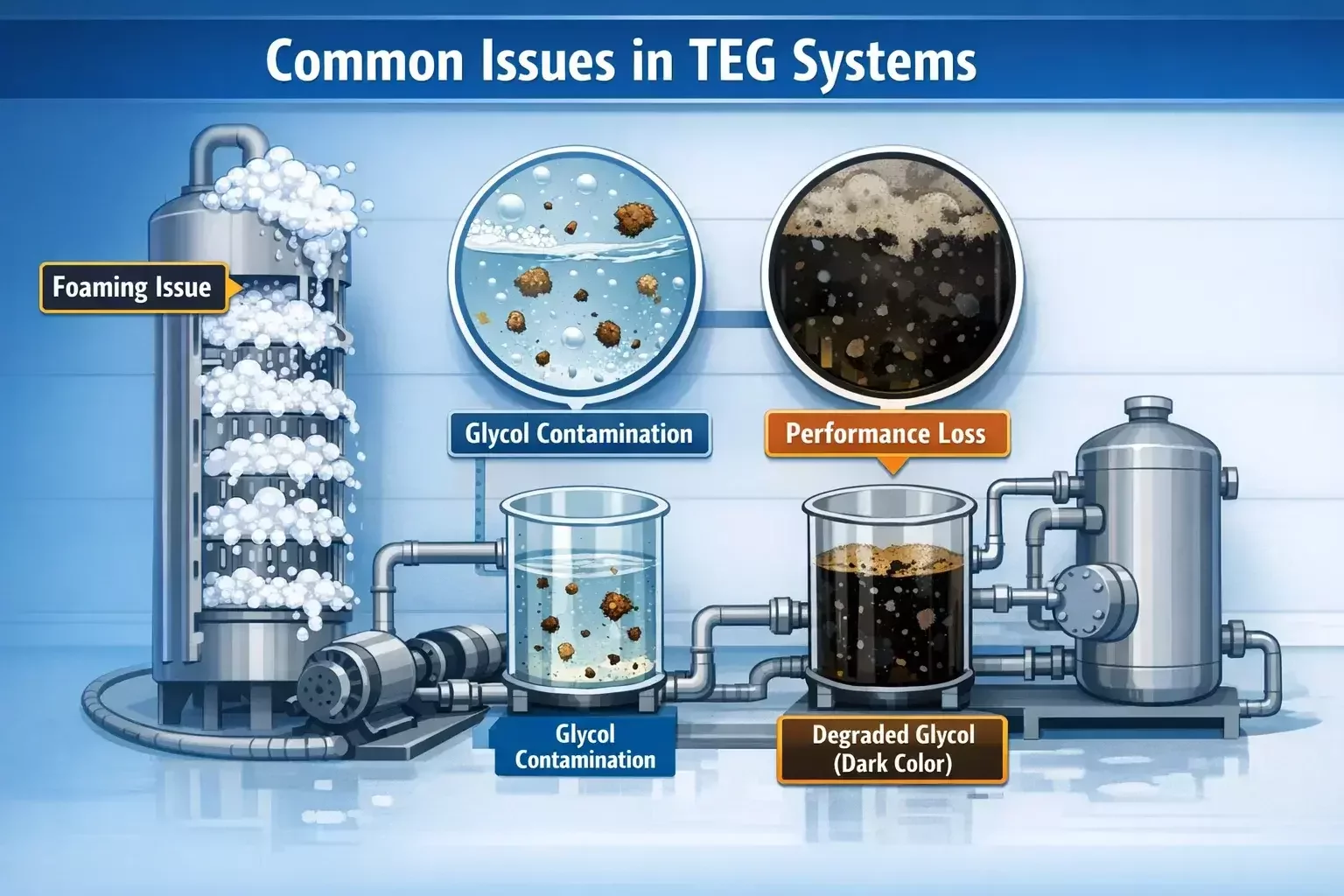
One of the most common issues is contamination of glycol by hydrocarbons, salts, and solid particles. These contaminants can reduce absorption efficiency, cause foaming, and lead to operational instability.
Over time, contamination can degrade glycol quality and impact overall system performance.
Foaming Issues
Foaming in the absorber column can significantly reduce contact efficiency between gas and glycol.
Foam formation is often caused by:
• Hydrocarbon contamination
• Presence of surfactants
• High gas velocities
Foaming reduces dehydration efficiency and may lead to glycol carryover into the gas stream.
Glycol Degradation
High regeneration temperatures and prolonged exposure to oxygen can lead to thermal and oxidative degradation of TEG.
Degraded glycol loses its ability to absorb water effectively and may form by-products that impact system performance.
Operational Variability
Changes in gas flow rate, pressure, and composition can affect dehydration efficiency.
For example, increased gas flow may require higher glycol circulation, while changes in temperature can influence absorption capacity.
Managing these variations is critical for maintaining consistent performance.
Monitoring and Performance Control
Effective operation of TEG systems requires continuous monitoring of key parameters.
Operators typically track:
• Glycol concentration (purity)
• Water content in gas
• Temperature and pressure conditions
• Circulation rates
These parameters provide insight into system performance and help identify issues before they escalate.
Advanced systems may use real-time monitoring and automation to optimize performance and reduce manual intervention.
Optimization Strategies for TEG Systems
To ensure reliable dehydration, TEG systems must be continuously optimized based on operating conditions.
Maintaining Glycol Quality
Regular filtration and removal of contaminants help maintain glycol purity and performance. Periodic replacement or reconditioning may also be required.
Controlling Regeneration Conditions
Proper control of reboiler temperature is essential to avoid glycol degradation while ensuring effective water removal.
Optimizing stripping processes can further improve regeneration efficiency.
Managing Foaming
Use of anti-foaming agents and proper system design can help reduce foam formation and improve contact efficiency.
Adjusting Circulation Rates
Glycol circulation must be matched to gas flow conditions. Adjusting flow rates ensures efficient dehydration without unnecessary energy consumption.
Preventive Maintenance
Routine inspection and maintenance of system components, including pumps, heat exchangers, and columns, help prevent operational issues and extend system life.
Importance of Integrated System Approach
TEG dehydration does not operate in isolation. It interacts with other processes such as gas sweetening, compression, and transportation.
A system-level approach ensures that dehydration performance aligns with overall process requirements, improving efficiency and reducing operational risks.
Beyond Dehydration: Strategic Role of TEG Systems
Tri Ethylene Glycol (TEG) dehydration systems are often viewed simply as moisture removal units. However, in modern oil and gas operations, they serve a much broader purpose. By ensuring dry gas delivery, these systems enable safe transportation, protect infrastructure, and maintain process efficiency across the value chain.
Their role extends from wellhead operations to pipeline transport and gas processing facilities, making them a critical link between production and commercialization.Operational Benefits of TEG Systems
One of the most significant advantages of TEG dehydration is its ability to prevent hydrate formation. By removing water vapor, TEG eliminates one of the key components required for hydrate formation, ensuring uninterrupted gas flow even under high-pressure and low-temperature conditions.
TEG systems also play a vital role in corrosion prevention. By reducing moisture content, they limit the conditions under which corrosive reactions occur, thereby protecting pipelines, valves, and processing equipment.
Another key benefit is consistent gas quality. Dehydrated gas meets pipeline and sales specifications, ensuring compliance and reducing the risk of downstream processing issues.
Additionally, TEG systems contribute to operational reliability. Their continuous regeneration and reuse capability ensures long-term performance with minimal interruption.Economic Impact of TEG Dehydration
The economic value of TEG systems is closely tied to their ability to prevent costly operational issues.
Hydrate formation and pipeline blockages can lead to significant downtime and production losses. By eliminating these risks, TEG systems help maintain continuous operations and reduce non-productive time.
Corrosion-related damage can result in expensive repairs and equipment replacement. Effective dehydration minimizes these risks, extending asset life and reducing maintenance costs.
TEG systems also improve energy efficiency by enabling smooth gas flow and reducing the need for additional processing.Furthermore, the regenerative nature of TEG makes it a cost-effective solution. Unlike single-use chemicals, TEG can be reused multiple times, reducing overall chemical consumption.
Environmental and Regulatory Considerations
As the oil and gas industry moves toward more sustainable practices, the environmental impact of dehydration systems is becoming increasingly important.
TEG systems, when properly designed and operated, can minimize emissions and reduce waste. Efficient regeneration reduces the need for frequent chemical replacement, lowering environmental impact.
Modern systems are also designed to capture and manage emissions from regeneration units, helping operators meet environmental regulations.
However, responsible operation is essential. Proper handling, maintenance, and monitoring are required to ensure that environmental benefits are fully realized.
Challenges in Sustainability
While TEG systems offer several advantages, they also present certain challenges.
Energy consumption during regeneration can be significant, particularly in large-scale operations. Optimizing heat integration and improving energy efficiency are key areas of focus.
Emission control, especially from reboiler vents, is another important consideration. Advanced technologies are being developed to reduce these emissions and improve overall system sustainability.
Future Trends in TEG Technology
The future of TEG dehydration systems is being shaped by advancements in technology and process optimization.
One of the key trends is the development of high-efficiency regeneration systems that reduce energy consumption while maintaining glycol purity.
Digitalization is also playing a major role. Real-time monitoring, automation, and data analytics allow operators to optimize system performance and respond quickly to changing conditions.
Another emerging area is the integration of hybrid dehydration technologies, combining TEG with other methods such as molecular sieves to achieve ultra-low water content in gas streams.
Research into improved glycol formulations and additives is further enhancing system performance and durability.
Strategic Importance in Gas Processing
TEG dehydration systems are no longer just supporting units—they are strategic assets in gas processing operations.
Their ability to ensure safe, efficient, and compliant gas handling makes them indispensable in modern energy systems.
For operators, investing in advanced TEG systems means:
Improved operational reliabilityReduced risk of downtime
Enhanced asset protection
Better economic performance
Conclusion
Tri Ethylene Glycol remains one of the most effective and widely used solutions for gas dehydration in the oil and gas industry. Its ability to remove moisture, prevent hydrates, and protect infrastructure makes it a cornerstone of safe and efficient operations.
The success of TEG systems depends not only on their design but also on proper operation, continuous optimization, and integration with broader process systems.
As the industry evolves, advancements in technology and sustainability will continue to enhance the role of TEG, ensuring its relevance in increasingly complex and demanding environments.
Ultimately, TEG dehydration systems are not just about removing water—they are about enabling reliable energy flow from reservoir to market.
FAQs
1. What is Tri Ethylene Glycol (TEG)?
Tri Ethylene Glycol (TEG) is a hygroscopic chemical used primarily in the oil and gas industry to remove water vapor from natural gas streams.
2. What is the main use of TEG in oil and gas?
TEG is mainly used for gas dehydration, where it absorbs moisture from natural gas to prevent hydrate formation and corrosion.
3. How does TEG remove water from gas?
TEG absorbs water vapor when wet gas contacts it in an absorber column. The glycol is then regenerated by heating to remove the absorbed water.
4. Why is gas dehydration important?
Dehydration prevents hydrate formation, corrosion, and pipeline blockages, ensuring safe and efficient gas transport.
5. What are gas hydrates and why are they dangerous?
Gas hydrates are ice-like solids formed when water combines with hydrocarbons under pressure and low temperature, potentially blocking pipelines.
6. Can Tri Ethylene Glycol be reused?
Yes, TEG is regenerated in dehydration systems and reused multiple times, making it cost-effective.
7. What are the key components of a TEG system?
A TEG system typically includes an absorber column, regeneration unit (reboiler), heat exchangers, and circulation pumps.
8. What challenges occur in TEG systems?
Common challenges include glycol contamination, foaming, degradation, and variations in operating conditions.
9. How can TEG system performance be optimized?
Performance can be improved by maintaining glycol purity, controlling regeneration temperature, preventing contamination, and optimizing circulation rates.
10. Are there alternatives to TEG for gas dehydration?
Yes, alternatives include molecular sieves and solid desiccants, but TEG remains widely preferred due to cost and efficiency.



