
Introduction
In the oil and gas industry, drilling operations form the backbone of exploration and production activities. Whether it is a shallow onshore well or a deep offshore drilling project, maintaining control over the wellbore environment is critical to operational success.
At the center of this process lies a highly engineered system known as drilling fluid, commonly referred to as drilling mud.
Drilling fluids are not merely supportive materials used during drilling—they are multifunctional engineering systems designed to ensure wellbore stability, efficient drilling, and safe operations. From controlling formation pressure to transporting rock cuttings and cooling the drill bit, drilling fluids play a vital role throughout the drilling lifecycle.
As drilling operations continue to move toward deeper, more complex, and high-pressure/high-temperature (HPHT) environments, the importance of advanced drilling fluid systems has grown significantly. Proper fluid design can reduce operational risks, enhance drilling efficiency, and prevent costly well control issues.
Understanding drilling fluids, their composition, types, and practical uses is essential for engineers, operators, and stakeholders involved in modern drilling operations.
What are Drilling Fluids?
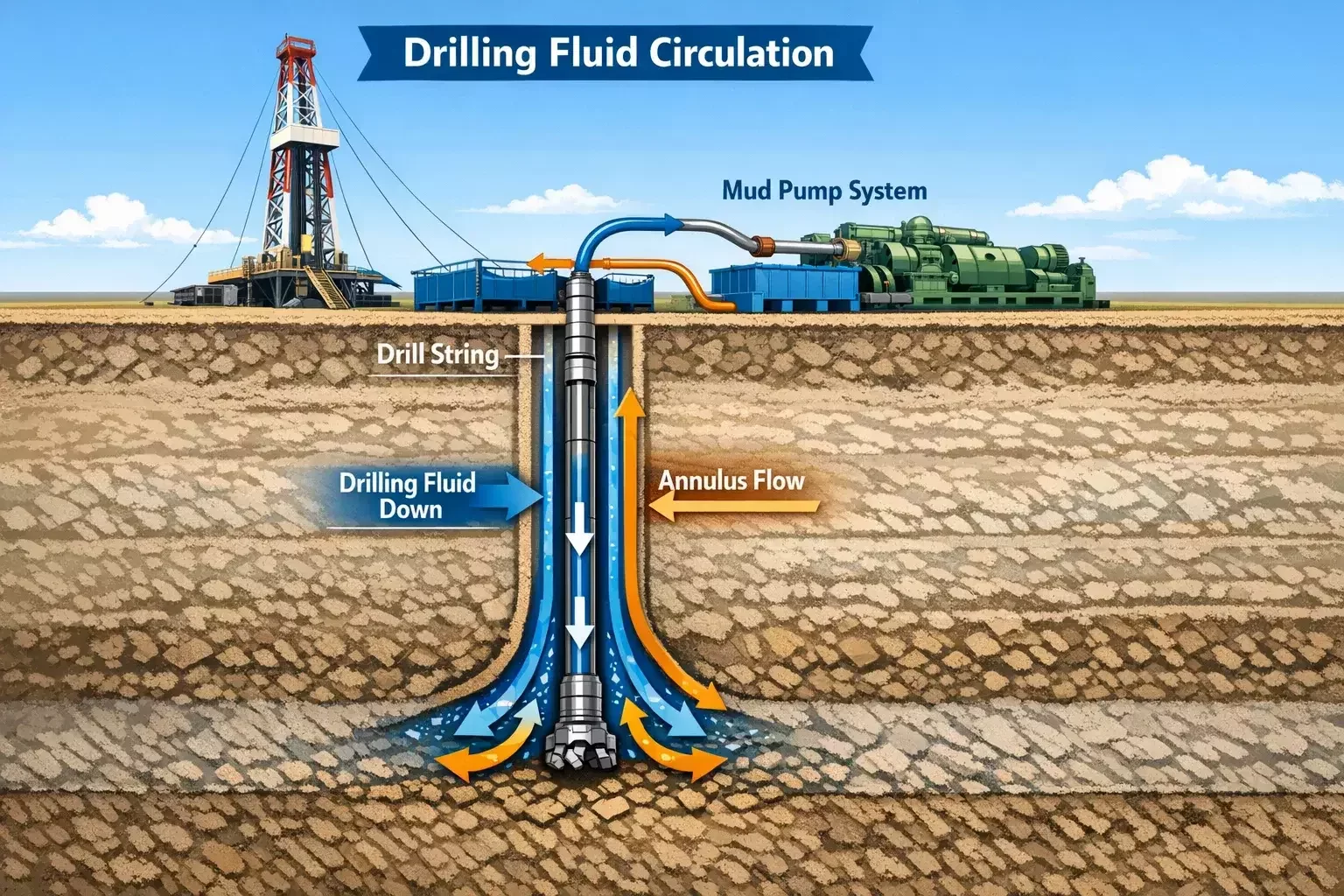
Drilling fluids are specially formulated liquids or gases that are circulated through the wellbore during drilling operations. They are pumped down the drill string, pass through the drill bit, and return to the surface through the annular space between the drill pipe and the wellbore.
This continuous circulation allows drilling fluids to perform multiple critical functions simultaneously.
Unlike simple liquids, drilling fluids are complex chemical systems composed of base fluids, weighting materials, viscosifiers, and various additives that work together to maintain desired physical and chemical properties under varying downhole conditions.
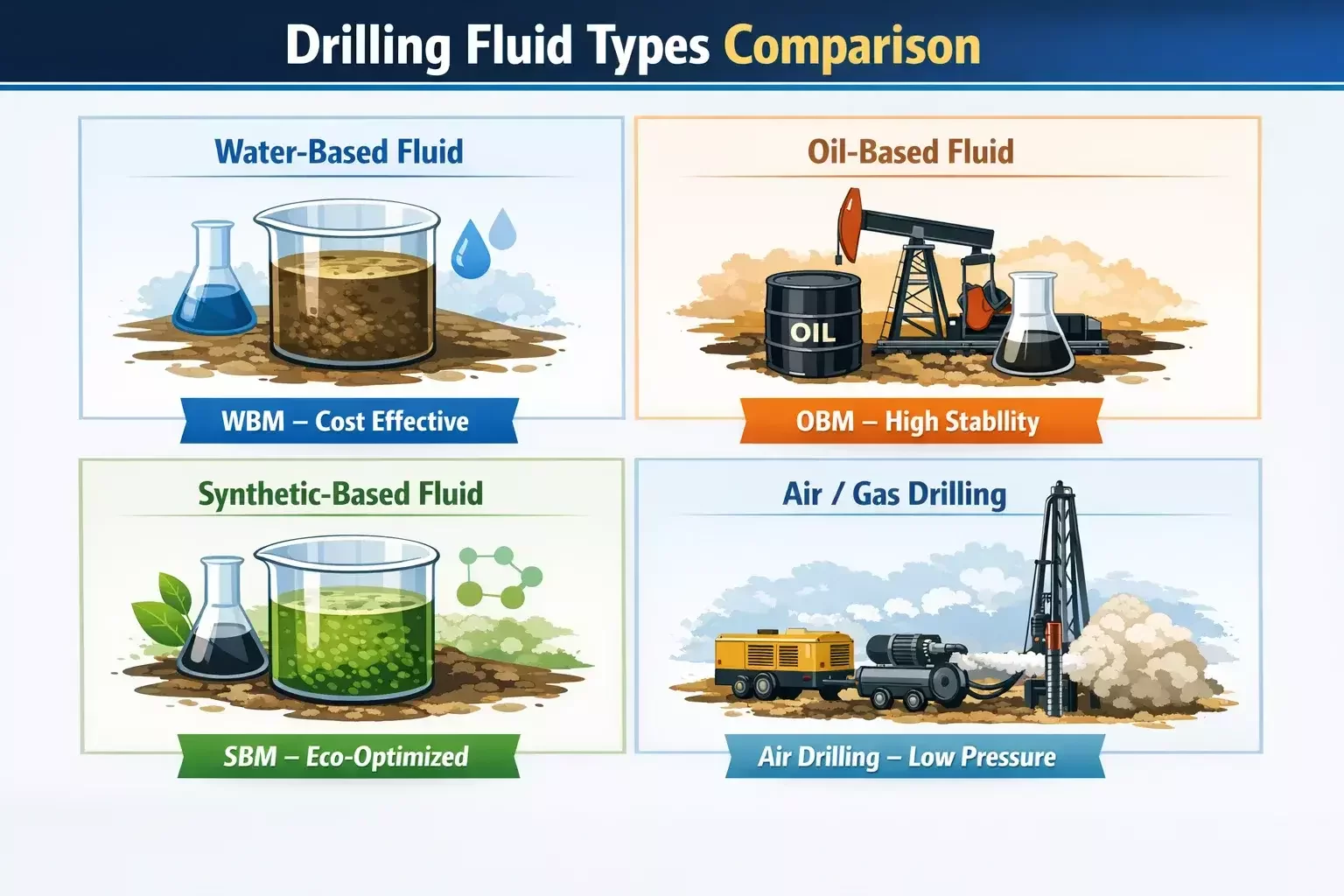
Depending on the type of well and geological formation, drilling fluids may be water-based, oil-based, synthetic-based, or even air/gas-based systems.
Why Drilling Fluids Are Critical in Drilling Operations
The role of drilling fluids extends far beyond basic lubrication. In reality, they are essential for maintaining control over the entire drilling process.
Without properly designed drilling fluids, drilling operations can face severe challenges such as wellbore collapse, uncontrolled pressure influx, poor cuttings removal, and equipment damage.
In modern drilling, fluids are engineered to meet specific operational requirements, ensuring that drilling progresses safely and efficiently even in complex geological environments.
Key Functions of Drilling Fluids
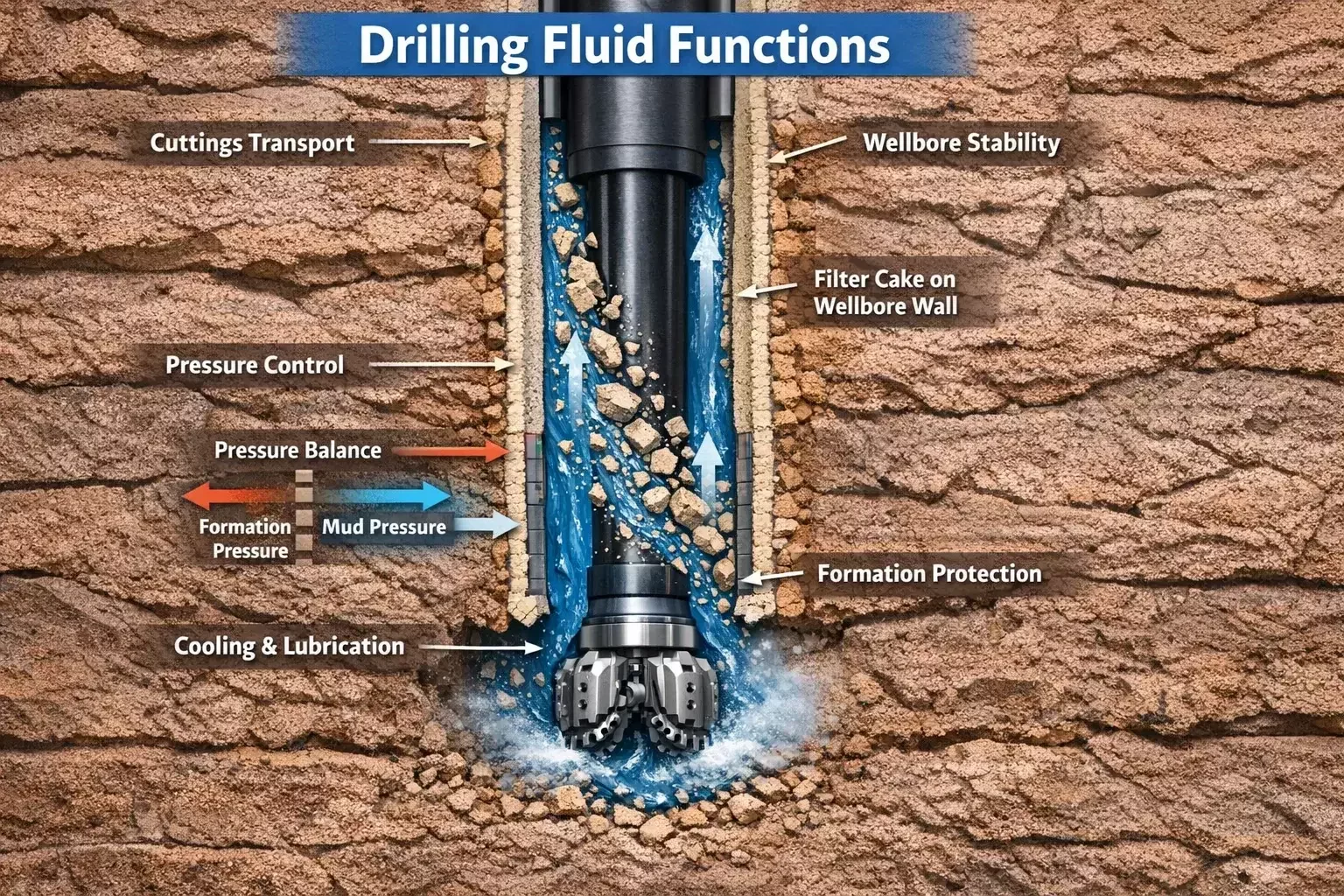
Drilling fluids are designed to perform several simultaneous functions, each of which contributes directly to drilling efficiency and well integrity.
1. Cuttings Transport and Hole Cleaning
One of the primary functions of drilling fluids is to carry rock cuttings generated by the drill bit from the bottom of the well to the surface.
As the drill bit penetrates the formation, it produces fragments of rock that must be removed continuously. If these cuttings are not efficiently transported, they can accumulate at the bottom of the well, leading to reduced drilling efficiency, stuck pipe incidents, or even wellbore blockage.
The viscosity and flow properties of drilling fluids are carefully controlled to ensure effective suspension and transport of these cuttings.
2. Wellbore Stability
Maintaining the structural integrity of the wellbore is one of the most critical challenges in drilling operations.
Different formations may be prone to swelling, sloughing, or collapse when exposed to drilling fluids. Properly designed fluids help stabilize these formations by creating a thin filter cake on the wellbore wall and minimizing fluid invasion into the formation.
Additives such as bentonite, polymers, and shale inhibitors play a crucial role in maintaining wellbore stability and preventing costly drilling complications.
3. Pressure Control
Drilling fluids are used to control subsurface pressure and prevent the uncontrolled flow of formation fluids into the wellbore, a situation known as a “kick.”
The density of the drilling fluid is adjusted using weighting materials such as barite to create sufficient hydrostatic pressure that counterbalances formation pressure.
Maintaining proper pressure control is essential to avoid blowouts and ensure safe drilling operations.
4. Cooling and Lubrication
Drilling operations generate significant heat due to friction between the drill bit, drill string, and formation.
Drilling fluids help dissipate this heat by circulating continuously through the system. They also provide lubrication, reducing friction and wear on drilling equipment.
This function is especially important in extended-reach drilling and high-temperature environments.
5. Formation Protection
In addition to supporting drilling operations, drilling fluids are designed to minimize damage to the reservoir formation.
Excessive fluid invasion can reduce the permeability of the formation and negatively impact future production. Proper fluid design ensures that a low-permeability filter cake is formed, preventing deep penetration of fluid into the formation.
6. Suspension of Solids When Circulation Stops
During drilling interruptions, such as when adding drill pipe, the drilling fluid must be capable of suspending cuttings and weighting materials in place.
If solids settle at the bottom of the well, it can lead to operational issues such as stuck pipe or uneven density distribution. High-quality drilling fluids maintain sufficient gel strength to suspend solids during static conditions.
The Evolution of Drilling Fluid Systems
Historically, drilling fluids were simple mixtures of water and clay. However, as drilling operations became more complex, the need for advanced fluid systems emerged.
Modern drilling fluids are now carefully engineered formulations that incorporate a wide range of chemical additives to address specific challenges such as high pressure, high temperature, reactive shale formations, and deepwater conditions.
Today, drilling fluid design is a specialized field that combines chemistry, fluid mechanics, and reservoir engineering to optimize drilling performance.
Types of Drilling Fluids
Drilling fluids are broadly classified based on their base fluid composition and operational application. The selection of a drilling fluid type depends on several factors, including formation characteristics, temperature and pressure conditions, environmental regulations, and cost considerations.
Each type of drilling fluid offers specific advantages and limitations, making it suitable for particular drilling environments.
1. Water-Based Drilling Fluids (WBM)
Water-based drilling fluids are the most commonly used systems in the oil and gas industry. In these systems, water serves as the primary base fluid, and various additives are incorporated to enhance performance.
Water-based muds can be further classified into freshwater, saltwater, and brine-based systems, depending on the composition of the base fluid.
These fluids are widely used due to their cost-effectiveness, ease of handling, and environmental compatibility.
Key Characteristics
Water-based fluids rely on additives such as bentonite, polymers, and salts to control viscosity, filtration, and stability. They are relatively simple to formulate and adjust during drilling operations.
However, their performance can be limited in challenging formations, particularly in reactive shale environments where water interaction may cause swelling and instability.
Applications
Water-based drilling fluids are typically used in:
• Shallow to medium-depth wells
• Non-reactive or mildly reactive formations
• Onshore drilling operations
Advantages and Limitations
Water-based systems are economical and environmentally safer compared to oil-based fluids. However, they may struggle in high-temperature, high-pressure (HPHT) wells or highly reactive formations.
2. Oil-Based Drilling Fluids (OBM)
Oil-based drilling fluids use oil—such as diesel or mineral oil—as the continuous phase, with water dispersed within it as an emulsion.
These systems are designed for challenging drilling environments where water-based fluids may not perform effectively.
Key Characteristics
Oil-based fluids offer excellent lubrication, thermal stability, and resistance to contamination. They are particularly effective in minimizing formation damage and stabilizing reactive shale formations.
Because the external phase is oil, these fluids prevent water-sensitive formations from interacting with the fluid, reducing swelling and wellbore instability.
Applications
Oil-based drilling fluids are commonly used in:
• Deep wells and HPHT conditions
• Horizontal and directional drilling
• Reactive shale formations
Advantages and Limitations
Oil-based systems provide superior performance in complex drilling environments. However, they are more expensive and subject to stricter environmental regulations due to disposal and handling concerns.
3. Synthetic-Based Drilling Fluids (SBM)
Synthetic-based drilling fluids are similar to oil-based systems but use synthetic fluids instead of conventional oil as the base.
These fluids are developed to combine the performance benefits of oil-based muds with improved environmental compliance.
Key Characteristics
Synthetic-based fluids provide high thermal stability, excellent lubrication, and reduced toxicity compared to traditional oil-based systems.
They are engineered to meet environmental regulations, particularly in offshore drilling operations.
Applications
Synthetic-based fluids are widely used in:
• Offshore drilling operations
• Environmentally sensitive areas
• Deepwater and complex wells
Advantages and Limitations
SBM systems offer a balance between performance and environmental impact. However, they are still relatively costly and require careful handling.
4. Air and Gas-Based Drilling Fluids
In certain drilling conditions, fluids may be replaced entirely by air, mist, or foam systems. These are known as air or gas-based drilling fluids.
Key Characteristics
These systems use compressed air or gas as the circulating medium, sometimes combined with small amounts of liquid to create mist or foam.
They are particularly effective in reducing hydrostatic pressure within the wellbore.
Applications
Air and gas-based fluids are used in:
• Low-pressure formations
• Hard rock drilling
• Situations where minimizing formation damage is critical
Advantages and Limitations
These systems allow for faster drilling rates and reduced formation damage. However, they are not suitable for high-pressure environments and require specialized equipment and safety measures.
Choosing the Right Drilling Fluid Type
Selecting the appropriate drilling fluid is a critical decision that depends on multiple operational and geological factors.
Engineers must consider:
• Formation type and reactivity
• Well depth and temperature conditions
• Pressure requirements
• Environmental regulations
• Cost and logistics
A well-designed drilling fluid system must strike a balance between performance, safety, and cost efficiency.
The Role of Fluid Engineering in Modern Drilling
As drilling operations become increasingly complex, the selection and design of drilling fluids have evolved into a highly specialized engineering discipline.
Modern drilling fluid systems are no longer generic solutions—they are customized formulations designed to meet specific well conditions.
This requires a deep understanding of fluid chemistry, reservoir behavior, and operational constraints.
Composition of Drilling Fluids
Drilling fluids are not single substances but carefully engineered multi-component systems. Their performance depends on the interaction of various materials, each designed to deliver a specific function under downhole conditions.
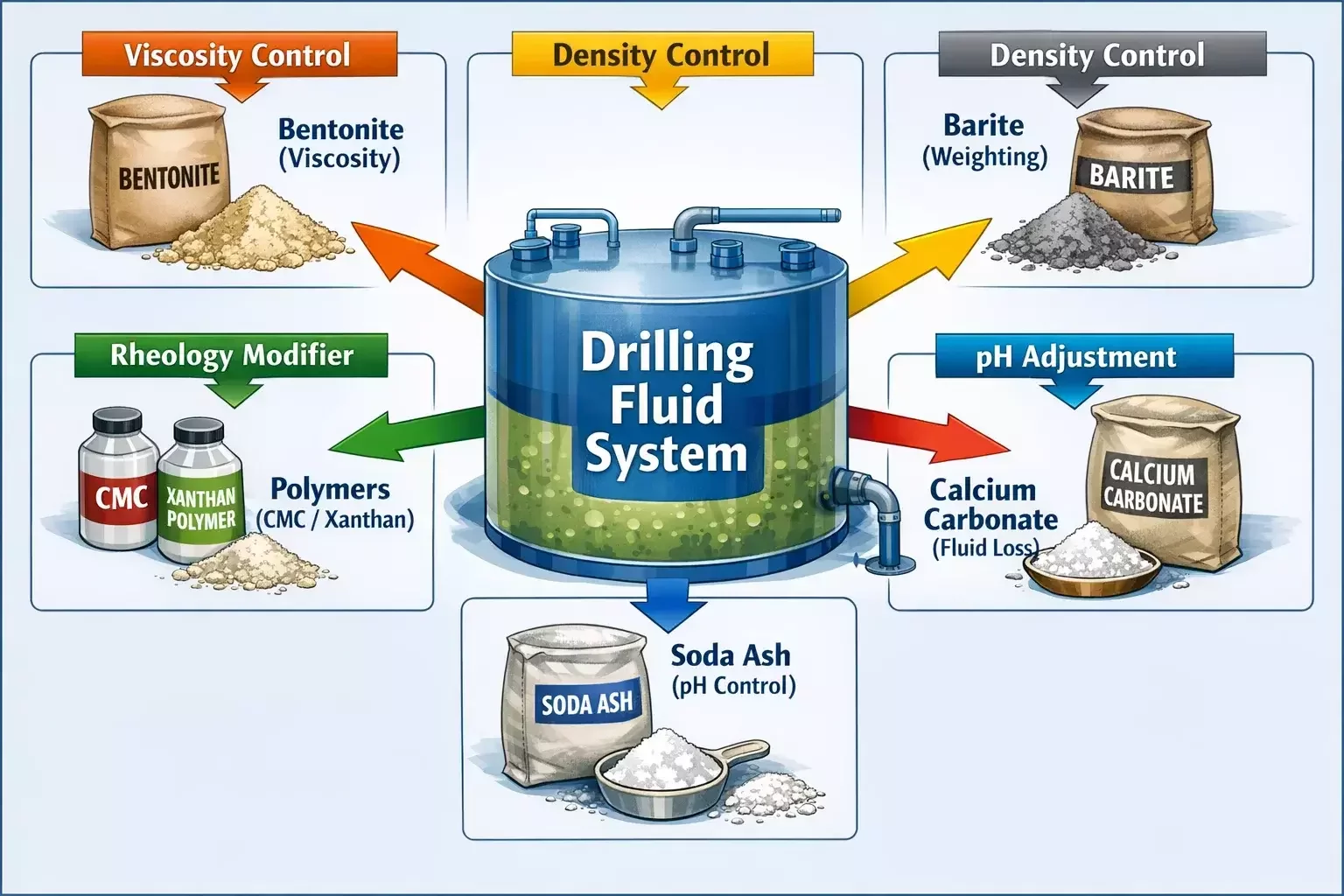
At a fundamental level, drilling fluids consist of four primary components:
• Base fluid
• Weighting agents
• Viscosifiers and rheology modifiers
• Chemical additives
The correct balance of these components ensures that the drilling fluid maintains stability, efficiency, and performance throughout the drilling operation.
1. Base Fluid: The Foundation of the System
The base fluid forms the continuous phase of the drilling fluid and determines its fundamental behavior.
In water-based muds, water acts as the base fluid, while in oil-based systems, oil or synthetic fluids are used.
The choice of base fluid influences:
• Fluid density
• Thermal stability
• Environmental compatibility
• Interaction with formation
For example, water-based fluids are cost-effective and environmentally friendly, whereas oil-based fluids provide superior stability in reactive formations and high-temperature environments.
2. Weighting Agents: Controlling Hydrostatic Pressure
Weighting agents are added to increase the density of the drilling fluid, allowing it to exert sufficient hydrostatic pressure to control formation fluids.
The most commonly used weighting material is barite, a high-density mineral that helps maintain well control.
By adjusting the concentration of weighting agents, engineers can ensure that the fluid pressure remains balanced against formation pressure, preventing kicks and blowouts.
Proper density control is essential for safe and stable drilling operations.
3. Viscosifiers and Rheology Modifiers
Viscosity plays a crucial role in determining the fluid’s ability to transport cuttings and maintain suspension.
Viscosifiers are additives that increase the thickness and flow resistance of drilling fluids, enabling efficient cuttings transport.
Bentonite
Bentonite clay is one of the most widely used viscosifiers. When hydrated, it forms a gel-like structure that enhances fluid viscosity and helps suspend solids.
Polymers (CMC, Xanthan Gum, Guar Gum)
Polymer-based additives such as Carboxy Methyl Cellulose (CMC), Xanthan Gum, and Guar Gum are used to fine-tune fluid rheology.
These additives provide:
• Improved viscosity control
• Enhanced suspension capacity
• Stability under varying shear conditions
Polymers are particularly important in modern drilling systems where precise control over fluid behavior is required.
4. Fluid Loss Control Additives
Fluid loss control is essential to prevent excessive invasion of drilling fluid into the formation.
If uncontrolled, fluid loss can damage the formation and affect future production.
Additives such as calcium carbonate and polymers are used to form a thin, low-permeability filter cake on the wellbore wall.
This filter cake acts as a barrier, reducing fluid loss while maintaining wellbore stability.
5. pH Control and Alkalinity Agents
Maintaining proper pH levels in drilling fluids is critical for ensuring the performance of other additives and preventing chemical instability.
Substances such as soda ash, sodium hydroxide, and sodium bicarbonate are used to regulate alkalinity.
Proper pH control helps:
• Enhance additive performance
• Prevent corrosion
• Stabilize fluid chemistry
6. Shale Stabilizers and Inhibitors
Reactive shale formations can swell or disintegrate when exposed to water-based drilling fluids.
To address this, shale inhibitors such as potassium chloride (KCl) and calcium-based additives are used.
These chemicals help reduce clay swelling and maintain wellbore stability in challenging formations.
7. Lubricants and Specialty Additives
Drilling operations often involve high friction between the drill string and the wellbore, especially in directional and horizontal wells.
Lubricants such as graphite and specialty chemical additives are used to reduce friction and torque.
Additionally, other specialty additives may include:
• Defoamers to control foam formation
• Biocides to prevent microbial growth
• Corrosion inhibitors to protect equipment
These additives enhance the overall performance and longevity of drilling systems.
Interaction Between Components
The effectiveness of a drilling fluid system depends not only on individual components but also on how they interact with each other.
For example:
• Increasing viscosity must not compromise fluid pumpability
• Higher density must not lead to excessive pressure
• Chemical compatibility must be maintained across all additives
This makes drilling fluid formulation a dynamic and highly specialized process, requiring continuous monitoring and adjustment during drilling operations.
The Importance of Precision Formulation
Modern drilling environments demand precise control over fluid properties.
Engineers must design drilling fluids that can:
• Withstand high temperatures and pressures
• Adapt to changing formation conditions
• Maintain consistent performance over time
This level of precision is achieved through careful selection and optimization of fluid components.
Practical Uses of Drilling Fluids in Oil & Gas Operations
Drilling fluids are applied throughout the entire drilling lifecycle, supporting operations from the initial spud to final well completion. Their role extends beyond theoretical functions and becomes highly practical in real-world field conditions.
In the early stages of drilling, fluids help establish well control and stable circulation, ensuring that cuttings are efficiently removed as the wellbore begins to deepen. As drilling progresses into more complex formations, fluid systems are continuously adjusted to match changing geological conditions.
In directional and horizontal drilling, drilling fluids play a critical role in reducing friction and maintaining smooth drill string movement. Without proper lubrication and rheological control, extended-reach drilling would become significantly more difficult and inefficient.
In high-pressure, high-temperature (HPHT) wells, drilling fluids must maintain thermal stability and consistent performance, ensuring that fluid properties do not degrade under extreme conditions. This is essential for maintaining well control and avoiding operational failures.
Additionally, drilling fluids are crucial in minimizing formation damage, preserving reservoir integrity, and ensuring that the well remains productive after completion.
Operational Challenges in Drilling Fluid Management
Despite their importance, managing drilling fluids presents several operational challenges. These challenges arise due to the dynamic nature of drilling environments and the need for continuous fluid optimization.
One of the primary challenges is maintaining consistent fluid properties under changing downhole conditions. Temperature, pressure, and formation interactions can alter viscosity, density, and chemical balance, requiring real-time adjustments.
Another challenge is contamination control. Drilling fluids can become contaminated by formation solids, salts, or hydrocarbons, which can negatively impact performance. Effective solids control systems and chemical treatments are required to maintain fluid quality.
Fluid loss and wellbore instability also remain key concerns. If fluid invades the formation excessively, it can lead to formation damage or collapse. Engineers must carefully balance fluid composition to minimize these risks.
Cost management is another important factor. High-performance fluid systems, particularly oil-based and synthetic-based fluids, can be expensive. Optimizing fluid usage while maintaining performance is essential for economic efficiency.
Environmental and Regulatory Considerations
With increasing focus on sustainability and environmental protection, drilling fluid selection and disposal have become critical considerations in modern operations.
Water-based drilling fluids are generally more environmentally acceptable, especially in onshore operations. However, oil-based and synthetic-based fluids require strict handling, treatment, and disposal protocols to minimize environmental impact.
Regulations in many regions require operators to use low-toxicity formulations, manage waste effectively, and prevent contamination of surrounding ecosystems.
In offshore drilling, environmental compliance becomes even more stringent, with specific guidelines governing the discharge and disposal of drilling fluids.
As a result, the industry is continuously working toward developing eco-friendly fluid systems that maintain performance while reducing environmental impact.
The Future of Drilling Fluid Technology
As drilling operations become more advanced, the role of drilling fluids continues to evolve.
Emerging trends include the development of:
• High-performance polymer systems for improved rheology control
• Nano-enhanced drilling fluids for better filtration and stability
• Environmentally sustainable fluid formulations
• Real-time monitoring systems for fluid performance optimization
These innovations are enabling operators to drill deeper, faster, and more efficiently while maintaining safety and environmental standards.
Drilling fluid engineering is increasingly becoming a data-driven discipline, where continuous monitoring and predictive adjustments play a key role in optimizing performance.
Conclusion
Drilling fluids are one of the most critical components of modern drilling operations, serving as multifunctional systems that support well construction, safety, and efficiency.
From transporting cuttings and controlling pressure to stabilizing formations and protecting equipment, drilling fluids perform a wide range of essential functions that directly impact drilling success.
Their composition—comprising base fluids, weighting agents, viscosifiers, and chemical additives—is carefully engineered to meet the specific demands of each well.
Different types of drilling fluids, including water-based, oil-based, synthetic-based, and gas-based systems, are selected based on formation characteristics and operational requirements.
However, the effectiveness of drilling fluids depends not only on their design but also on their management. Continuous monitoring, adjustment, and optimization are necessary to ensure consistent performance throughout the drilling process.
As the industry moves toward more complex and challenging drilling environments, the importance of advanced drilling fluid systems will continue to grow.
Ultimately, drilling fluids are not just operational tools—they are strategic enablers of safe, efficient, and successful drilling operations.
FAQs
1. What are drilling fluids used for?
Drilling fluids are used to transport cuttings, control pressure, stabilize the wellbore, cool the drill bit, and protect the formation during drilling operations.
2. What are the main types of drilling fluids?
The main types include water-based fluids (WBM), oil-based fluids (OBM), synthetic-based fluids (SBM), and air/gas-based systems.
3. Why is drilling fluid density important?
Drilling fluid density controls hydrostatic pressure, which helps prevent formation fluids from entering the wellbore and ensures safe drilling operations.
4. What is the role of bentonite in drilling fluids?
Bentonite acts as a viscosifier, increasing fluid thickness and enabling efficient suspension and transport of cuttings.
5. How do polymers like CMC and xanthan gum help?
Polymers improve rheology, enhance cuttings transport, reduce fluid loss, and stabilize drilling fluid performance under varying conditions.
6. What is a filter cake in drilling operations?
A filter cake is a thin layer formed on the wellbore wall that prevents excessive fluid loss into the formation and helps maintain stability.
7. What are weighting agents in drilling fluids?
Weighting agents like barite increase fluid density to control formation pressure and prevent blowouts.
8. When are oil-based drilling fluids used?
Oil-based fluids are used in challenging conditions such as HPHT wells, reactive shale formations, and directional drilling operations.
9. What challenges are associated with drilling fluids?
Common challenges include contamination, fluid loss, maintaining consistent properties, and managing environmental impact.
10. Are drilling fluids environmentally safe?
Water-based fluids are generally safer, while oil-based and synthetic fluids require strict handling and disposal to meet environmental regulations.



