
Introduction
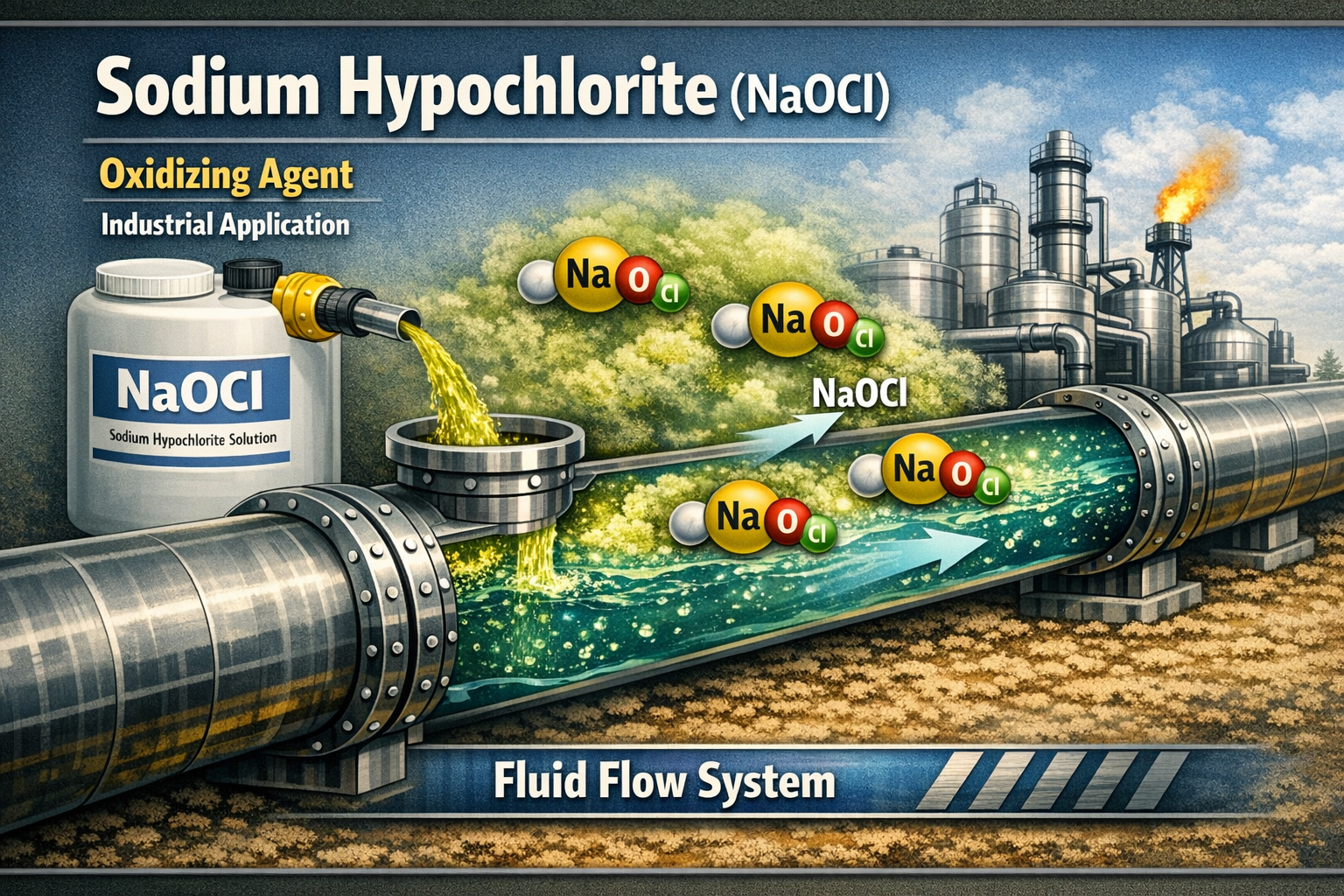
In industrial operations, some chemicals are widely recognized for their simplicity, yet their impact is far-reaching. Sodium hypochlorite is one such compound.
Commonly known for its disinfecting properties, sodium hypochlorite is used across multiple industries—from water treatment to sanitation and oilfield operations. However, beyond its everyday applications lies a deeper role in chemical control, microbial management, and system protection.
In oil and gas environments, where fluid systems are complex and often exposed to biological contamination, sodium hypochlorite becomes a valuable tool for maintaining system integrity and operational efficiency.
Understanding what sodium hypochlorite is and how it works provides insight into its broader industrial significance.
What is Sodium Hypochlorite?
Sodium hypochlorite (NaOCl) is a chemical compound typically available as a pale greenish liquid with a strong chlorine-like odor. It is produced by reacting chlorine with sodium hydroxide.
It is widely recognized as an oxidizing agent, meaning it can break down organic matter and destroy microorganisms.
Key characteristics of sodium hypochlorite include:
• Strong oxidizing capability
• Effective antimicrobial action
• High reactivity with organic compounds
• Water-soluble nature
How Sodium Hypochlorite Works
The effectiveness of sodium hypochlorite lies in its ability to release active chlorine.
When dissolved in water, it forms hypochlorous acid (HOCl), which is a powerful oxidizing agent. This compound penetrates microbial cells and disrupts their internal structure, leading to rapid inactivation.
At the same time, its oxidizing nature allows it to break down organic contaminants and unwanted compounds in fluid systems.
This dual action—oxidation and disinfection—makes sodium hypochlorite a versatile chemical across industries.
Why Chemical Control is Important in Oilfield Systems
Oilfield environments are complex systems where fluids, chemicals, and microorganisms interact continuously.
Without proper control:
• Microbial growth can lead to corrosion
• Organic buildup can affect system efficiency
• Chemical imbalance can disrupt operations
These challenges require chemicals that can act quickly and effectively.
Sodium hypochlorite addresses these issues by controlling biological activity and breaking down unwanted compounds.
Key Applications of Sodium Hypochlorite
Although widely known for sanitation, sodium hypochlorite plays several important roles in industrial and oilfield applications.
In oilfield systems, it is used for microbial control, helping prevent microbiologically influenced corrosion (MIC).
It is also used for oxidation of contaminants, breaking down unwanted organic materials and maintaining cleaner fluid systems.
In certain operations, it supports system maintenance and cleaning, ensuring that equipment and pipelines remain free from harmful buildup.
Its versatility makes it a valuable component in maintaining stable and efficient operations.
Advantages of Sodium Hypochlorite
Sodium hypochlorite offers several advantages that contribute to its widespread use.
It acts quickly, providing rapid microbial control and oxidation. Its effectiveness across a wide range of conditions makes it suitable for dynamic environments.
It is also relatively easy to handle and apply, allowing for flexible dosing in different systems.
Additionally, its ability to address both biological and chemical challenges makes it a multi-functional solution.Limitations and Considerations
Despite its effectiveness, sodium hypochlorite must be used carefully.
Its strong oxidizing nature means it can react with other chemicals, requiring proper compatibility assessment.
Overdosing can lead to unwanted reactions or material impact, while underdosing may reduce effectiveness.
Environmental and safety considerations also require proper handling and controlled application.
These factors highlight the importance of proper system design and dosing strategies.
From Compound to Application
While sodium hypochlorite is a well-known chemical, its effectiveness in industrial and oilfield systems depends on how it is formulated, applied, and controlled.
Different applications require different concentrations, dosing methods, and system conditions. A properly designed sodium hypochlorite program ensures that oxidation and microbial control are achieved without disrupting overall system stability.
Types of Sodium Hypochlorite Solutions
Sodium hypochlorite is typically supplied as an aqueous solution, but its concentration can vary depending on the application.
Lower concentration solutions are used where controlled oxidation is required, minimizing the risk of aggressive reactions.
Higher concentration solutions provide stronger oxidizing power, suitable for applications requiring rapid microbial control or breakdown of organic contaminants.
The choice of concentration depends on:
• System sensitivity
• Level of contamination
• Required reaction speed
Maintaining the right balance between strength and control is essential for effective performance.
Key Applications in Oilfield Systems
Sodium hypochlorite serves multiple functions in oilfield operations, particularly where biological and organic control is required.
Microbial Control
One of its primary applications is controlling microbial growth in fluid systems.
Microorganisms in oilfield environments can:
• Produce corrosive by-products
• Form biofilms on surfaces
• Interfere with chemical treatments
Sodium hypochlorite disrupts microbial activity through oxidation, helping maintain cleaner and more stable systems.
Oxidation of Organic Contaminants
Oilfield fluids often contain organic compounds that can accumulate over time.
Sodium hypochlorite helps:
• Break down organic matter
• Reduce system fouling
• Maintain fluid clarity and performance
This improves the efficiency of downstream processes and reduces operational issues.
System Cleaning and Maintenance
Periodic chemical cleaning is necessary to maintain equipment and pipelines.
Sodium hypochlorite is used to:
• Remove biological deposits
• Clean internal surfaces
• Restore system efficiency
Its rapid action makes it suitable for maintenance operations.
Dosing Strategies for Effective Performance
The success of sodium hypochlorite treatment depends largely on correct dosing.
Continuous Dosing
In systems with ongoing microbial activity, continuous dosing helps maintain a consistent level of control.
This approach ensures that microorganisms do not re-establish and that system conditions remain stable.
Batch Treatment
For periodic cleaning or shock treatment, sodium hypochlorite can be applied in batches.
This allows for:
• Rapid reduction of contamination
• Intensive system cleaning
• Restoration of normal operating conditions
Controlled Injection Points
The location of injection plays a critical role in effectiveness.
Introducing sodium hypochlorite at points with good mixing ensures:
• Better distribution
• Efficient reaction with contaminants
• Improved overall performance
Factors Affecting Sodium Hypochlorite Performance
Several operational factors influence how well sodium hypochlorite performs in oilfield systems.
pH and Temperature
The effectiveness of sodium hypochlorite depends on pH conditions.
At certain pH levels, the formation of hypochlorous acid is optimized, enhancing its oxidizing power.
Temperature also affects reaction rates, with higher temperatures generally increasing activity.
Presence of Organic Load
High levels of organic material can consume sodium hypochlorite rapidly.
This requires careful dosing to ensure that sufficient active chlorine remains available for effective treatment.
Compatibility with Other Chemicals
Sodium hypochlorite must be compatible with other chemicals in the system.
Incompatible combinations can lead to:
• Reduced effectiveness
• Unwanted reactions
• System instability
Proper testing and integration are essential.
Contact Time
For effective microbial control and oxidation, sufficient contact time is required.
Short contact times may limit effectiveness, while adequate exposure ensures complete reaction.
Balancing Effectiveness and Control
One of the key challenges in using sodium hypochlorite is balancing its strong oxidizing power with system stability.
Excessive dosing can lead to material impact or unwanted reactions, while insufficient dosing reduces effectiveness.
A well-designed program ensures:
• Optimal chemical performance
• Minimal side effects
• Consistent system stability
From Controlled Conditions to Field Reality
While sodium hypochlorite performs predictably in controlled environments, real oilfield systems introduce variability that can significantly influence its effectiveness. Fluid composition, temperature, microbial load, and operational dynamics all affect how the chemical behaves.
In practice, sodium hypochlorite must function in complex, multiphase environments where conditions change continuously. This makes proper application and ongoing optimization essential for maintaining consistent performance.
Field Applications of Sodium Hypochlorite
Sodium hypochlorite is widely used in oilfield systems where microbial activity and organic contamination pose risks to operations.
In production systems, it is applied to control microbial growth in pipelines and surface facilities. This helps reduce the risk of microbiologically influenced corrosion (MIC) and maintain clean flow paths.
In storage and handling systems, sodium hypochlorite is used for periodic cleaning, preventing buildup of organic deposits and biofilms that can affect efficiency.
In certain stimulation and maintenance operations, it supports system preparation by removing biological contaminants before treatment.
These applications demonstrate its role as both a preventive and corrective chemical.
Operational Challenges in Field Use
Despite its effectiveness, sodium hypochlorite faces several challenges when applied in real-world conditions.
Rapid Consumption in High Organic Environments
In systems with high organic load, sodium hypochlorite can be consumed quickly.
Organic compounds react with the oxidizing agent, reducing the amount of active chlorine available for microbial control.
This can lead to reduced treatment efficiency if dosing is not properly adjusted.
Decomposition and Stability Issues
Sodium hypochlorite is not completely stable, especially under certain conditions.
Exposure to:
• High temperatures
• Sunlight or UV
• Metal contaminants
can accelerate decomposition, reducing its effectiveness over time.
Proper storage and handling are therefore critical.
Chemical Compatibility Concerns
As a strong oxidizing agent, sodium hypochlorite can react with other chemicals in the system.
Incompatible interactions may lead to:
• Reduced performance of other additives
• Formation of unwanted by-products
• Instability in fluid systems
This makes compatibility testing essential before field application.
Material Impact and Corrosion
While sodium hypochlorite helps control microbial corrosion, excessive or uncontrolled use can impact certain materials.
If not properly managed, it may contribute to material degradation, particularly in sensitive systems.
Balancing dosage is key to avoiding such issues.
Monitoring and Performance Control
Effective use of sodium hypochlorite requires continuous monitoring of system conditions.
Operators typically monitor:
• Residual chlorine levels
• Microbial activity
• Fluid composition
• Temperature and pH
Maintaining an appropriate residual level ensures that the chemical remains effective throughout the system.
Advanced monitoring tools can provide real-time data, allowing for faster adjustments and improved control.
Optimization Strategies for Sodium Hypochlorite Systems
To achieve reliable performance, sodium hypochlorite systems must be carefully optimized.
Proper Storage and Handling
Maintaining chemical stability begins with proper storage.
• Store in cool, shaded conditions
• Avoid contamination with metals
• Use compatible storage materials
This helps preserve active chlorine content.
Adjusting Dosage Based on System Conditions
Dosing should be adjusted based on:
• Organic load
• Microbial activity
• Flow conditions
This ensures effective treatment without overuse.
Strategic Injection Points
Introducing sodium hypochlorite at locations with good mixing improves distribution and reaction efficiency.
This enhances overall system performance.
Integration with Chemical Programs
Sodium hypochlorite should be integrated with other chemical treatments such as corrosion inhibitors and scale inhibitors.
A coordinated approach ensures that all chemicals work together effectively.
Periodic Shock Treatments
In addition to continuous dosing, periodic high-dose treatments can help eliminate persistent microbial populations and restore system conditions.
Importance of System-Level Approach
Sodium hypochlorite is most effective when used as part of a broader chemical management strategy.
Considering its interaction with other chemicals, system conditions, and operational requirements ensures better results.
This system-level approach reduces risks, improves efficiency, and enhances long-term performance.
Beyond Disinfection: Strategic Role in Industrial Systems
Sodium hypochlorite is often associated with cleaning and disinfection, but in oilfield and industrial environments, its role extends far beyond basic sanitation. It acts as a chemical control agent, enabling operators to manage microbial activity, maintain system cleanliness, and support overall process efficiency.
Its ability to function as both an oxidizing and antimicrobial agent makes it a versatile tool in maintaining stable and reliable operations.
Operational Benefits of Sodium Hypochlorite
One of the most significant benefits of sodium hypochlorite is its rapid action. It reacts quickly with microorganisms and organic contaminants, providing immediate control in systems where delays can lead to operational issues.
Another key advantage is its dual functionality. By simultaneously controlling microbial growth and oxidizing organic matter, it addresses multiple challenges with a single treatment approach.
Sodium hypochlorite also contributes to system cleanliness and efficiency. By reducing biofilm formation and organic buildup, it helps maintain smooth flow conditions and improves the performance of equipment and pipelines.
Additionally, its flexibility in dosing—whether continuous or batch—allows operators to adapt treatment strategies based on system needs.
Economic Impact on Operations
The economic value of sodium hypochlorite lies in its ability to prevent costly problems before they occur.
Microbial activity can lead to corrosion, fouling, and reduced system efficiency. By controlling these issues, sodium hypochlorite helps reduce maintenance costs and extend equipment life.
Clean systems operate more efficiently, reducing energy consumption and improving overall productivity.
Furthermore, its relatively simple application and availability make it a cost-effective solution compared to more complex treatment systems.
While chemical costs must be managed, the savings in avoided downtime, maintenance, and operational disruptions often outweigh the investment.
Environmental and Safety Considerations
Sodium hypochlorite must be used responsibly due to its strong oxidizing nature.
Proper dosing ensures that it performs effectively without causing unnecessary environmental impact. Overuse can lead to the formation of by-products that require careful management.
Modern practices focus on controlled application, minimizing waste while maintaining effectiveness.
Safety is also a key consideration. Proper handling, storage, and monitoring are essential to ensure safe use in industrial environments.
Challenges in Sustainability
While sodium hypochlorite is effective, it presents certain challenges.
Its stability can be affected by environmental conditions, requiring careful storage and handling. Decomposition reduces effectiveness and can lead to inefficiencies.
Additionally, managing reaction by-products and ensuring compatibility with other chemicals requires careful planning.
Balancing performance with environmental responsibility is an ongoing focus for operators.
Future Trends in Sodium Hypochlorite Usage
The future of sodium hypochlorite systems is being shaped by advancements in chemical management and process optimization.
One key trend is the development of improved dosing and monitoring systems that allow precise control of chemical usage. Real-time data enables operators to adjust dosing based on system conditions, improving efficiency.
Another area of focus is integration with broader chemical programs, ensuring that sodium hypochlorite works in harmony with other treatments.
Research is also exploring ways to enhance stability and reduce unwanted by-products, improving both performance and environmental compatibility.
Automation and digitalization are expected to play a growing role, enabling smarter and more efficient chemical management.
Strategic Importance in Modern Operations
Sodium hypochlorite is no longer just a support chemical—it is a strategic component of system management.
Its ability to control biological and chemical challenges makes it essential for maintaining operational stability and efficiency.
For operators, effective use of sodium hypochlorite means:
Improved system reliabilityReduced operational risks
Enhanced asset protection
Better economic performance
Conclusion
Sodium hypochlorite is a versatile and powerful chemical with applications that extend far beyond its common perception as a disinfectant. In oilfield and industrial systems, it plays a critical role in controlling microbial activity, managing organic contamination, and maintaining system efficiency.
Its effectiveness depends on proper formulation, dosing, and integration with overall chemical programs. When used correctly, it provides a reliable and cost-effective solution for maintaining stable operations.
As the industry evolves, advancements in technology and sustainability will continue to enhance its role, ensuring that sodium hypochlorite remains a valuable tool in modern chemical management.
Ultimately, sodium hypochlorite is not just about cleaning systems—it is about keeping complex operations running efficiently and reliably.
FAQs
1. What is sodium hypochlorite?
Sodium hypochlorite (NaOCl) is a chemical compound widely used as an oxidizing and disinfecting agent in industrial and oilfield applications.
2. What is sodium hypochlorite used for in oilfields?
It is used for microbial control, oxidation of organic contaminants, and system cleaning to maintain operational efficiency.
3. How does sodium hypochlorite work?
It releases active chlorine in water, forming hypochlorous acid (HOCl), which oxidizes organic matter and destroys microorganisms.
4. Why is microbial control important in oil and gas systems?
Microbial activity can lead to corrosion, biofilm formation, and reduced efficiency, making control essential for system integrity.
5. What are the main benefits of sodium hypochlorite?
It offers fast action, dual functionality (oxidation + disinfection), cost-effectiveness, and flexibility in application.
6. What challenges are associated with sodium hypochlorite use?
Challenges include stability issues, rapid consumption in high organic environments, and compatibility with other chemicals.
7. How is sodium hypochlorite applied in systems?
It can be applied through continuous dosing or batch treatments, depending on system requirements.
8. Does sodium hypochlorite cause corrosion?
If overdosed or improperly managed, it can impact certain materials, so controlled dosing is essential.
9. What factors affect its performance?
pH, temperature, organic load, contact time, and chemical compatibility all influence its effectiveness.
10. Is sodium hypochlorite environmentally safe?
When used responsibly and in controlled amounts, it is effective and manageable, but proper handling and disposal are required.



