
Introduction
Foam formation is a common yet critical challenge across multiple industrial processes, including oil and gas operations, chemical processing, wastewater handling, and cementing systems. While it may appear harmless on the surface, uncontrolled foam can severely disrupt operations by reducing efficiency, causing overflow, and interfering with accurate process control.
In oilfield applications, foam can affect separation systems, drilling fluids, and cementing operations—leading to operational instability and increased downtime. Managing foam effectively is therefore not just a process requirement, but a performance-critical factor.
Among the various solutions available, silicone-based defoamers have emerged as one of the most effective and widely used foam control agents. Their ability to act quickly, perform under extreme conditions, and maintain stability makes them highly valuable in demanding industrial environments.
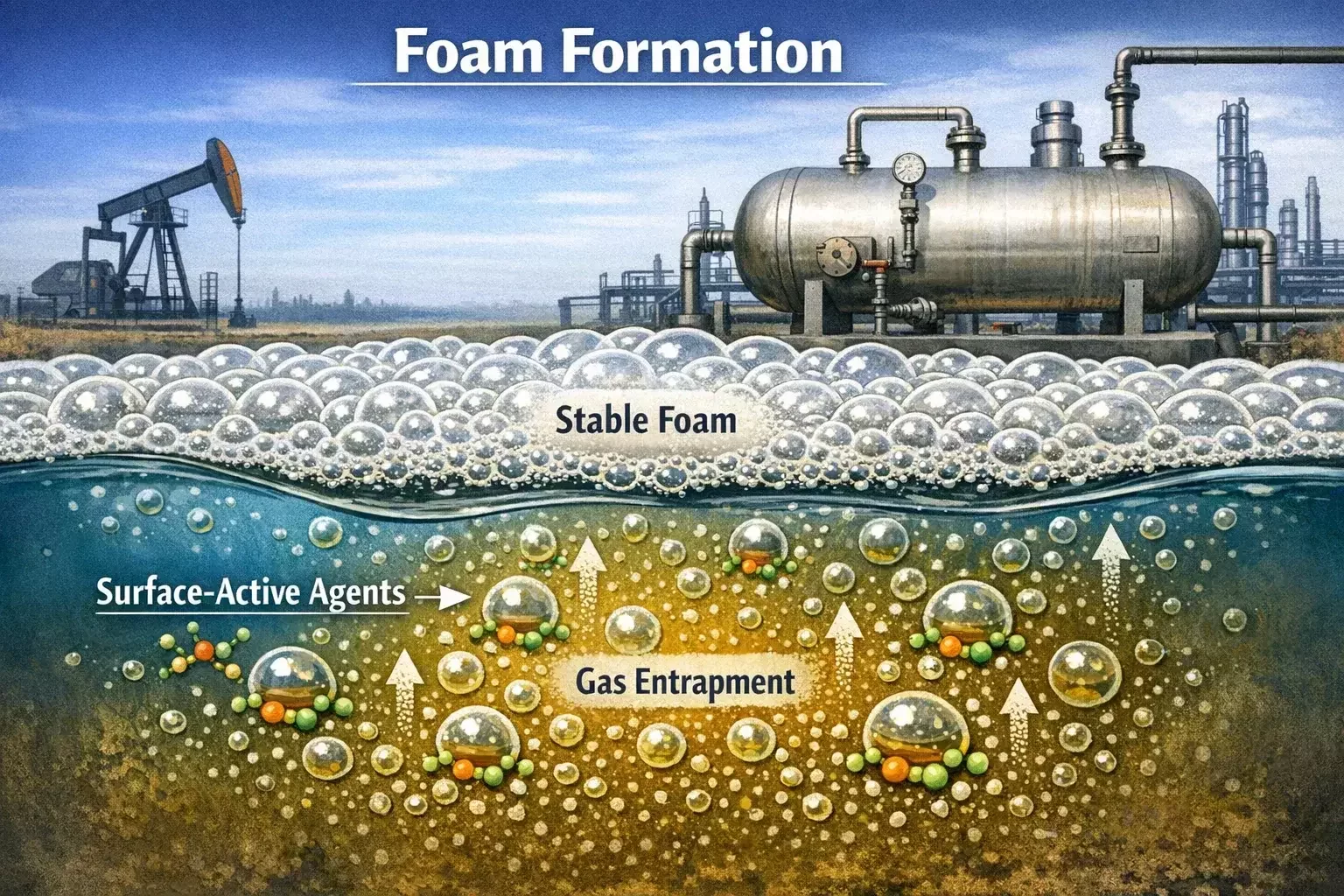
Understanding Foam Formation
Foam is essentially a dispersion of gas bubbles within a liquid, stabilized by surface-active agents such as surfactants. These agents reduce surface tension and create a film around gas bubbles, preventing them from collapsing.
In industrial systems, foam formation is often triggered by:
High agitation or turbulence
Presence of surfactants or organic compounds
Gas entrainment during processing
Temperature and pressure variations
Once formed, foam can become stable and persistent, making it difficult to remove without chemical intervention.
What Are Silicone-Based Defoamers?
Silicone-based defoamers are specialized chemical formulations designed to break and prevent foam formation. They are typically composed of polydimethylsiloxane (PDMS) oils combined with silica or other carriers that enhance performance.
The key advantage of silicone-based systems lies in their low surface tension and spreading capability, which allows them to rapidly penetrate foam films and destabilize them.
Unlike conventional defoamers, silicone-based products are effective at very low concentrations and maintain performance across a wide range of operating conditions.
How Silicone Defoamers Work
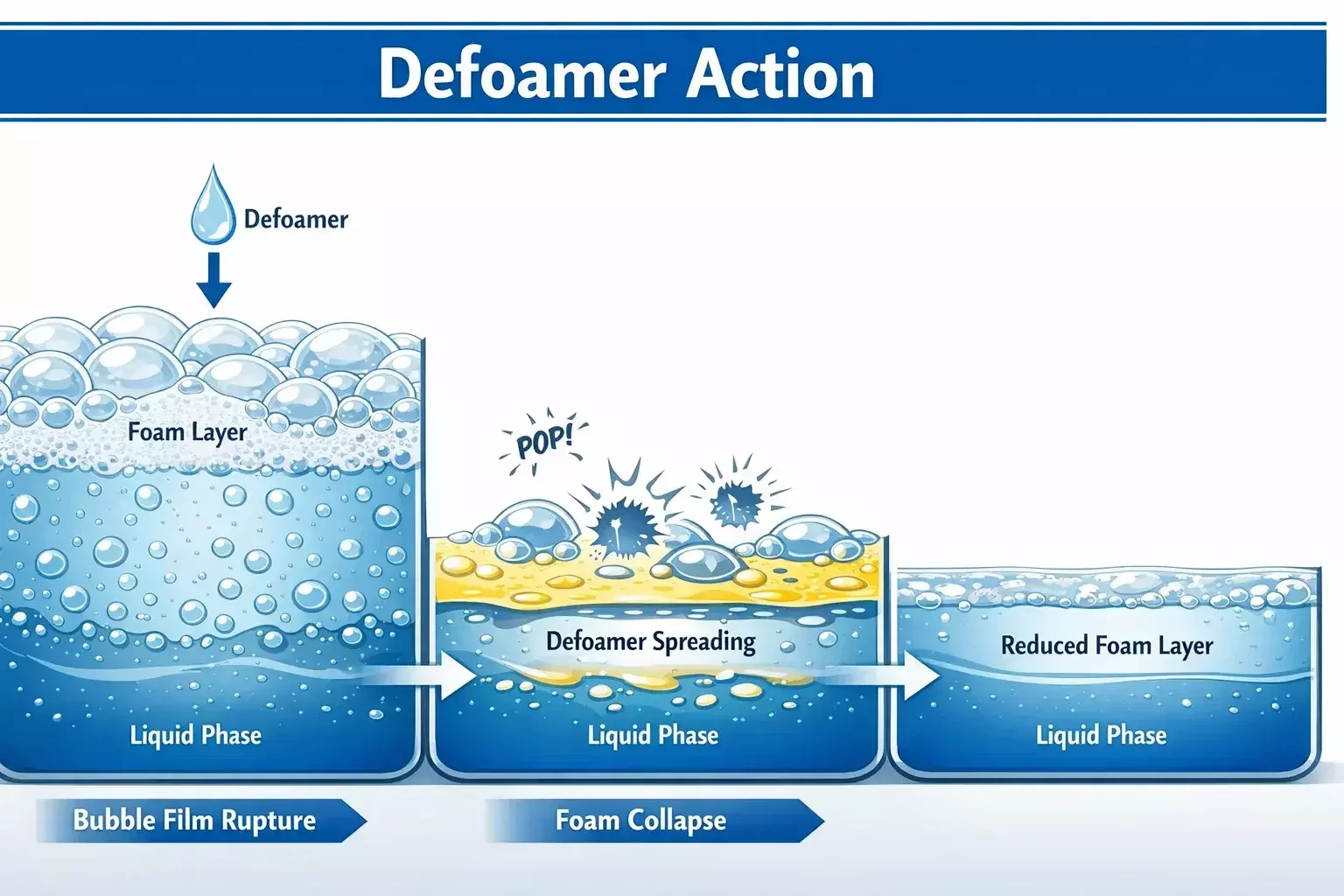
The mechanism of silicone-based defoamers is based on disrupting the stability of foam films.
When added to a foaming system, the defoamer spreads across the surface of the foam and penetrates the liquid film surrounding gas bubbles. This weakens the film and causes it to rupture, leading to the collapse of foam.
Additionally, silicone defoamers prevent the formation of new foam by reducing the stability of surface-active films. This dual action—foam breaking and foam prevention—makes them highly efficient.
Role in Oilfield and Industrial Applications
In oil and gas operations, silicone-based defoamers are widely used in:
Drilling fluids to control entrained air and foam formation
Cementing systems to ensure uniform slurry density
Separation units to improve oil-water separation efficiency
Production systems where foam can disrupt flow and processing
Their chemical stability allows them to perform effectively in high-temperature and high-pressure environments, making them suitable for challenging oilfield conditions.
Why Silicone-Based Defoamers Stand Out
Compared to other types of defoamers, silicone-based formulations offer several advantages.
They provide rapid foam knockdown, ensuring immediate control in critical processes. Their effectiveness at low dosage reduces chemical consumption and operational costs.
They are also highly stable, maintaining performance in extreme temperatures, varying pH levels, and complex fluid systems.
These characteristics make silicone-based defoamers a preferred choice in industries where reliability and efficiency are essential.
Understanding Formulation Complexity
Silicone-based defoamers are not single-component products—they are carefully engineered formulations designed to perform under specific process conditions. Their effectiveness depends not only on silicone oil content but also on how the formulation is structured, dispersed, and stabilized within the system.
Different industrial applications require different defoamer designs. A formulation that performs well in drilling fluids may not be suitable for cementing or separation systems. Therefore, understanding the types and formulation strategies is critical for achieving optimal performance.
Types of Silicone-Based Defoamers
Silicone defoamers are broadly classified based on how they are delivered and how they interact with the system.
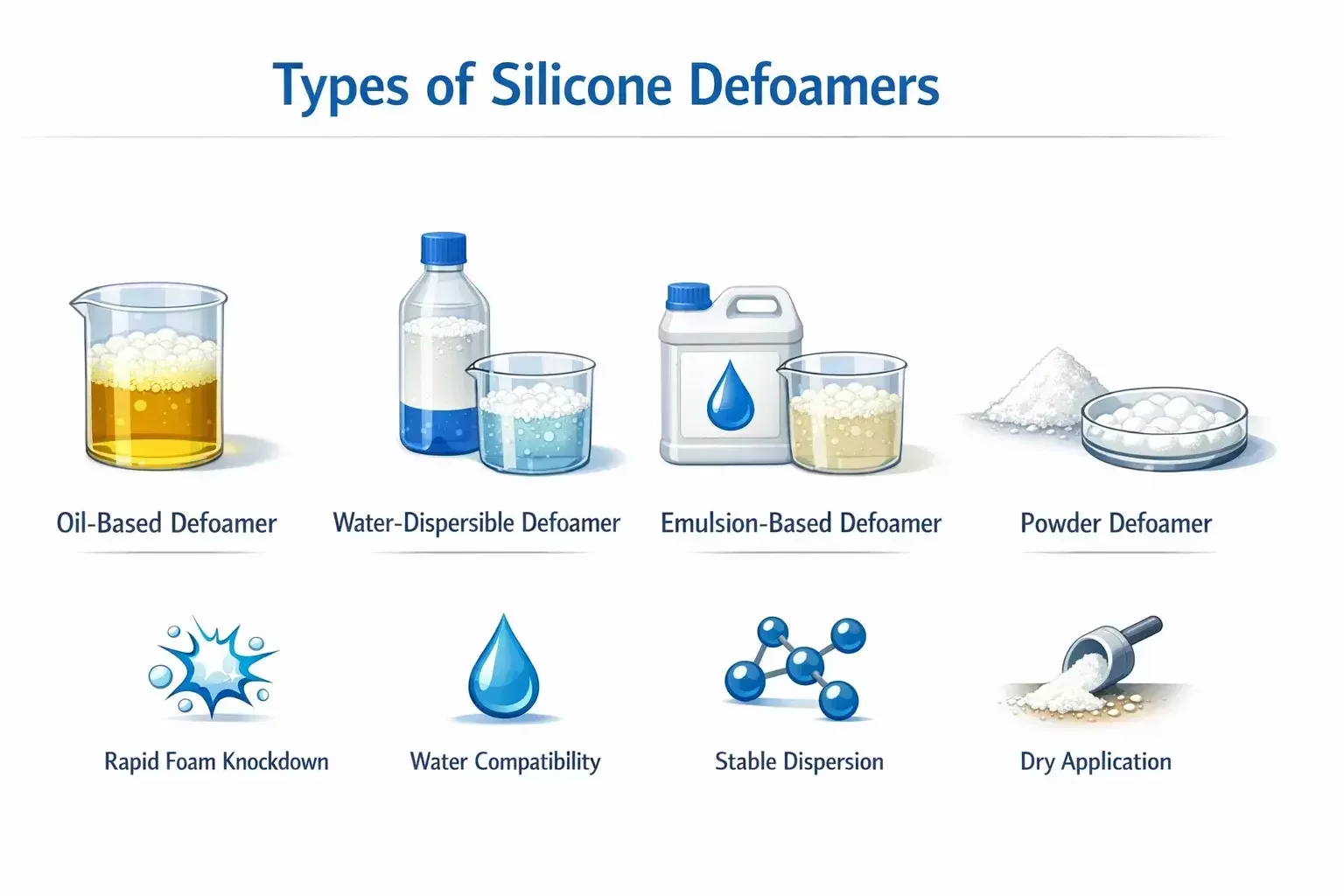
Oil-Based Silicone Defoamers
Oil-based formulations consist primarily of silicone oil, often combined with hydrophobic silica. These are highly effective in non-aqueous or low-water systems.
Their strong spreading ability allows rapid foam collapse, making them suitable for applications where immediate foam knockdown is required. However, their dispersion in water-based systems can be limited without proper formulation support.
Water-Dispersible Silicone Defoamers
These formulations are designed for aqueous systems and are commonly used in oilfield and industrial processes involving water-based fluids.
They contain emulsified silicone droplets that can disperse evenly throughout the fluid. This improves compatibility and ensures consistent foam control across the system.
Water-dispersible defoamers are particularly useful in drilling fluids, wastewater treatment, and separation processes.
Emulsion-Based Silicone Defoamers
Emulsion defoamers are among the most widely used types due to their versatility. They consist of silicone oil dispersed in water with the help of emulsifiers.
This structure allows easy handling, uniform distribution, and effective performance in a variety of systems. Emulsion-based defoamers provide a balance between rapid foam control and long-term stability.
Powdered Silicone Defoamers
In certain applications, silicone defoamers are available in powder form. These are typically used in dry mixes such as cement additives or powdered chemical formulations.
When introduced into the system, they activate and provide foam control without affecting the overall composition of the mix.
Key Components in Defoamer Formulations
The performance of silicone-based defoamers depends on the interaction of multiple components within the formulation.
Silicone oil (such as PDMS) acts as the primary active ingredient responsible for foam destabilization. Its low surface tension enables rapid spreading across foam films.
Hydrophobic silica particles enhance the defoaming action by promoting film rupture and improving efficiency.
Emulsifiers or dispersing agents ensure that the defoamer is evenly distributed within the system, especially in water-based applications.
Carriers and stabilizers are used to maintain formulation integrity and ensure consistent performance during storage and application.
Each component plays a specific role, and their balance determines overall effectiveness.
Performance Factors Influencing Defoamer Efficiency
The efficiency of silicone-based defoamers is influenced by several operational and environmental factors.
Temperature
High temperatures can affect both foam stability and defoamer performance. Silicone-based systems are generally stable under elevated temperatures, making them suitable for demanding oilfield applications.
However, extreme conditions may require specially designed formulations to maintain effectiveness.
Fluid Composition
The presence of surfactants, oils, salts, and other chemicals in the system can influence defoamer performance. Compatibility with the base fluid is essential to ensure proper dispersion and action.
Incompatible formulations may lead to reduced efficiency or separation issues.
Mixing and Shear Conditions
The way a defoamer is introduced into the system affects its performance. High shear conditions can break down emulsions, while inadequate mixing may prevent proper distribution.
Optimizing dosing methods and mixing conditions is therefore critical.
Foam Characteristics
Not all foams behave the same way. Some are highly stable and require strong defoaming action, while others are easier to control.
Understanding the nature of the foam—its stability, bubble size, and formation rate—helps in selecting the right defoamer formulation.
Balancing Immediate and Long-Term Performance
An effective defoamer must provide both rapid foam knockdown and long-term foam suppression.
Some formulations excel at breaking foam quickly but may not prevent its reformation. Others provide sustained control but act more slowly.
The ideal solution balances these two aspects, ensuring consistent performance throughout the process.
Importance of Application-Specific Design
There is no universal defoamer suitable for all applications. Each system requires a tailored formulation based on process conditions, fluid composition, and operational requirements.
For example, drilling fluids require defoamers that can withstand high shear and temperature, while cementing systems need products that do not interfere with slurry properties.
This makes formulation design a critical factor in achieving reliable foam control.
From Formulation to Field Performance
While silicone-based defoamers are designed for high efficiency in controlled environments, their real performance is tested in dynamic field conditions. Industrial and oilfield systems involve constant changes in temperature, pressure, fluid composition, and flow behavior.
Foam formation in such environments is rarely predictable. It can fluctuate rapidly based on operational conditions, making foam control a continuous challenge rather than a one-time solution.
The effectiveness of silicone defoamers therefore depends not only on formulation, but also on how they are applied, monitored, and optimized in real time.Field Applications of Silicone-Based Defoamers
Silicone defoamers are widely used across various stages of oilfield and industrial operations, where foam can disrupt performance and reduce efficiency.
In drilling operations, foam can form due to high circulation rates and the presence of surfactants in drilling fluids. Silicone defoamers help maintain fluid stability, ensuring accurate density and efficient cuttings transport.
In cementing systems, foam can lead to inconsistent slurry density and poor cement placement. Defoamers ensure uniform slurry behavior, which is critical for achieving proper zonal isolation.
In production and separation systems, foam formation can interfere with oil-water separation and reduce processing efficiency. Silicone defoamers enable faster phase separation and stable operations.
In wastewater and industrial processing units, foam can cause overflow, reduce capacity, and disrupt treatment efficiency. Defoamers help maintain smooth and controlled processing conditions.
Operational Challenges in Foam Control
Despite their effectiveness, silicone-based defoamers face several challenges in field applications.
Variability in Foam Generation
Foam formation is influenced by multiple factors, including fluid composition, agitation, and gas presence. Sudden changes in these conditions can lead to unpredictable foam behavior.
This variability makes it difficult to maintain consistent foam control without continuous monitoring.
Overdosing and Underdosing
Incorrect dosing is a common issue in defoamer application. Underdosing may fail to control foam effectively, while overdosing can lead to excessive chemical consumption and potential process interference.
Achieving the right balance requires careful evaluation of system conditions and foam intensity.
Compatibility Issues
Defoamers must be compatible with the fluid system in which they are used. Incompatible formulations can separate, lose effectiveness, or interfere with other chemical additives.
This is particularly important in complex systems such as drilling fluids and production streams.
High Shear and Harsh Conditions
In high-shear environments, such as drilling circulation systems, defoamer droplets can break down, reducing their effectiveness.
Similarly, extreme temperatures and pressures can affect formulation stability, requiring specially designed products for such conditions.
Monitoring and Control Strategies
Effective foam control requires continuous monitoring of system behavior. Operators must track foam formation trends and adjust chemical dosing accordingly.
Visual observation, process indicators, and performance metrics such as separation efficiency and fluid stability are used to evaluate defoamer effectiveness.
In advanced systems, automated dosing and real-time monitoring technologies help maintain optimal foam control without manual intervention.
Optimization Techniques for Consistent Performance
To achieve reliable foam control, silicone defoamer systems must be optimized based on operational conditions.
Controlled Dosing
Maintaining the correct dosage is essential for balancing foam suppression and cost efficiency. Dosing strategies may be adjusted based on real-time system behavior.
Proper Dispersion
Ensuring uniform distribution of the defoamer within the system enhances its effectiveness. This may involve optimizing injection points and mixing conditions.
Application-Specific Selection
Selecting the right formulation for each application is critical. For example, high-temperature systems require thermally stable defoamers, while aqueous systems require well-dispersible formulations.
Integration with Process Design
Foam control should be integrated into the overall process design rather than treated as an isolated issue. This ensures that defoamers work in harmony with other system components.
The Importance of System-Level Thinking
Foam control is not just about eliminating bubbles—it is about maintaining process stability and efficiency.
In oilfield and industrial systems, foam interacts with multiple process variables, including fluid dynamics, chemical composition, and equipment performance.
A system-level approach ensures that defoamers contribute to overall operational efficiency rather than acting as a reactive solution.
Beyond Foam Control: Driving Process Efficiency
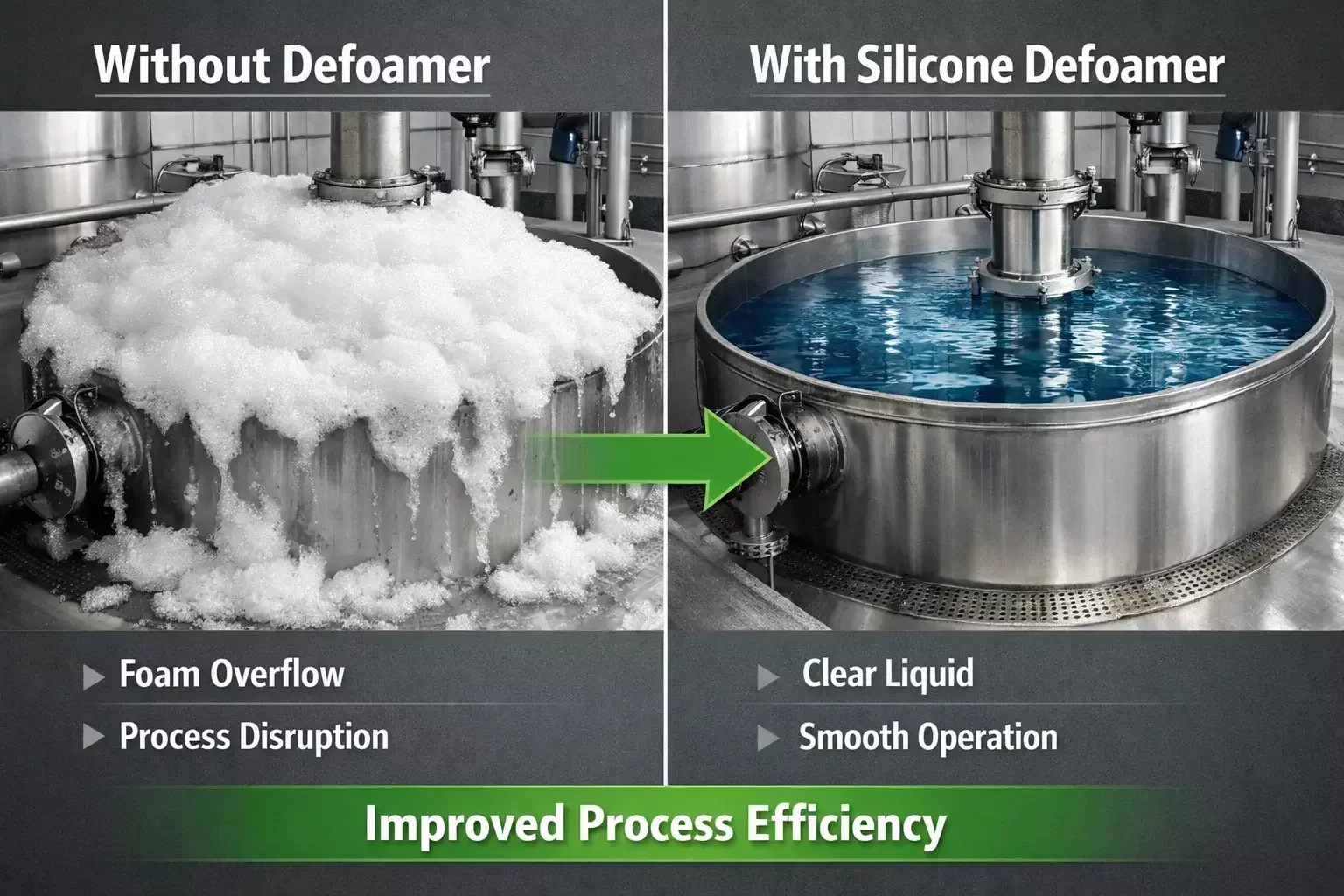
Silicone-based defoamers are often introduced as a solution to foam—but their impact goes far beyond simply breaking bubbles. In industrial and oilfield systems, effective foam control directly translates into process stability, operational efficiency, and improved output quality.
By preventing foam-related disruptions, these defoamers help maintain consistent flow behavior, accurate fluid measurements, and reliable equipment performance. This makes them a critical component in ensuring smooth and uninterrupted operations.
Operational Benefits of Silicone-Based Defoamers
One of the most immediate benefits of silicone-based defoamers is their ability to deliver rapid foam knockdown. This ensures that sudden foam surges do not interfere with critical processes such as separation, pumping, or mixing.
In addition to speed, these defoamers provide long-lasting foam suppression, preventing the reformation of foam over time. This dual action reduces the need for repeated chemical dosing and enhances overall system efficiency.
Their effectiveness at low concentrations is another key advantage. Because only small quantities are required, operators can achieve significant results without excessive chemical usage.
Furthermore, silicone-based defoamers are highly versatile. They perform reliably across a wide range of temperatures, pressures, and fluid compositions, making them suitable for complex industrial environments.
Economic Advantages in Industrial Operations
From an economic perspective, silicone-based defoamers contribute to cost optimization in multiple ways.
By controlling foam, they reduce operational disruptions such as overflow, equipment fouling, and inefficient separation. This leads to fewer shutdowns and lower maintenance costs.
Improved process efficiency also translates into better resource utilization. For example, in separation systems, effective foam control enhances oil-water separation, improving product recovery and reducing losses.
Additionally, the low dosage requirement of silicone defoamers reduces chemical consumption, further lowering operational expenses.
While the initial cost of silicone-based products may be higher than conventional defoamers, their performance efficiency often results in a lower total cost of operation.
Sustainability and Environmental Considerations
As industries move toward more sustainable practices, the environmental profile of chemical additives has become increasingly important.
Silicone-based defoamers offer several sustainability advantages. Their high efficiency means less chemical usage, reducing the overall environmental footprint.
Modern formulations are being developed with improved biodegradability and reduced toxicity, aligning with stricter environmental regulations.
In addition, by improving process efficiency, these defoamers help reduce waste generation and energy consumption. For example, efficient foam control in separation systems minimizes reprocessing and enhances operational throughput.
However, responsible usage remains essential. Proper dosing and formulation selection are necessary to ensure that environmental benefits are fully realized without unintended side effects.
Challenges in Sustainability Claims
While silicone-based defoamers are often positioned as sustainable solutions, it is important to evaluate their performance in context.
Their environmental impact depends on factors such as formulation design, application method, and disposal practices. In some cases, improper use or overdosage can offset potential benefits.
Therefore, sustainability in foam control is not just about the product—it is about how effectively it is integrated into the overall system.
Future Trends in Defoamer Technology
The future of silicone-based defoamers is being shaped by advancements in material science, process engineering, and environmental innovation.
One of the key trends is the development of next-generation silicone formulations that offer enhanced performance with improved environmental compatibility. These formulations aim to deliver high efficiency while meeting evolving regulatory standards.
Another emerging area is the use of hybrid defoamer systems, combining silicone with other chemical technologies to achieve optimized performance across diverse conditions.
Digitalization is also influencing foam control strategies. Real-time monitoring and automated dosing systems enable more precise control of defoamer application, improving efficiency and reducing waste.
Research into nanotechnology and advanced dispersion techniques is further expanding the potential of defoamer systems, allowing for better distribution and performance at even lower concentrations.
Strategic Importance in Modern Operations
In today’s industrial landscape, foam control is not a secondary concern—it is a core operational requirement.
Silicone-based defoamers play a strategic role in maintaining system stability, improving efficiency, and supporting sustainable operations. Their ability to perform under challenging conditions makes them indispensable in modern oilfield and industrial processes.
Conclusion
Silicone-based defoamers represent a powerful solution to one of the most persistent challenges in industrial operations. By effectively controlling foam, they enable smoother processes, reduce operational risks, and improve overall efficiency.
Their advantages in performance, cost optimization, and sustainability position them as a preferred choice in demanding applications. However, their true value lies in how well they are selected, applied, and integrated into the system.
As technology continues to evolve, silicone-based defoamers are expected to become even more advanced, efficient, and environmentally aligned—playing a key role in the future of industrial process optimization.
FAQs
1. What are silicone-based defoamers?
Silicone-based defoamers are chemical additives used to break and prevent foam formation in industrial and oilfield processes by destabilizing foam bubbles.
2. How do silicone defoamers work?
They spread across foam surfaces, penetrate bubble films, and cause them to rupture, leading to rapid foam collapse and prevention of reformation.
3. Where are silicone defoamers used in oil and gas?
They are used in drilling fluids, cementing systems, production facilities, and separation units to control foam and improve process efficiency.
4. What is PDMS in defoamers?
Polydimethylsiloxane (PDMS) is the primary silicone compound used in defoamers, known for its low surface tension and high spreading ability.
5. What are the advantages of silicone-based defoamers?
They offer fast foam knockdown, low dosage requirement, stability under extreme conditions, and long-lasting performance.
6. Are silicone defoamers suitable for high-temperature environments?
Yes, they are highly stable and effective in high-temperature and high-pressure conditions, making them ideal for oilfield applications.
7. What factors affect defoamer performance?
Performance depends on temperature, fluid composition, mixing conditions, foam stability, and compatibility with the system.
8. Can overdosing defoamers cause issues?
Yes, excessive dosing can lead to inefficiency, increased cost, and potential interference with other chemical processes.
9. Are silicone-based defoamers environmentally safe?
Modern formulations are designed to be more environmentally friendly, with improved biodegradability and reduced toxicity.
10. How are silicone defoamers selected for applications?
Selection depends on process conditions, fluid type, temperature, compatibility, and the nature of foam formation.



