
Introduction
Oil and gas drilling is one of the most complex engineering operations in the energy sector. Beneath every successful well lies a carefully designed drilling fluid system—commonly known as drilling mud—that ensures safe, efficient, and controlled drilling.
At the heart of these fluid systems are mud chemicals, which play a critical role in maintaining wellbore stability, controlling pressure, and optimizing drilling performance. Without these chemical additives, drilling operations would face severe challenges, including formation collapse, fluid loss, and inefficient cuttings removal.
As drilling moves into deeper, more complex, and high-pressure environments, the importance of mud chemistry has grown significantly. Today, mud chemicals are not just supporting components—they are strategic enablers of drilling success.
What Are Mud Chemicals?
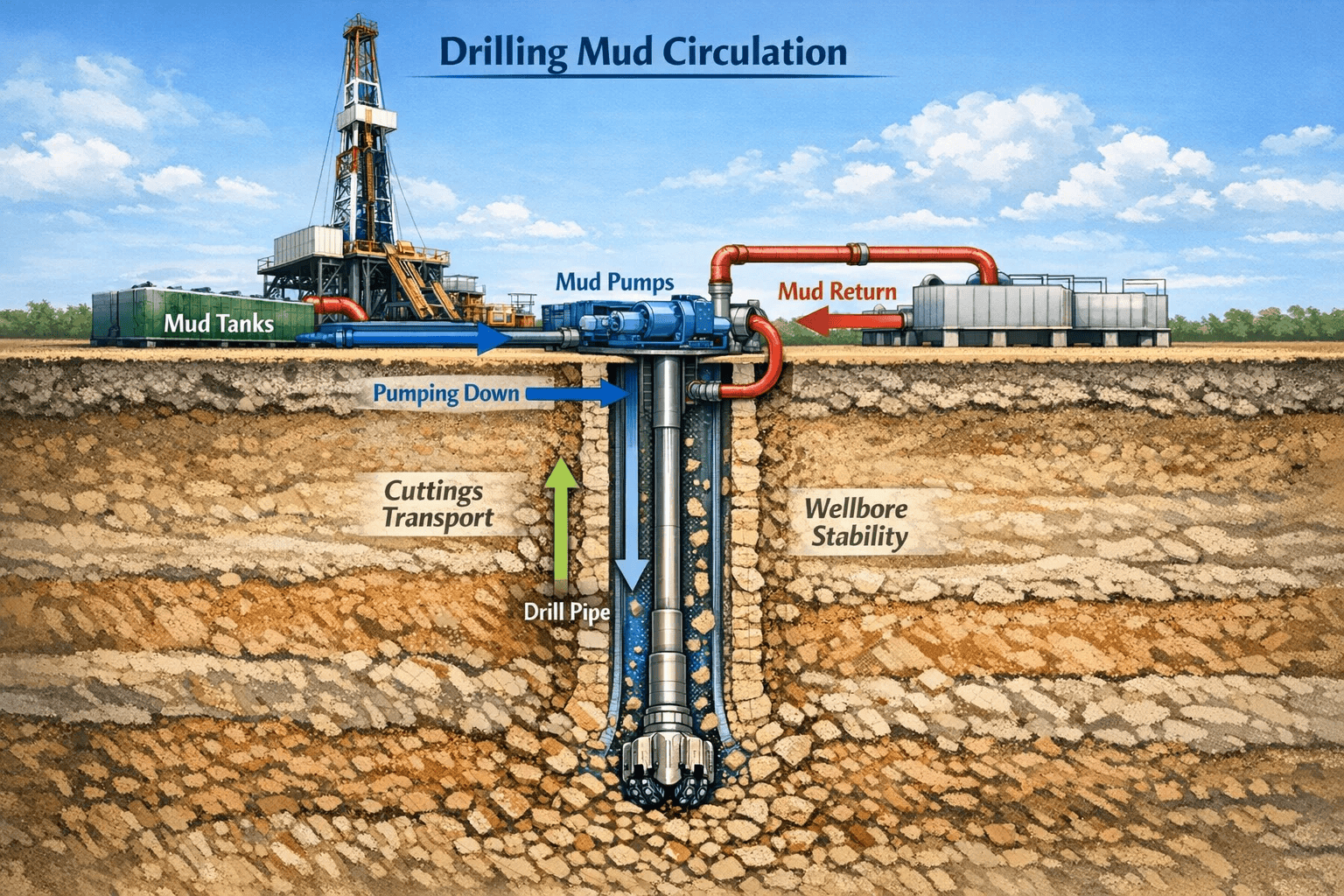
Mud chemicals are specialized additives used in drilling fluids to modify and control their physical and chemical properties. These additives are carefully selected and blended to create a fluid system that meets specific operational and geological requirements.
Drilling mud itself is a mixture of base fluid (water, oil, or synthetic), solids, and chemical additives. The role of mud chemicals is to enhance the performance of this system by controlling viscosity, density, filtration, pH, and stability.
Rather than serving a single purpose, mud chemicals function as a multi-component system, where each additive contributes to overall drilling efficiency.
Core Functions of Drilling Fluids
To understand the role of mud chemicals, it is important to first examine the functions of drilling fluids in general. These fluids are responsible for multiple critical tasks during drilling operations.
One of their primary functions is wellbore stabilization. As drilling progresses, the exposed formation must remain intact. Drilling fluids create a hydrostatic pressure that prevents collapse and supports the wellbore walls.
Another key function is cuttings transport. As the drill bit breaks the rock, the generated cuttings must be carried to the surface. Proper fluid viscosity and rheology ensure efficient lifting of these particles.
Drilling fluids also play a crucial role in pressure control. By adjusting fluid density, operators can balance formation pressure and prevent dangerous events such as blowouts.
Additionally, these fluids help in cooling and lubricating the drill bit, reducing wear and improving drilling efficiency.
Mud chemicals are essential in enabling all these functions.
Why Mud Chemicals Are Critical in Modern Drilling
In earlier drilling operations, simple fluid systems were often sufficient. However, modern wells involve challenging conditions such as high pressure, high temperature (HPHT), complex geology, and extended reach drilling.
Under these conditions, untreated drilling fluids cannot perform effectively. Mud chemicals are required to:
Maintain fluid stability under extreme temperatures
Control fluid loss into permeable formations
Prevent clay swelling and shale instability
Optimize rheological properties for efficient drilling
The absence of proper chemical treatment can lead to severe operational issues, including stuck pipe, wellbore collapse, and excessive non-productive time (NPT).
Key Categories of Mud Chemicals
Mud chemicals are categorized based on their function within the drilling fluid system. Each category addresses a specific aspect of drilling performance.
Viscosifiers and Rheology Modifiers
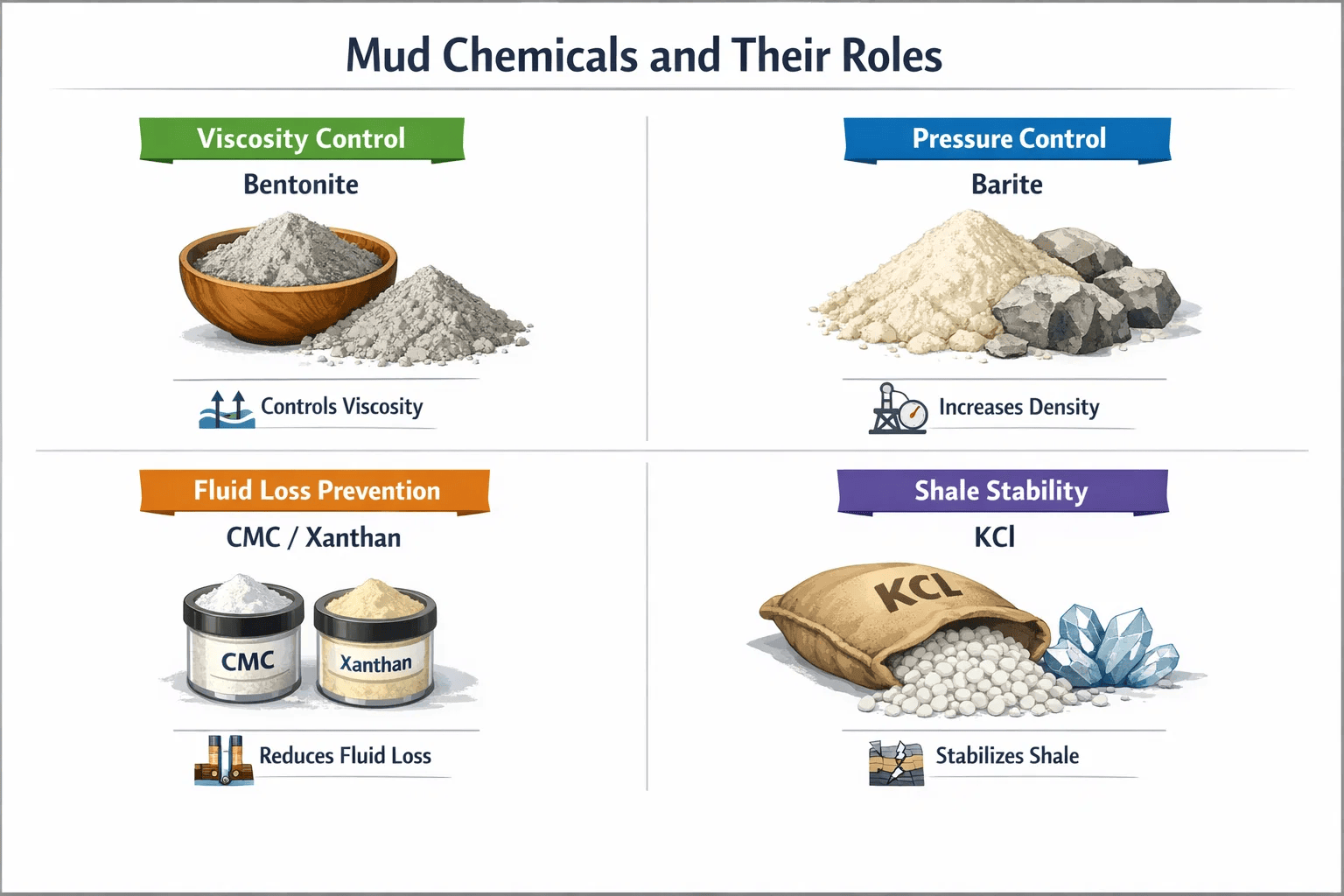
Viscosifiers such as bentonite, xanthan gum, and guar gum are used to control the thickness and flow behavior of drilling fluids. These additives ensure that the fluid can effectively carry cuttings to the surface while maintaining suspension when circulation stops.
Proper rheology is essential for maintaining drilling efficiency and preventing cuttings from settling at the bottom of the well.
Weighting Agents
Weighting materials such as barite are added to increase the density of drilling fluids. This helps maintain hydrostatic pressure and prevents the influx of formation fluids into the wellbore.
Accurate density control is critical for well control and safety during drilling operations.
Fluid Loss Control Additives
Additives such as calcium carbonate and certain polymers help reduce fluid loss into the formation. They form a thin filter cake on the wellbore wall, preventing excessive fluid invasion.
This not only protects the formation but also maintains the stability of the drilling fluid system.
pH and Alkalinity Control Chemicals
Chemicals like soda ash, sodium hydroxide, and sodium bicarbonate are used to control the pH of drilling fluids. Proper pH levels ensure chemical stability and enhance the performance of other additives.
Maintaining alkalinity also helps prevent corrosion and improves overall fluid behavior.
Shale Stabilizers
Clay-rich formations can swell or disperse when exposed to water-based fluids, leading to wellbore instability. Chemicals such as potassium chloride (KCl) and calcium chloride are used to stabilize these formations.
These additives reduce clay hydration and help maintain structural integrity.
The Interconnected Nature of Mud Chemistry
One of the most important aspects of mud chemicals is that they do not operate independently. Each additive interacts with others, and the overall performance depends on how well the system is balanced.
For example, increasing fluid density using weighting agents may affect rheology, requiring adjustments with viscosifiers. Similarly, changes in pH can influence the effectiveness of fluid loss additives.
This interconnected nature makes mud system design a highly specialized process that requires continuous monitoring and adjustment.
Expanding the Role of Mud Chemistry
In drilling operations, mud chemicals are not just supportive additives—they are the core drivers of drilling fluid performance. Each chemical is selected to address a specific operational challenge, and together they create a system capable of adapting to changing downhole conditions.
Understanding the functional roles of these chemicals in detail is essential for designing efficient and stable drilling fluid systems.
Viscosifiers and Rheology Modifiers
One of the most critical aspects of drilling fluid performance is its rheology, which determines how the fluid flows under different conditions.
Bentonite is one of the most widely used viscosifiers in water-based drilling fluids. It hydrates in water to form a gel-like structure, providing the necessary viscosity to suspend and transport drill cuttings. Its ability to maintain suspension when circulation stops is particularly important in preventing cuttings from settling at the bottom of the well.
In more advanced systems, polymers such as xanthan gum and guar gum are used to fine-tune rheological properties. These additives enhance low-shear viscosity, improving hole cleaning efficiency without significantly increasing pumping requirements.
Together, these chemicals ensure that drilling fluids maintain the right balance between flow and suspension.
Weighting Agents for Pressure Control
Maintaining proper hydrostatic pressure is essential for well control. Weighting agents are added to drilling fluids to achieve the desired density.
Barite is the most commonly used weighting material due to its high specific gravity and chemical stability. By increasing fluid density, barite helps counter formation pressure and prevents the influx of formation fluids into the wellbore.
Accurate density control is critical. Excessive density can fracture the formation, while insufficient density can lead to well control issues. Therefore, barite must be carefully managed to maintain the optimal pressure balance.
Fluid Loss Control Additives
During drilling, fluid loss into permeable formations can lead to formation damage and instability. Fluid loss control additives are used to minimize this issue.
Calcium carbonate is commonly used as a bridging agent that plugs pore spaces and forms a thin, low-permeability filter cake on the wellbore wall. This reduces fluid invasion while maintaining wellbore stability.
Polymers such as Carboxymethyl Cellulose (CMC) further enhance fluid loss control by increasing the viscosity of the filtrate and strengthening the filter cake structure.
These additives play a crucial role in protecting both the formation and the drilling fluid system.
Shale Stabilizers and Clay Inhibitors
Shale formations present one of the most significant challenges in drilling operations. When exposed to water-based fluids, clay minerals can absorb water, swell, and disintegrate, leading to wellbore instability.
Potassium chloride (KCl) is widely used as a shale stabilizer. It works by inhibiting clay hydration, reducing swelling, and maintaining the structural integrity of the formation.
Calcium chloride is another effective inhibitor that enhances stability in reactive formations. These chemicals help prevent issues such as sloughing, hole enlargement, and stuck pipe incidents.
pH Control and Alkalinity Management
The chemical stability of drilling fluids depends heavily on maintaining the correct pH level. pH control additives ensure that the fluid system remains stable and compatible with other chemicals.
Sodium hydroxide and soda ash are commonly used to adjust alkalinity. Proper pH levels improve the performance of polymers, reduce corrosion, and enhance overall fluid behavior.
Maintaining the right chemical environment is essential for ensuring that all additives function effectively.
Lubricants and Friction Reducers
As drilling operations become more complex, especially in directional and horizontal wells, friction between the drill string and wellbore increases.
Additives such as graphite are used to reduce friction and torque, improving drilling efficiency and reducing wear on equipment. These lubricants help maintain smooth drilling operations, particularly in extended reach wells.
Specialty Additives for Enhanced Performance
In addition to core additives, several specialty chemicals are used to address specific challenges.
Drilling detergents help clean the wellbore and improve drilling efficiency by preventing the buildup of sticky materials. Sodium silicate is used as a sealing agent to stabilize weak formations and control fluid loss.
Mica flakes are often used to bridge fractures and prevent lost circulation in highly fractured zones. These additives provide targeted solutions for complex drilling environments.
The Importance of Chemical Balance
The effectiveness of mud chemicals depends not only on individual performance but also on how well they work together. Each additive influences the behavior of others, making system balance a critical factor.
For example, increasing viscosity to improve cuttings transport may require adjustments in fluid loss control to maintain stability. Similarly, changes in pH can affect polymer performance and overall fluid behavior.
This interdependence highlights the importance of continuous monitoring and real-time adjustments in drilling fluid systems.From Design to Reality: Mud Systems in the Field
While mud systems are carefully designed in labs and planning stages, their real test begins in the field. Drilling environments are dynamic—formation properties change with depth, pressure conditions fluctuate, and unexpected geological challenges often arise.
Mud chemicals must therefore perform in real-time conditions, adapting continuously to maintain drilling efficiency and wellbore stability.
The success of a drilling operation depends not just on the selection of chemicals, but on how effectively they are applied and managed during drilling.
Field Application of Mud Chemicals
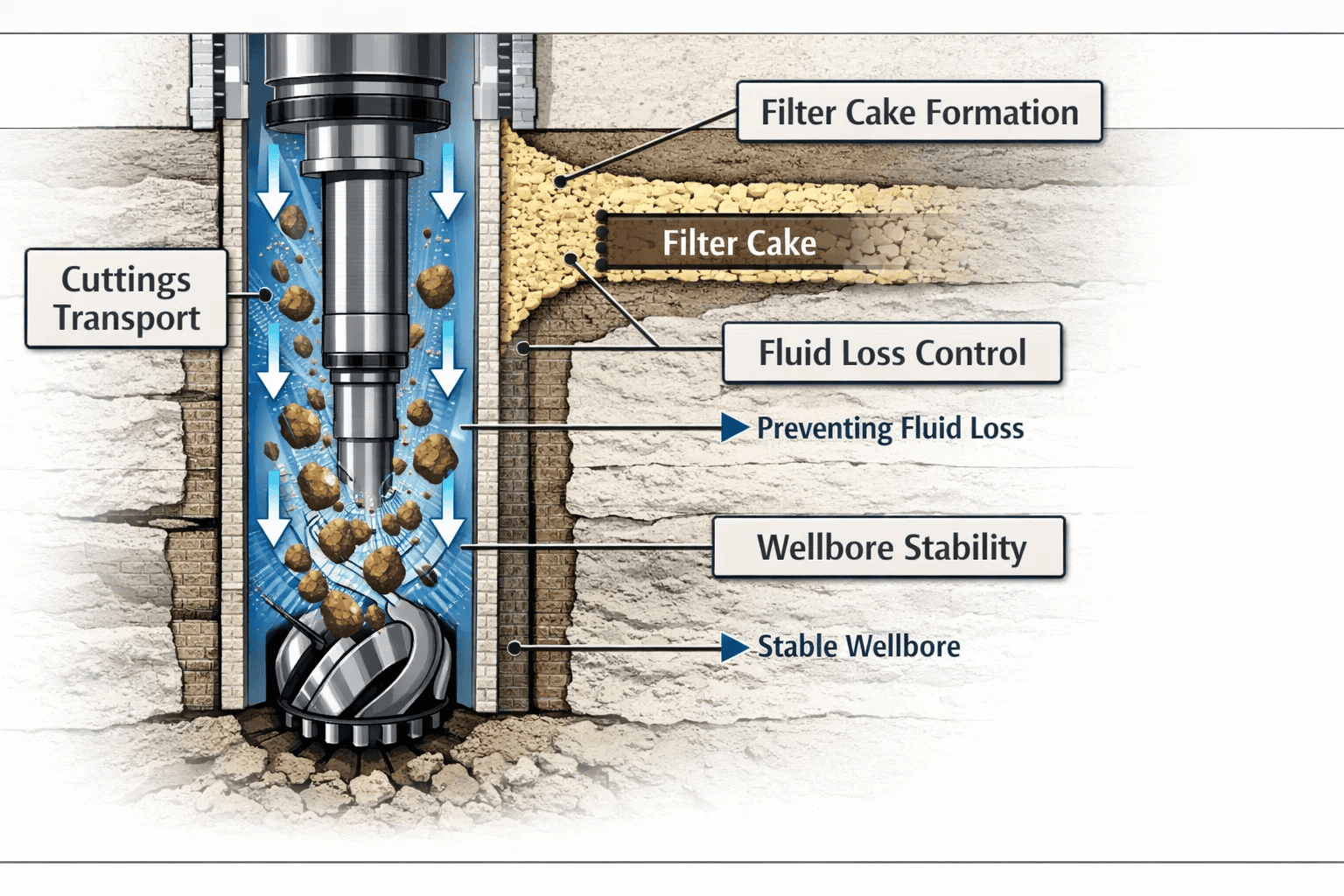
In actual drilling operations, mud systems are continuously circulated from the surface to the wellbore and back. During this process, mud engineers monitor and adjust chemical properties to match downhole conditions.
At the surface, mud is mixed with required additives based on the drilling program. As drilling progresses, samples are regularly tested to evaluate properties such as viscosity, density, filtration, and pH.
When changes are observed—such as increased fluid loss, reduced viscosity, or instability—appropriate chemicals are added to restore balance.
For example, when drilling through reactive shale, additional shale inhibitors like potassium chloride may be introduced to prevent swelling. Similarly, if fluid loss increases in a permeable formation, fluid loss additives such as calcium carbonate or polymers are adjusted.
This continuous optimization process ensures that the drilling fluid remains effective throughout the operation.
Operational Challenges in Mud Systems
Despite careful planning, several challenges can arise during drilling that directly impact mud performance.
Formation Variability
Reservoir formations are rarely uniform. Sudden changes in lithology, permeability, or pressure can disrupt the balance of the mud system.
For instance, encountering a highly permeable zone may lead to significant fluid loss, while drilling through reactive clay formations can cause wellbore instability.
These variations require rapid adjustments in mud chemistry to maintain control.
High Pressure and High Temperature (HPHT) Conditions
In deep wells, extreme temperature and pressure conditions can affect the stability of mud chemicals.
Polymers may degrade at high temperatures, reducing their effectiveness, while fluid properties may change under pressure. Selecting temperature-resistant chemicals and maintaining system stability becomes critical in such environments.
Lost Circulation
One of the most common drilling challenges is lost circulation, where drilling fluid is lost into fractures or highly permeable zones.
This not only increases operational cost but also reduces hydrostatic pressure, posing well control risks. Additives such as mica flakes and bridging materials are used to seal these zones and restore circulation.
Contamination of Drilling Fluids
Drilling fluids can become contaminated by formation fluids such as saltwater, hydrocarbons, or gases. This contamination can alter fluid properties and reduce effectiveness.
For example, high salinity can impact polymer performance, while gas influx can affect density and pressure control. Proper chemical treatment is required to mitigate these effects.
Monitoring and Control Systems
Effective mud management relies on continuous monitoring of fluid properties. Mud engineers use a combination of laboratory tests and real-time data to evaluate system performance.
Key parameters include viscosity, gel strength, density, filtration rate, and pH. These indicators help determine whether the mud system is performing as expected or requires adjustment.
Advanced drilling operations also utilize digital monitoring tools and sensors to track downhole conditions. This data-driven approach allows for faster decision-making and more precise chemical adjustments.
Optimization Strategies for Mud Systems
Maintaining an efficient mud system requires ongoing optimization throughout the drilling process.
Real-Time Chemical Adjustment
Mud properties must be continuously adjusted based on drilling conditions. This includes modifying additive concentrations, introducing new chemicals, or rebalancing the system to maintain performance.
Formation-Specific Design
Different formations require different mud systems. Customizing chemical formulations based on geological conditions improves efficiency and reduces operational risks.
Integration with Drilling Parameters
Mud performance is closely linked to drilling parameters such as rate of penetration, pump rate, and drill string rotation. Coordinating these factors ensures optimal drilling performance.
Preventive Approach
Rather than reacting to problems, modern drilling operations focus on preventing them. This includes designing robust mud systems that can handle expected challenges and implementing proactive monitoring strategies.
The Role of Expertise and Coordination
Successful mud management requires close coordination between drilling engineers, mud engineers, and field operators. Each decision—from chemical selection to real-time adjustments—impacts the overall drilling process.
This collaborative approach ensures that mud systems are aligned with operational goals and can adapt to changing conditions.
Enhancing Efficiency Beyond Basic Drilling
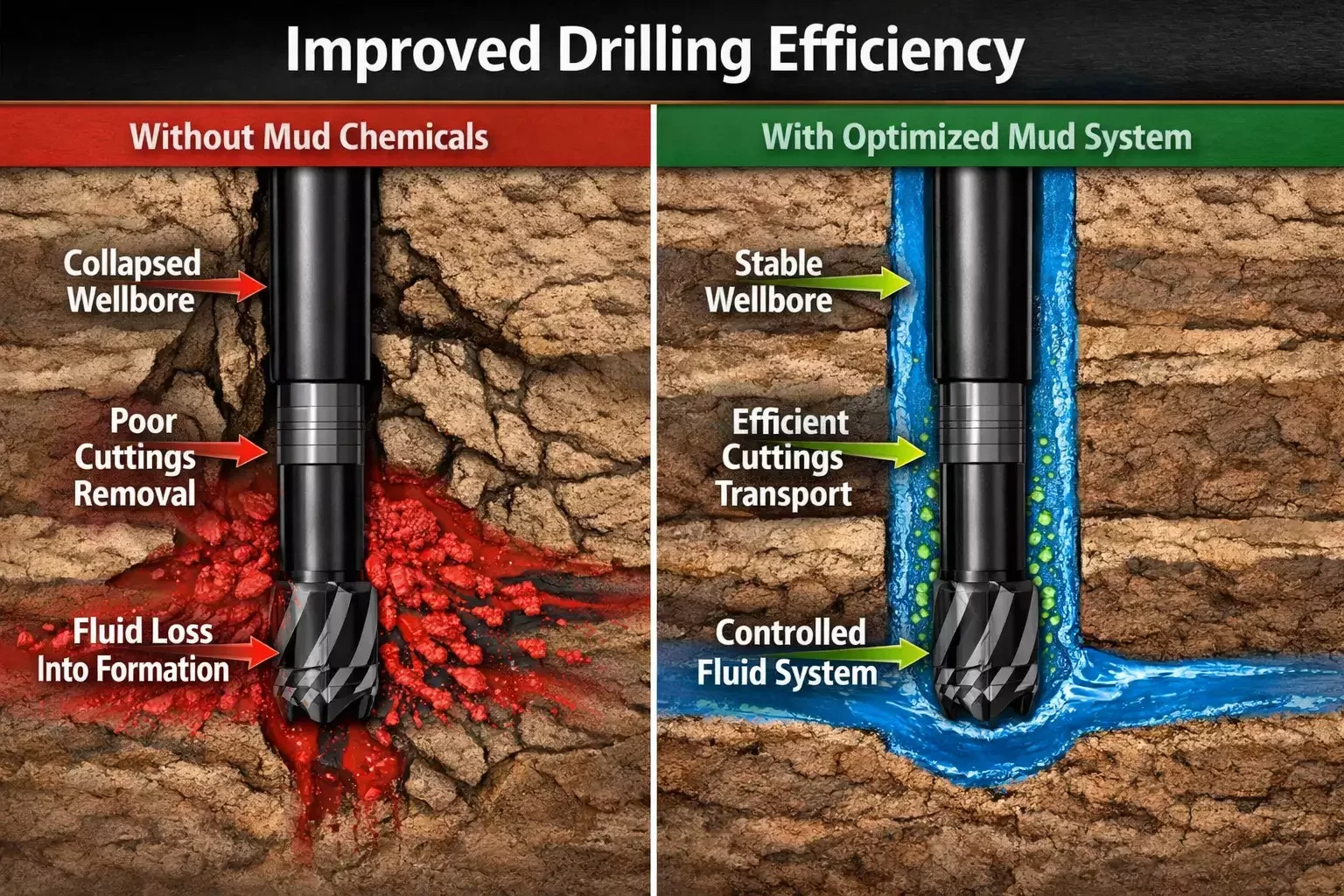
Mud chemicals are not just operational necessities—they are key drivers of drilling efficiency, safety, and cost optimization. As drilling environments become more complex, the ability of mud systems to adapt and perform under varying conditions directly influences the success of the entire operation.
From wellbore stability to pressure control and cuttings transport, mud chemicals ensure that drilling progresses smoothly while minimizing operational risks. Their role extends beyond support—they actively shape drilling performance.
Operational Benefits of Mud Chemicals
One of the most significant benefits of mud chemicals is their ability to maintain wellbore integrity. By stabilizing formations and preventing collapse, they reduce the risk of costly issues such as stuck pipe or hole enlargement.
Mud chemicals also improve drilling efficiency by optimizing fluid rheology. Properly designed mud systems enhance cuttings removal, reduce drag, and support higher rates of penetration.
Another important benefit is fluid loss control, which protects the formation and maintains drilling fluid stability. By forming an effective filter cake, mud chemicals prevent excessive fluid invasion and minimize formation damage.
Additionally, these chemicals contribute to equipment protection. By maintaining proper pH and chemical balance, they reduce corrosion and extend the lifespan of drilling equipment.Economic Impact on Drilling Operations
The economic value of mud chemicals is closely tied to their ability to reduce non-productive time (NPT). Drilling issues such as wellbore instability, lost circulation, and fluid contamination can lead to significant delays and increased costs.
By preventing these problems, mud chemicals help operators maintain consistent drilling performance and avoid costly interruptions.
Another key economic advantage is optimization of resource usage. Efficient mud systems reduce the need for excessive fluid consumption and minimize waste, contributing to overall cost savings.
Furthermore, improved drilling efficiency leads to shorter drilling timelines, allowing projects to be completed faster and more economically.
While the cost of chemical additives may seem significant, their contribution to reducing operational risks and improving performance makes them a high-value investment.
Role in Modern and Complex Drilling Environments
As the industry moves toward deeper wells, extended reach drilling, and unconventional resources, the role of mud chemicals continues to expand.
In high-pressure, high-temperature (HPHT) environments, specialized chemicals are required to maintain stability and performance. These conditions demand advanced formulations that can withstand extreme temperatures and pressures without degradation.
In horizontal and directional drilling, mud systems must provide effective lubrication and cuttings transport over longer distances. This requires precise control of rheology and fluid properties.
Mud chemicals also play a critical role in drilling through challenging formations, including reactive shales and fractured zones, where stability and fluid loss control are essential.
Environmental Considerations
Environmental responsibility is becoming increasingly important in drilling operations. Modern mud chemical systems are being developed with a focus on reducing environmental impact.
This includes the use of more environmentally friendly additives, improved waste management practices, and the development of fluid systems that minimize formation damage.
Regulatory requirements are also driving innovation in mud chemistry, encouraging the use of safer and more sustainable solutions.
Future Trends in Mud Chemical Technology
The future of mud chemicals lies in innovation and integration with advanced technologies.
One of the key trends is the development of high-performance polymers and additives that offer improved stability under extreme conditions. These advanced materials are designed to enhance performance while reducing chemical consumption.
Digitalization is also transforming drilling operations. Real-time monitoring systems and data analytics allow for more precise control of mud properties, enabling faster and more effective decision-making.
Another emerging area is the integration of nanotechnology into drilling fluids. Nanoparticles have the potential to improve fluid stability, enhance sealing properties, and increase overall efficiency.
As these technologies evolve, mud chemical systems will become more sophisticated, adaptable, and efficient.
Strategic Importance in the Oil and Gas Industry
Mud chemicals are no longer just operational tools—they are strategic components of modern drilling operations.
Their ability to influence drilling performance, reduce risks, and optimize costs makes them essential for achieving operational success in today’s challenging environments.
For operators, investing in advanced mud chemical systems means:
Improved drilling efficiency
Reduced operational risks
Enhanced well performance
Better economic outcomes
Conclusion
The role of mud chemicals in the oil drilling sector is both fundamental and transformative. From ensuring wellbore stability to optimizing drilling performance and supporting complex operations, these chemicals are at the core of successful drilling programs.
As the industry continues to evolve, the importance of mud chemistry will only increase. Advanced formulations, real-time monitoring, and integrated systems will define the next generation of drilling fluid technology.
Ultimately, mud chemicals enable operators to drill safer, faster, and more efficiently—unlocking value in increasingly challenging environments.
FAQs
1. What are mud chemicals in oil drilling?
Mud chemicals are additives used in drilling fluids to control properties like viscosity, density, pH, and filtration, ensuring safe and efficient drilling operations.
2. Why are mud chemicals important in drilling?
They help maintain wellbore stability, control pressure, transport cuttings, reduce fluid loss, and improve overall drilling performance.
3. What is the role of bentonite in drilling mud?
Bentonite acts as a viscosifier, helping suspend drill cuttings and improve fluid stability during drilling.
4. Why is barite used in drilling fluids?
Barite is used as a weighting agent to increase mud density and maintain hydrostatic pressure for well control.
5. What are shale inhibitors in drilling?
Shale inhibitors like potassium chloride prevent clay swelling and stabilize reactive formations during drilling.
6. What causes fluid loss in drilling operations?
Fluid loss occurs when drilling fluid enters permeable formations, which can be controlled using additives like calcium carbonate and polymers.
7. How is pH controlled in drilling fluids?
Chemicals such as soda ash and sodium hydroxide are used to maintain proper alkalinity and improve fluid performance.
8. What challenges affect mud chemical performance?
Challenges include high temperature, pressure variations, formation contamination, and complex geological conditions.
9. How do mud chemicals improve drilling efficiency?
They optimize rheology, reduce friction, enhance cuttings transport, and prevent operational issues like stuck pipe.
10. Are mud chemicals environmentally safe?
Modern mud chemicals are increasingly designed to be environmentally friendly, with improved formulations and waste management practices.



