Introduction
As oil reservoirs mature, conventional recovery methods leave behind a substantial portion of hydrocarbons trapped within the formation. In many cases, more than half of the original oil in place remains unrecovered due to physical and chemical limitations within the reservoir.
Enhanced Oil Recovery (EOR) technologies have been developed to address this challenge, and among them, Microbial Enhanced Oil Recovery (MEOR) stands out as a unique and innovative approach.
Unlike traditional EOR methods that rely primarily on mechanical, thermal, or chemical processes, MEOR leverages biological activity to improve oil mobility. By introducing specific microorganisms or stimulating indigenous microbial populations, MEOR modifies reservoir conditions in ways that facilitate oil displacement.
This approach represents a shift from force-driven recovery methods to process-driven reservoir transformation, where microscopic biological interactions lead to macroscopic production gains.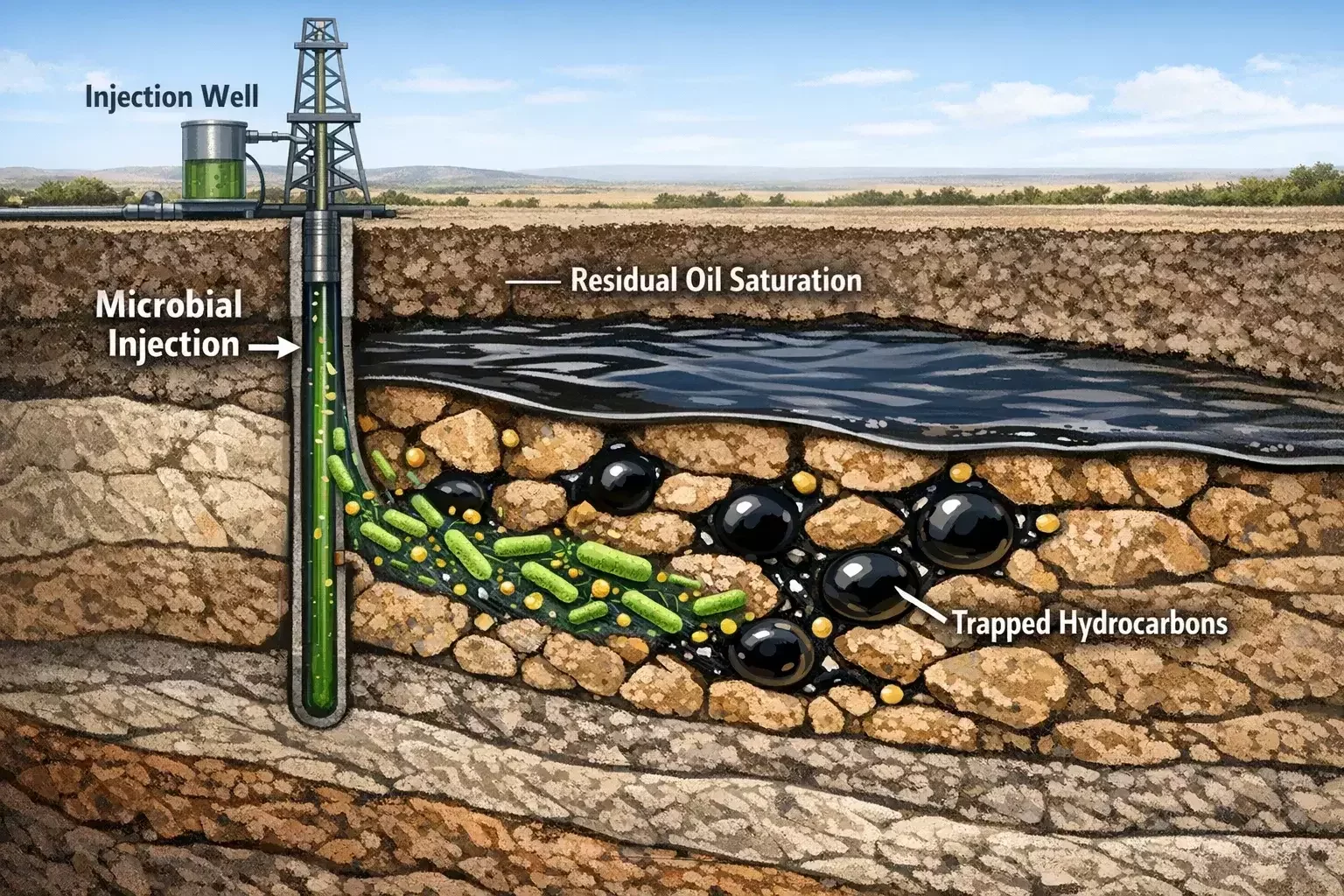
Understanding the Problem: Why Oil Remains Trapped
Oil reservoirs are complex systems composed of porous rock structures filled with hydrocarbons, water, and gases. After primary and secondary recovery, a large portion of oil remains trapped due to several factors.
Capillary forces at the pore level prevent oil droplets from moving freely through the rock matrix. High interfacial tension between oil and water further restricts displacement. Additionally, reservoir heterogeneity causes injected fluids to bypass certain zones, leaving behind significant volumes of oil.
Wettability also plays a critical role. In oil-wet formations, hydrocarbons adhere strongly to rock surfaces, making them difficult to mobilize even when pressure is applied.
These combined effects result in high residual oil saturation, which conventional recovery methods cannot effectively address.
What is Microbial Enhanced Oil Recovery (MEOR)?
Microbial Enhanced Oil Recovery is a tertiary recovery technique that uses microorganisms and their metabolic byproducts to improve oil production.
MEOR can be implemented in two primary ways:
The first approach involves injecting selected microorganisms into the reservoir. These microbes are chosen for their ability to survive and function under reservoir conditions.
The second approach focuses on stimulating indigenous microbial populations already present in the reservoir by injecting nutrients. This encourages natural microbial activity that contributes to oil recovery.
In both cases, the goal is to harness microbial processes to alter fluid properties, rock interactions, and reservoir dynamics.
How Microorganisms Enhance Oil Recovery
Microorganisms influence oil recovery through a range of biochemical processes that directly impact reservoir behavior.
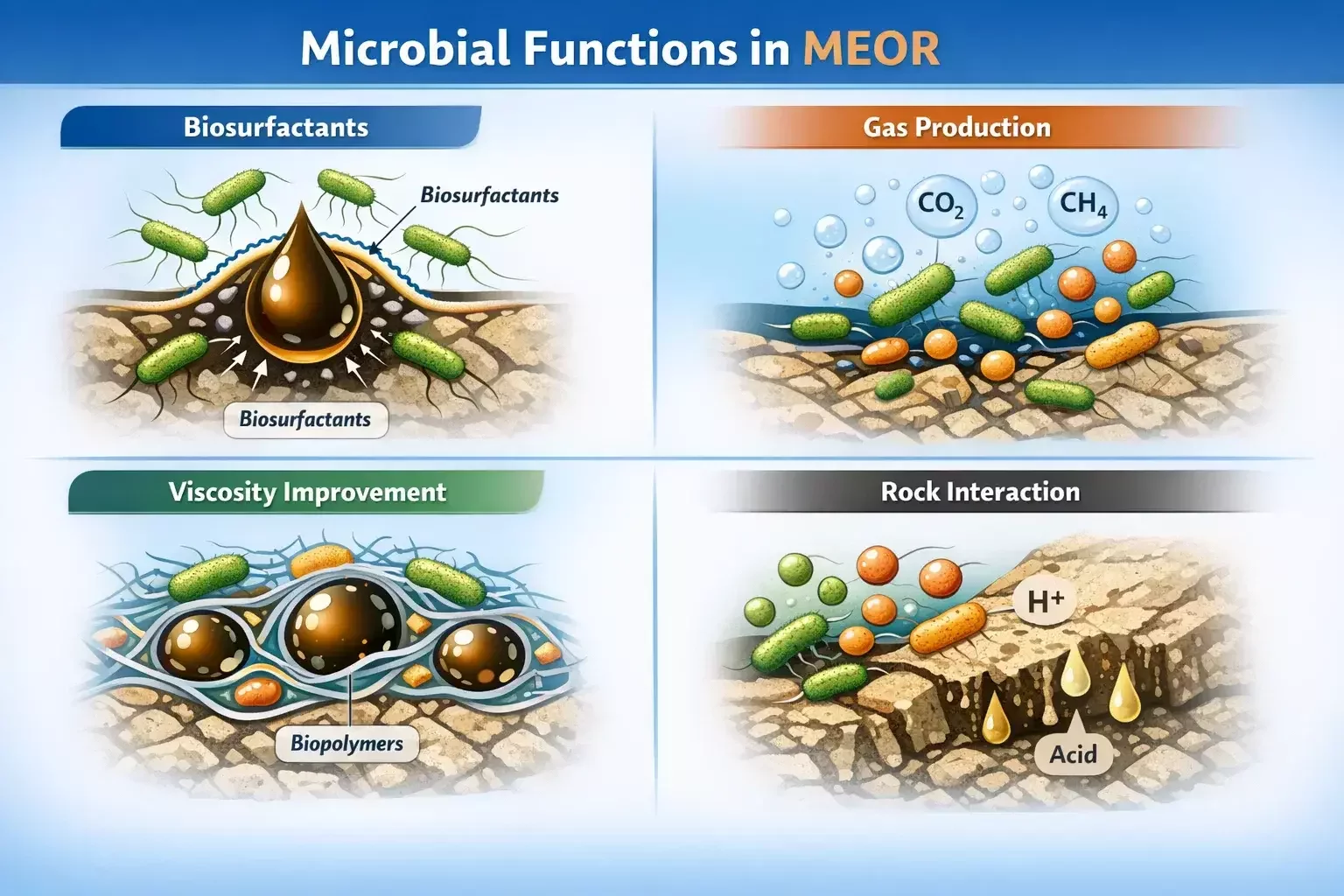
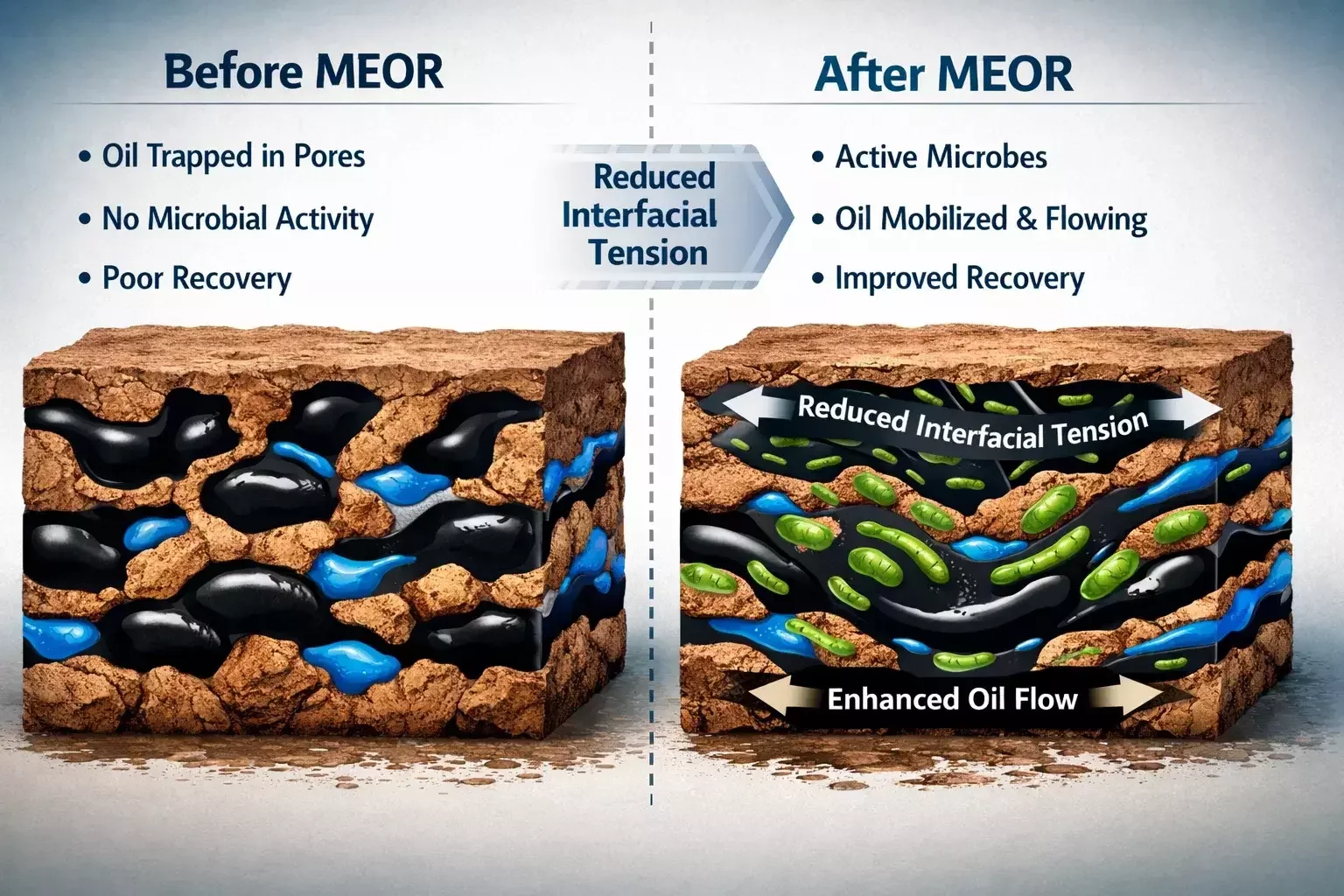
One of the most important contributions is the production of biosurfactants. These compounds reduce interfacial tension between oil and water, similar to chemical surfactants, allowing trapped oil droplets to become mobile.
Microbes also generate gases such as carbon dioxide and methane during metabolic activity. These gases increase reservoir pressure and help push oil toward production wells.
In addition, microorganisms produce organic acids that can interact with reservoir rock, modifying pore structures and improving permeability in certain zones.
Another significant mechanism is the formation of biopolymers, which increase the viscosity of injected fluids. This improves sweep efficiency by reducing channeling and ensuring more uniform displacement across the reservoir.
Mechanisms of MEOR in Reservoirs
The effectiveness of MEOR is driven by a combination of interrelated mechanisms that operate simultaneously within the reservoir.
Reduction of interfacial tension is one of the primary mechanisms, enabling oil to detach from rock surfaces and flow through pore spaces.
Wettability alteration is another key factor. Microbial activity can shift the reservoir from oil-wet to water-wet conditions, improving displacement efficiency.
Gas generation contributes to pressure maintenance and enhances oil mobility, particularly in depleted reservoirs.
Selective plugging is also an important mechanism. Microbial growth in high-permeability zones can partially block these pathways, diverting injected fluids into previously unswept areas.
Together, these mechanisms create a dynamic system in which biological processes enhance both microscopic and macroscopic recovery.
Why MEOR is Gaining Industry Attention
MEOR is attracting increasing interest due to its potential to provide a cost-effective and environmentally friendly alternative to traditional EOR methods.
Unlike thermal techniques, which require significant energy input, MEOR operates through biological processes that can be sustained within the reservoir. This reduces operational costs and energy consumption.
Additionally, MEOR can be applied to a wide range of reservoirs, including those where other EOR methods may not be feasible due to economic or technical constraints.
Advancements in microbiology and biotechnology are further expanding the potential of MEOR, enabling the development of more robust and efficient microbial systems.
Types of Microorganisms Used in MEOR
The success of Microbial Enhanced Oil Recovery depends largely on selecting microorganisms that can survive and remain active under reservoir conditions. These environments are often extreme, characterized by high temperature, pressure, salinity, and limited oxygen availability.
Microorganisms used in MEOR are typically categorized based on the type of metabolic products they generate and their functional role in enhancing oil recovery.
Biosurfactant-Producing Microorganisms
These microorganisms are among the most important in MEOR applications. They produce surface-active compounds that reduce interfacial tension between oil and water.
By lowering interfacial tension, biosurfactants enable trapped oil droplets to detach from rock surfaces and move through pore spaces. This mechanism closely resembles chemical surfactant flooding but is achieved through biological activity.
Common microbial groups in this category include species of Bacillus and Pseudomonas, known for their efficiency in producing biosurfactants under reservoir conditions.
Gas-Producing Microorganisms
Certain microorganisms generate gases such as carbon dioxide and methane as part of their metabolic processes. These gases play a critical role in enhancing oil recovery.
Gas generation contributes to increased reservoir pressure, which helps push oil toward production wells. Additionally, dissolved gases can reduce oil viscosity and improve its flow characteristics.
This mechanism is particularly beneficial in depleted reservoirs where pressure support is required.
Biopolymer-Producing Microorganisms
Some microorganisms produce extracellular polymers that increase the viscosity of injected fluids. These biopolymers act similarly to synthetic polymers used in EOR.
By improving fluid viscosity, they enhance sweep efficiency and reduce channeling. This ensures that injected fluids contact a larger portion of the reservoir, leading to improved recovery.
Biopolymer-producing microbes are especially useful in reservoirs with high permeability contrasts.
Acid-Producing Microorganisms
These microorganisms generate organic acids during metabolism, which can interact with reservoir rock.
In carbonate formations, acid production can enhance permeability by dissolving portions of the rock matrix. In other cases, acids may alter surface properties, contributing to improved oil displacement.
However, acid production must be carefully controlled to avoid unintended damage to the reservoir or infrastructure.
Indigenous vs. Injected Microorganisms
MEOR strategies can involve either stimulating naturally occurring microorganisms within the reservoir or introducing external microbial cultures.
Indigenous microorganisms are already adapted to reservoir conditions, making them more resilient and easier to activate. By injecting nutrients, operators can stimulate these microbes to produce beneficial byproducts.
On the other hand, injected microorganisms are selected for specific functionalities, such as high biosurfactant production or gas generation. These microbes must be carefully evaluated to ensure they can survive and remain active in the reservoir environment.
The choice between these approaches depends on reservoir characteristics, operational objectives, and economic considerations.
Nutrient Systems in MEOR
Microorganisms require nutrients to grow and produce the compounds that enhance oil recovery. Designing an effective nutrient system is therefore a critical component of MEOR implementation.
Nutrients typically include carbon sources, nitrogen, phosphorus, and trace elements that support microbial metabolism. These are injected into the reservoir along with or prior to microbial introduction.
The composition of the nutrient system must be carefully optimized to promote desired microbial activity while minimizing unwanted side effects, such as excessive biomass growth or plugging.
Controlled nutrient delivery ensures that microbial processes are sustained over time, providing consistent recovery benefits.
Reservoir Compatibility Considerations
For MEOR to be effective, microorganisms and nutrient systems must be compatible with reservoir conditions. Several key factors influence this compatibility.
Temperature
Reservoir temperature determines which microorganisms can survive and remain active. Thermophilic microbes are required for high-temperature reservoirs, while mesophilic organisms are suitable for moderate conditions.
Selecting temperature-tolerant strains is essential for maintaining long-term microbial activity.
Salinity
High salinity levels can inhibit microbial growth and reduce metabolic activity. Therefore, microorganisms used in MEOR must be tolerant to the salinity of formation water.
Halophilic or salt-tolerant microbes are often selected for reservoirs with high salinity.
Pressure
Reservoir pressure can influence microbial activity and gas production. While many microorganisms can function under high-pressure conditions, their metabolic rates may vary.
Understanding these effects is important for predicting performance and designing injection strategies.
Oxygen Availability
Most oil reservoirs are anaerobic environments, meaning they lack oxygen. Microorganisms used in MEOR must therefore be capable of functioning under anaerobic conditions.
This requirement influences both microbial selection and nutrient design.
Rock and Fluid Interactions
Microbial activity can alter rock-fluid interactions, affecting wettability, permeability, and fluid flow.
It is important to ensure that these changes are beneficial and do not lead to unintended consequences such as excessive plugging or formation damage.
Designing an Effective MEOR System
An effective MEOR program requires a balanced approach that integrates microbial selection, nutrient formulation, and reservoir compatibility.
Laboratory testing plays a crucial role in evaluating microbial performance under simulated reservoir conditions. These tests help identify optimal strains, nutrient compositions, and operational parameters.
Field trials are then conducted to validate laboratory results and refine the system before large-scale implementation.
This step-by-step approach ensures that MEOR applications are both technically effective and economically viable.
From Laboratory to Reservoir: The Real Test
While Microbial Enhanced Oil Recovery demonstrates strong potential in laboratory studies, its real effectiveness is determined in field conditions. Reservoir environments are complex, dynamic, and often unpredictable. Translating microbial activity into measurable production gains requires careful planning, controlled execution, and continuous monitoring.
Unlike purely chemical EOR methods, MEOR introduces a living system into the reservoir, which means its performance evolves over time. This makes field implementation both an opportunity and a challenge.
Field Implementation Strategies
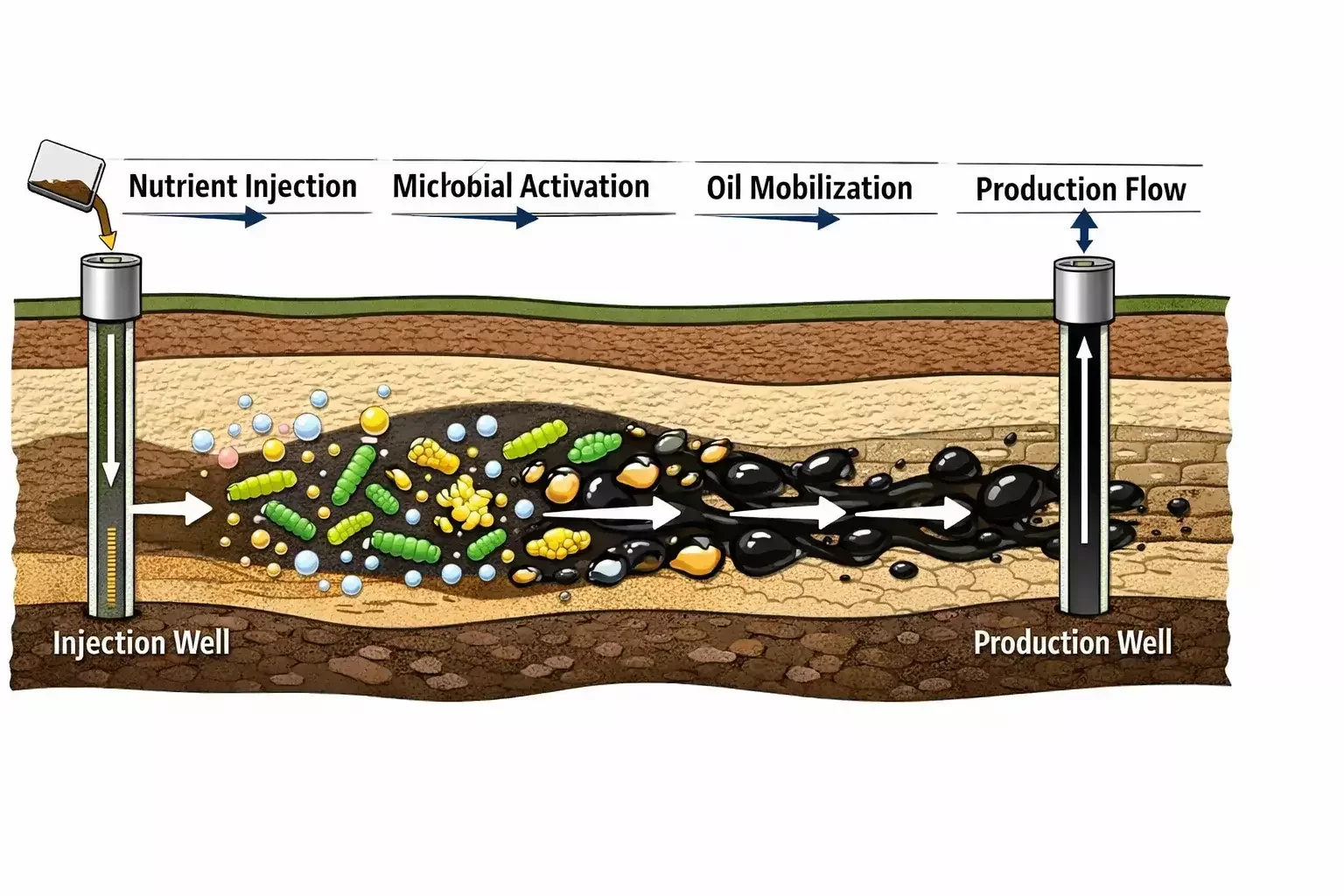
The success of MEOR depends heavily on how microorganisms and nutrients are introduced into the reservoir and how effectively they interact with the existing system.
Nutrient Injection Strategy
In many MEOR applications, the focus is on stimulating indigenous microorganisms rather than introducing external strains. This is achieved by injecting carefully designed nutrient solutions into the reservoir.
These nutrients activate native microbial populations, triggering the production of biosurfactants, gases, and other beneficial compounds. This approach reduces the risk associated with introducing foreign microbes and ensures better adaptation to reservoir conditions.
Microbial Injection Approach
In cases where specific microbial functions are required, selected strains are injected into the reservoir along with nutrients. These microorganisms are chosen based on their ability to survive reservoir conditions and produce targeted metabolic byproducts.
This method allows for more controlled and predictable outcomes but requires detailed compatibility testing.
Injection Patterns and Distribution
The placement of injection wells and the distribution of nutrients or microbes play a critical role in determining the effectiveness of MEOR.
Uniform distribution ensures that microbial activity occurs across a wider area of the reservoir, improving sweep efficiency. Poor distribution, on the other hand, may limit the process to specific zones, reducing overall effectiveness.
Reservoir heterogeneity must be carefully considered when designing injection patterns.
Key Challenges in MEOR Operations
Despite its advantages, MEOR presents several operational challenges that must be managed to ensure success.
Uncertainty in Microbial Behaviour
Microbial activity is influenced by multiple factors, including temperature, salinity, pressure, and nutrient availability. Variations in these conditions can lead to unpredictable performance.
Unlike chemical systems, microbial processes are not instantaneous and may require time to develop, making it difficult to achieve immediate results.
Reservoir Heterogeneity
Differences in permeability and porosity can affect how nutrients and microorganisms move through the reservoir. High-permeability zones may receive more treatment, while tighter zones remain unaffected.
This uneven distribution can limit the overall efficiency of the process.
Biomass Growth and Plugging
Microbial growth can sometimes lead to excessive biomass accumulation, which may block pore spaces and reduce permeability. While selective plugging can be beneficial in redirecting flow, uncontrolled growth can negatively impact production.
Careful nutrient management is essential to balance microbial activity.
Competition with Indigenous Microorganisms
In reservoirs where native microbial populations already exist, introduced microorganisms may face competition for nutrients. This can affect their ability to establish and perform effectively.
Understanding the existing microbial ecosystem is therefore important for designing successful MEOR programs.
Monitoring and Performance Evaluation
Effective monitoring is critical for assessing the success of MEOR operations and making necessary adjustments.
Operators track changes in production parameters such as oil rate, water cut, and gas composition. These indicators provide insights into how microbial processes are influencing reservoir behavior.
Chemical and microbiological analyses of produced fluids are also conducted to evaluate microbial activity and byproduct generation.
Advanced reservoir simulation models and tracer studies can further enhance understanding and guide optimization efforts.
Optimization Strategies
MEOR is a dynamic process that requires continuous optimization to achieve the best results.
Controlled Nutrient Delivery
Adjusting nutrient concentration and injection frequency helps regulate microbial growth and activity. This ensures that beneficial processes are sustained without causing operational issues.
Adaptive Injection Programs
Injection strategies may be modified based on reservoir response. This includes adjusting injection rates, changing injection points, or altering nutrient composition.
Integration with Other EOR Methods
MEOR can be combined with chemical or polymer flooding to enhance overall recovery. This integrated approach leverages the strengths of different techniques.
Pilot Testing and Scaling
Before full-scale deployment, pilot projects are conducted to validate performance under field conditions. These pilots provide valuable data for refining the process and reducing risk.
The Role of Expertise in MEOR
Successful MEOR implementation requires a multidisciplinary approach involving microbiology, reservoir engineering, and field operations.
Close collaboration between these domains ensures that microbial systems are effectively integrated into the overall production strategy. This alignment is essential for achieving consistent and reliable results.
Unlocking New Value from Mature Reservoirs
Microbial Enhanced Oil Recovery represents a shift in how the industry approaches residual oil. Instead of relying solely on pressure, heat, or synthetic chemicals, MEOR introduces a biological pathway to improve recovery.
As reservoirs mature and production declines, operators face increasing pressure to maximize output from existing assets. MEOR provides an opportunity to unlock additional reserves without the need for extensive infrastructure changes or high-energy processes.
By targeting the microscopic mechanisms that trap oil, MEOR transforms previously unrecoverable hydrocarbons into producible resources, extending the economic life of oilfields.
Key Benefits of MEOR
One of the most important advantages of MEOR is its ability to improve oil recovery through multiple mechanisms simultaneously. Biosurfactant production reduces interfacial tension, gas generation enhances reservoir pressure, and biopolymers improve sweep efficiency.
This multi-functional approach allows MEOR to address both microscopic and macroscopic recovery challenges within the reservoir.
Another key benefit is its adaptability. MEOR can be applied to a wide range of reservoir types, including those where traditional EOR methods may not be economically viable. Its flexibility makes it particularly suitable for mature and marginal fields.
Operational simplicity is also a major advantage. In many cases, MEOR can be implemented using existing injection infrastructure, reducing the need for additional capital investment.
Economic Considerations
From an economic perspective, MEOR offers a cost-effective alternative to more energy-intensive recovery methods. Since microbial processes occur naturally within the reservoir, the need for continuous chemical or thermal input is reduced.
The primary costs associated with MEOR include nutrient supply, microbial preparation (if required), and injection operations. Compared to large-scale thermal projects or complex chemical flooding systems, these costs are relatively moderate.
However, economic success depends on careful design and execution. Factors such as nutrient efficiency, microbial activity, and reservoir response must be optimized to ensure that incremental oil recovery justifies the investment.
Pilot testing plays a crucial role in evaluating economic feasibility. By assessing performance on a smaller scale, operators can reduce uncertainty and make informed decisions about full-field implementation.
Environmental and Sustainability Advantages
As the oil and gas industry faces increasing environmental scrutiny, MEOR offers several sustainability benefits.
Unlike thermal EOR, which requires significant energy input and results in higher emissions, MEOR operates through biological processes that consume less energy. This contributes to a lower carbon footprint.
The use of naturally occurring microorganisms and biodegradable byproducts further enhances its environmental profile. Advances in biotechnology are enabling the development of microbial systems that are more efficient and environmentally compatible.
Additionally, MEOR can reduce the need for harsh chemicals, supporting safer and more sustainable operations.
That said, responsible implementation remains essential. Proper control of microbial activity and nutrient injection is necessary to prevent unintended environmental or operational impacts.
Limitations and Considerations
Despite its advantages, MEOR is not without limitations. One of the primary challenges is the variability of microbial performance under reservoir conditions. Factors such as temperature, salinity, and pressure can influence microbial activity and effectiveness.
Another consideration is the time required for microbial processes to produce measurable results. Unlike some chemical methods that deliver immediate effects, MEOR may require longer periods to achieve full impact.
Operational control is also important. Excessive microbial growth can lead to plugging or other issues if not properly managed.
These challenges highlight the importance of careful design, monitoring, and optimization in MEOR projects.
Future Trends in MEOR
The future of MEOR is closely linked to advancements in microbiology, biotechnology, and digital oilfield technologies.
One of the most promising developments is the use of genetically optimized microorganisms designed to perform specific functions more efficiently. These tailored microbes have the potential to significantly enhance recovery performance.
Another emerging trend is the integration of MEOR with other EOR techniques. Hybrid approaches that combine microbial, chemical, and gas injection methods can deliver improved results by leveraging multiple recovery mechanisms.
Digital technologies are also playing a growing role. Real-time monitoring, data analytics, and reservoir modeling enable better control of microbial processes and more accurate prediction of outcomes.
These innovations are expected to make MEOR more reliable, scalable, and widely adopted in the coming years.
Strategic Importance for the Industry
As the global energy landscape evolves, the focus is shifting toward maximizing recovery from existing resources while minimizing environmental impact.
MEOR aligns with this objective by offering a low-impact, cost-effective, and adaptable recovery solution. It enables operators to extract additional value from mature fields while supporting sustainability goals.
For many operators, MEOR represents not just an alternative recovery method, but a strategic component of long-term production planning.
Conclusion
Microbial Enhanced Oil Recovery is redefining how oil is produced from mature reservoirs. By leveraging biological processes, it addresses the fundamental limitations of conventional recovery methods and opens new pathways for improving efficiency.
From microbial selection and nutrient design to field implementation and optimization, MEOR requires a comprehensive and integrated approach. When executed effectively, it delivers both economic and environmental benefits.
As technology continues to advance, MEOR is poised to play an increasingly important role in the future of oil recovery—helping the industry achieve more from existing resources while moving toward more sustainable operations
FAQs
1. What is Microbial Enhanced Oil Recovery (MEOR)?
MEOR is an advanced oil recovery technique that uses microorganisms and their metabolic byproducts to improve oil mobility and increase production from reservoirs.
2. How do microbes help in oil recovery?
Microorganisms produce biosurfactants, gases, acids, and biopolymers that reduce interfacial tension, increase pressure, improve sweep efficiency, and mobilize trapped oil.
3. What are biosurfactants in MEOR?
Biosurfactants are surface-active compounds produced by microbes that reduce interfacial tension between oil and water, enabling trapped oil to flow.
4. What types of microorganisms are used in MEOR?
Common types include biosurfactant-producing, gas-producing, biopolymer-producing, and acid-producing microorganisms.
5. What is the difference between indigenous and injected microbes?
Indigenous microbes are naturally present in the reservoir and are stimulated using nutrients, while injected microbes are externally introduced to perform specific functions.
6. What are the main benefits of MEOR?
MEOR improves oil recovery, reduces operational costs, lowers energy consumption, and offers a more environmentally friendly alternative to traditional EOR methods.
7. What challenges are associated with MEOR?
Challenges include unpredictable microbial behavior, reservoir heterogeneity, biomass plugging, and the need for careful nutrient management.
8. Is MEOR suitable for all reservoirs?
MEOR can be applied to many reservoirs, but its success depends on factors such as temperature, salinity, pressure, and microbial compatibility.
9. How is MEOR implemented in the field?
MEOR is implemented by injecting nutrients or microorganisms into the reservoir, followed by monitoring microbial activity and production response.
10. Is MEOR environmentally sustainable?
Yes, MEOR is considered more sustainable than thermal methods due to lower energy requirements and the use of biodegradable biological processes.



