
Introduction
Corrosion remains one of the most persistent and costly challenges in the oil and gas industry. From drilling equipment and pipelines to production tubing and surface processing infrastructure, metallic components are constantly exposed to aggressive chemical environments. These environments promote electrochemical reactions that gradually degrade metal surfaces, ultimately compromising structural integrity, safety, and operational reliability.
According to industry studies, corrosion-related damage costs the global oil and gas sector billions of dollars annually through equipment replacement, unplanned shutdowns, maintenance interventions, and lost production. In extreme cases, uncontrolled corrosion can lead to catastrophic failures, environmental incidents, and severe safety hazards.
To mitigate these risks, oilfield operators rely heavily on corrosion inhibitors, specialized chemical formulations designed to reduce the corrosion rate of metals exposed to aggressive fluids such as water, carbon dioxide (CO₂), hydrogen sulfide (H₂S), and oxygen. These inhibitors function by forming protective films on metal surfaces, altering electrochemical reactions, or neutralizing corrosive agents.
However, selecting the right corrosion inhibitor is not a one-size-fits-all decision. The chemical environment, operational conditions, and infrastructure layout vary significantly between onshore and offshore oilfields. Offshore operations typically encounter high salinity, marine exposure, and limited maintenance accessibility, while onshore operations often face varied reservoir compositions, fluctuating temperatures, and broader infrastructure networks.
Because of these differences, corrosion inhibitor selection requires careful evaluation of field-specific conditions, including fluid chemistry, operating temperature, pressure, flow dynamics, and environmental regulations.
Understanding how corrosion inhibitors are selected for offshore versus onshore oilfields is essential for designing effective corrosion management programs that protect assets while ensuring long-term operational efficiency.
Understanding Corrosion Mechanisms in Oilfield Environments
Corrosion in oil and gas operations occurs when metals react chemically or electrochemically with surrounding fluids and gases. The process is driven by natural thermodynamic tendencies that cause metals to return to more stable mineral forms, such as oxides or sulfides.
In oilfield systems, corrosion typically arises from the presence of produced water, dissolved gases, and microbial activity within production fluids. These elements interact with steel infrastructure, initiating localized or generalized corrosion processes.
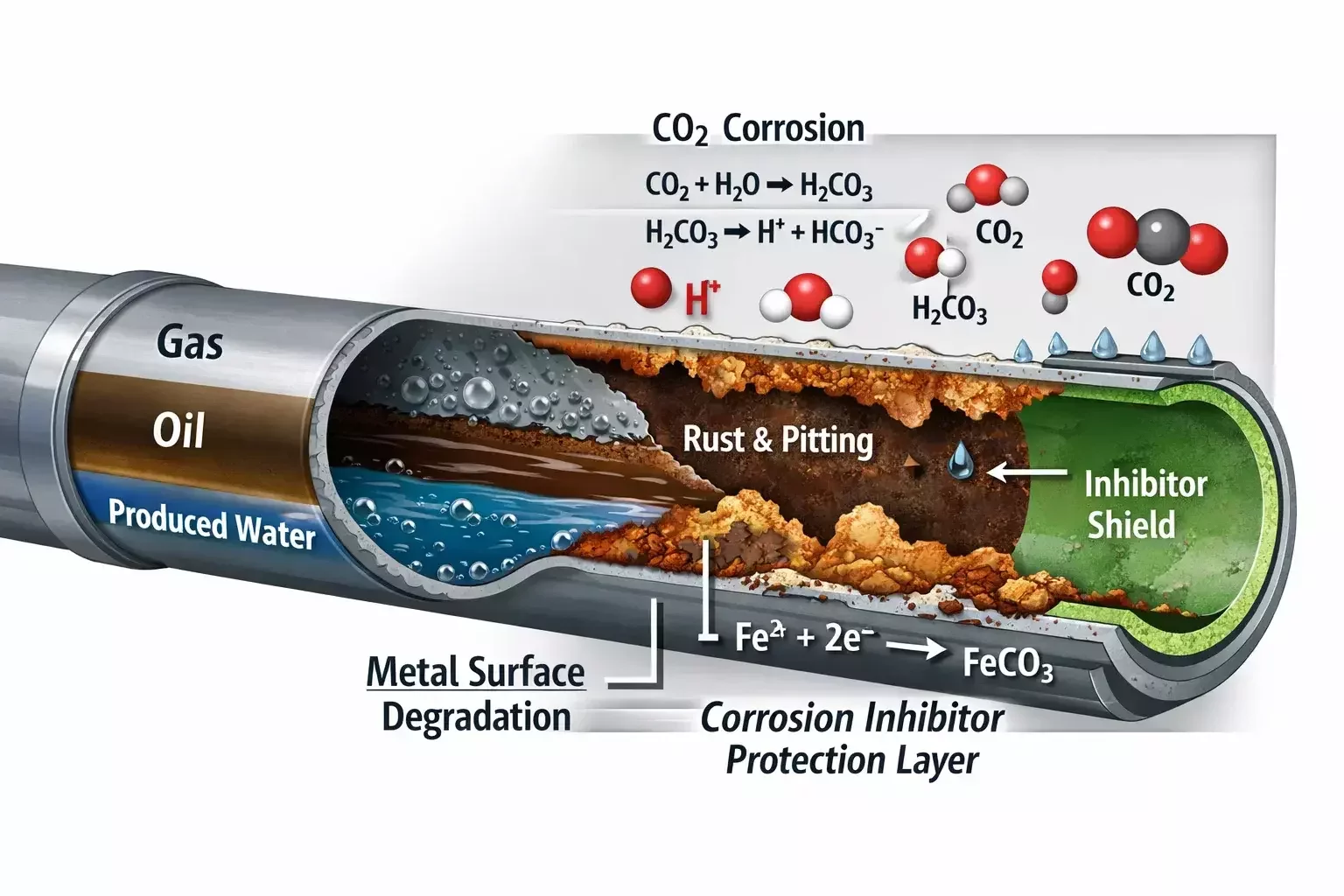
One of the most common forms encountered in oil production systems is carbon dioxide corrosion, often referred to as sweet corrosion. When CO₂ dissolves in produced water, it forms carbonic acid. This weak acid lowers the pH of the fluid and accelerates metal dissolution, particularly in pipelines and tubing carrying multiphase fluids.
Another significant mechanism is hydrogen sulfide corrosion, known as sour corrosion. Hydrogen sulfide reacts with iron to form iron sulfide compounds, which can weaken the metal structure and create brittle failure conditions. Sour environments are particularly dangerous because they also pose serious safety risks due to the toxicity of H₂S gas.
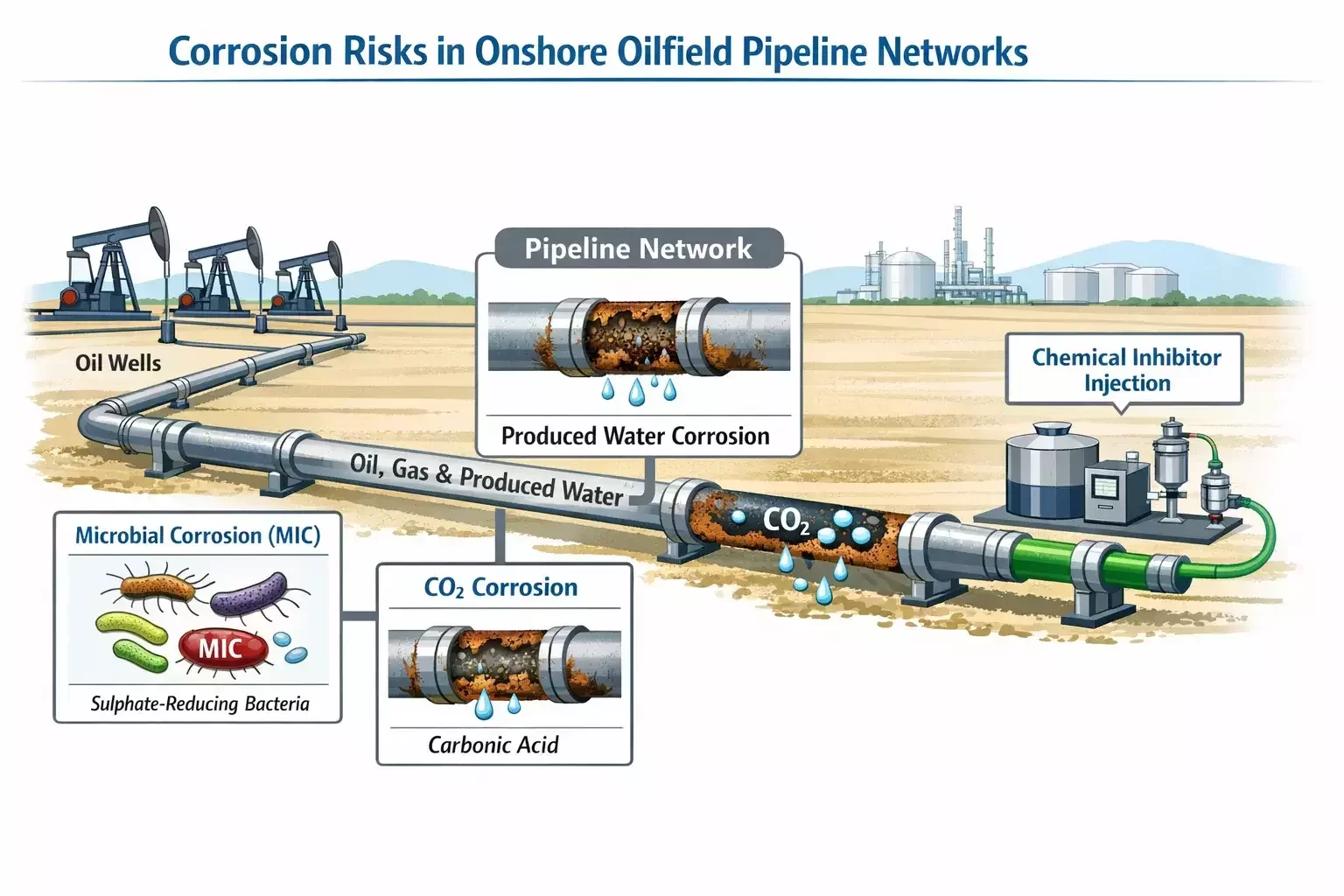
In addition to chemical corrosion, microbiologically influenced corrosion (MIC) can occur when sulfate-reducing bacteria generate hydrogen sulfide as a metabolic byproduct. These microorganisms thrive in stagnant or low-flow environments such as storage tanks, pipelines, and injection systems.
The severity and type of corrosion vary depending on factors such as fluid composition, temperature, pressure, and flow velocity. Offshore environments often intensify corrosion processes due to continuous exposure to saline seawater and humid marine atmospheres, while onshore environments may exhibit highly variable chemical conditions depending on reservoir geology.
Because corrosion mechanisms differ across locations and operating conditions, inhibitor formulations must be tailored to the specific chemical and operational environment of each oilfield.
Why Corrosion Inhibitor Selection Requires Field-Specific Evaluation
Effective corrosion control is not achieved simply by injecting chemicals into a system. Instead, it requires a carefully engineered approach that considers the dynamic interaction between metal surfaces, production fluids, and operating conditions.
The selection of corrosion inhibitors typically begins with fluid analysis and corrosion risk assessment. Produced water samples are analyzed to determine salinity levels, pH, dissolved gases, and mineral composition. These parameters influence both the corrosion rate and the effectiveness of different inhibitor chemistries.
Temperature and pressure also play critical roles in inhibitor performance. High-temperature environments can destabilize certain inhibitor molecules, reducing their ability to form protective films. Offshore deepwater wells, for example, often experience extreme pressure and temperature conditions that require thermally stable inhibitor formulations.
Flow dynamics represent another key factor. In high-velocity pipelines, inhibitor films must be strong enough to remain attached to metal surfaces despite turbulence and shear forces. Conversely, low-flow environments may allow microbial colonies to develop, requiring inhibitors with additional biocidal compatibility.
Environmental and regulatory considerations further complicate inhibitor selection. Offshore platforms operate under strict environmental regulations that limit the discharge of hazardous chemicals into marine ecosystems. As a result, offshore inhibitors must often meet stringent environmental acceptability standards, including biodegradability and low toxicity to aquatic organisms.
Onshore operations may face fewer marine-related environmental restrictions but often require inhibitors capable of functioning across diverse infrastructure systems, including gathering lines, processing facilities, and storage tanks.
These operational differences make corrosion inhibitor selection a complex engineering decision that integrates chemistry, reservoir conditions, infrastructure design, and regulatory compliance.
The Strategic Role of Corrosion Inhibitors in Asset Protection
Corrosion inhibitors are a cornerstone of modern oilfield integrity management programs. When properly selected and applied, these chemicals significantly extend the service life of pipelines, tubing, and processing equipment.
Most oilfield corrosion inhibitors function by adsorbing onto metal surfaces, creating a thin protective barrier that isolates the metal from corrosive agents present in production fluids. This barrier reduces the rate of electrochemical reactions that cause metal dissolution.
Different inhibitor chemistries are used depending on the operational environment. Film-forming amines, imidazolines, and quaternary ammonium compounds are commonly applied in production systems due to their strong adsorption characteristics and compatibility with hydrocarbon fluids.
In many cases, inhibitors must also function alongside other production chemicals such as scale inhibitors, demulsifiers, and biocides. Ensuring chemical compatibility within these complex treatment programs is essential to avoid performance interference or unintended chemical reactions.
For offshore installations where equipment accessibility is limited and maintenance costs are high, inhibitor programs often operate continuously through automated dosing systems. Onshore operations may allow more flexible treatment strategies, including batch treatments or periodic injection programs depending on corrosion severity.
Ultimately, the strategic selection of corrosion inhibitors enables operators to balance operational efficiency, safety, and cost management while protecting critical infrastructure from degradation.
Corrosion Challenges Unique to Offshore Oilfields
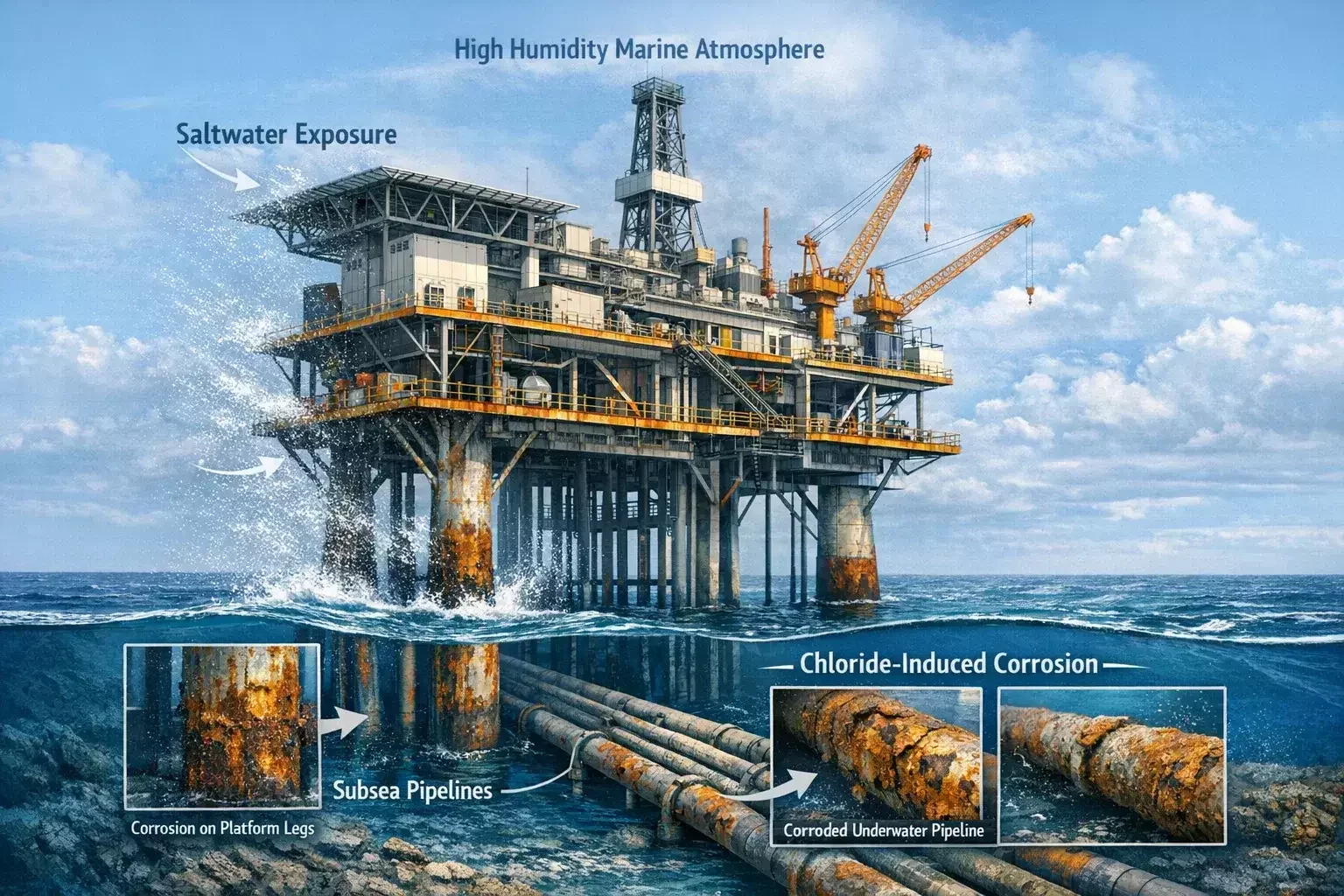
Offshore oil and gas operations present some of the most aggressive corrosion environments encountered in industrial operations. Equipment operating in marine environments must withstand constant exposure to saltwater, high humidity, and temperature variations, all of which accelerate corrosion processes.
One of the most significant factors affecting corrosion offshore is high salinity. Seawater contains large concentrations of dissolved salts, particularly sodium chloride, which acts as an electrolyte that facilitates electrochemical reactions on metal surfaces. When metallic structures such as pipelines, risers, or platform components come into contact with saline moisture, corrosion rates increase substantially.
In addition to salinity, offshore facilities are continuously exposed to marine atmospheric conditions. The combination of salt-laden air, wind, and humidity allows chloride particles to deposit on exposed metal surfaces. These chloride deposits attract moisture, creating thin electrolyte films that support corrosion reactions even in areas not directly submerged in seawater.
Another factor that intensifies offshore corrosion is the presence of dissolved gases such as carbon dioxide (CO₂) and hydrogen sulfide (H₂S) in produced fluids. When these gases dissolve in water, they create acidic conditions that accelerate metal degradation. Offshore reservoirs often produce multiphase fluids containing oil, gas, and water, increasing the likelihood of corrosion within pipelines and processing systems.
Offshore installations also face operational constraints that complicate corrosion management. Maintenance access is limited because equipment is located on platforms or subsea infrastructure. Any corrosion-related failure can require specialized vessels, divers, or remotely operated vehicles for repair, dramatically increasing operational costs.
Because of these factors, corrosion inhibitor programs in offshore oilfields must be highly reliable, capable of providing long-term protection under continuous exposure to corrosive conditions.
Corrosion Conditions in Onshore Oilfields
While onshore oilfields do not experience the same marine exposure as offshore facilities, they still present a diverse range of corrosion challenges driven by reservoir chemistry and infrastructure scale.
One of the defining characteristics of onshore production environments is variability in produced fluids. Reservoirs across different geological regions produce fluids with widely varying chemical compositions. Some onshore wells produce high volumes of water with elevated CO₂ content, while others may contain hydrogen sulfide, organic acids, or dissolved minerals that contribute to corrosion.
Unlike offshore operations, onshore infrastructure typically extends across large pipeline networks and processing facilities that connect multiple wells to central gathering stations. These extended pipeline systems increase the surface area exposed to corrosive fluids and introduce additional variables such as changes in flow velocity, temperature fluctuations, and intermittent production cycles.
Onshore environments may also experience microbiologically influenced corrosion (MIC) due to the presence of sulfate-reducing bacteria and other microorganisms in produced water systems. These bacteria generate hydrogen sulfide as a metabolic byproduct, which accelerates corrosion in pipelines and storage tanks.
Temperature variations can also be more pronounced in onshore systems. Pipelines running across long distances may encounter significant environmental temperature changes, affecting fluid properties and corrosion behavior. Seasonal variations, particularly in desert or cold-climate oilfields, can influence corrosion rates and inhibitor performance.
Despite these challenges, onshore facilities typically offer greater accessibility for inspection, maintenance, and chemical treatment adjustments compared to offshore installations. This operational flexibility allows corrosion management programs to incorporate periodic monitoring, pigging operations, and targeted chemical treatments.
Infrastructure Differences That Influence Corrosion Inhibitor Selection
The structural design of offshore and onshore oilfields also plays a major role in determining how corrosion inhibitors are selected and applied.
Offshore operations rely heavily on compact and highly integrated infrastructure, including subsea pipelines, risers, wellheads, and platform processing systems. Because of the limited space available on offshore platforms, chemical injection systems must operate efficiently with minimal storage and handling requirements.
In many offshore applications, corrosion inhibitors are injected continuously through automated chemical dosing systems to ensure consistent protection. These systems must deliver precise inhibitor concentrations while maintaining compatibility with other chemicals used in the production process.
Subsea pipelines present an additional challenge because they operate under high pressure and are often inaccessible once installed. Corrosion inhibitor formulations used in subsea environments must therefore provide stable, long-lasting protective films that remain effective despite turbulent flow conditions and multiphase fluid transport.
Onshore oilfields, in contrast, often feature distributed infrastructure with multiple wellheads connected to centralized processing facilities through gathering pipelines. This infrastructure layout allows operators to implement a wider range of corrosion control strategies.
For example, onshore pipelines may utilize batch inhibitor treatments, where corrosion inhibitors are periodically injected in concentrated doses rather than continuously. In addition, pigging operations can be used to clean pipeline interiors and redistribute corrosion inhibitors along pipeline walls.
The scale and accessibility of onshore systems also enable more frequent inspection and corrosion monitoring programs. Operators can deploy corrosion coupons, probes, and inline inspection tools to assess corrosion rates and adjust inhibitor programs accordingly.
Because offshore and onshore infrastructures operate under different logistical constraints, corrosion inhibitor selection must account not only for chemical performance but also for injection methods, monitoring capabilities, and maintenance accessibility.
The Impact of Environmental Regulations on Inhibitor Selection
Environmental regulations represent another major factor influencing corrosion inhibitor selection, particularly in offshore oilfields.
Offshore operations are subject to strict regulatory frameworks designed to protect marine ecosystems from chemical contamination. Many countries require offshore chemical treatments to meet environmental acceptability standards, including biodegradability, low bioaccumulation potential, and minimal toxicity to aquatic organisms.
As a result, corrosion inhibitors used in offshore systems must often comply with environmental certification programs such as offshore chemical notification schemes or regional environmental guidelines. These requirements can limit the types of chemicals available for corrosion control and require the development of specialized environmentally acceptable formulations.
Onshore operations may also face environmental regulations, particularly in regions with strict water management policies. However, onshore facilities generally have more flexibility in selecting corrosion inhibitors because chemical discharge into marine environments is not a primary concern.
This regulatory difference means offshore corrosion inhibitors must often balance high performance with environmental compatibility, while onshore inhibitors may prioritize performance under varied reservoir conditions.
Laboratory Evaluation and Compatibility Testing
Before corrosion inhibitors are deployed in field operations, they must undergo rigorous laboratory evaluation to ensure that they can effectively protect metal surfaces under the specific conditions of the oilfield. Laboratory testing is one of the most important steps in corrosion inhibitor selection because it allows engineers to simulate production conditions and evaluate inhibitor performance before large-scale deployment.
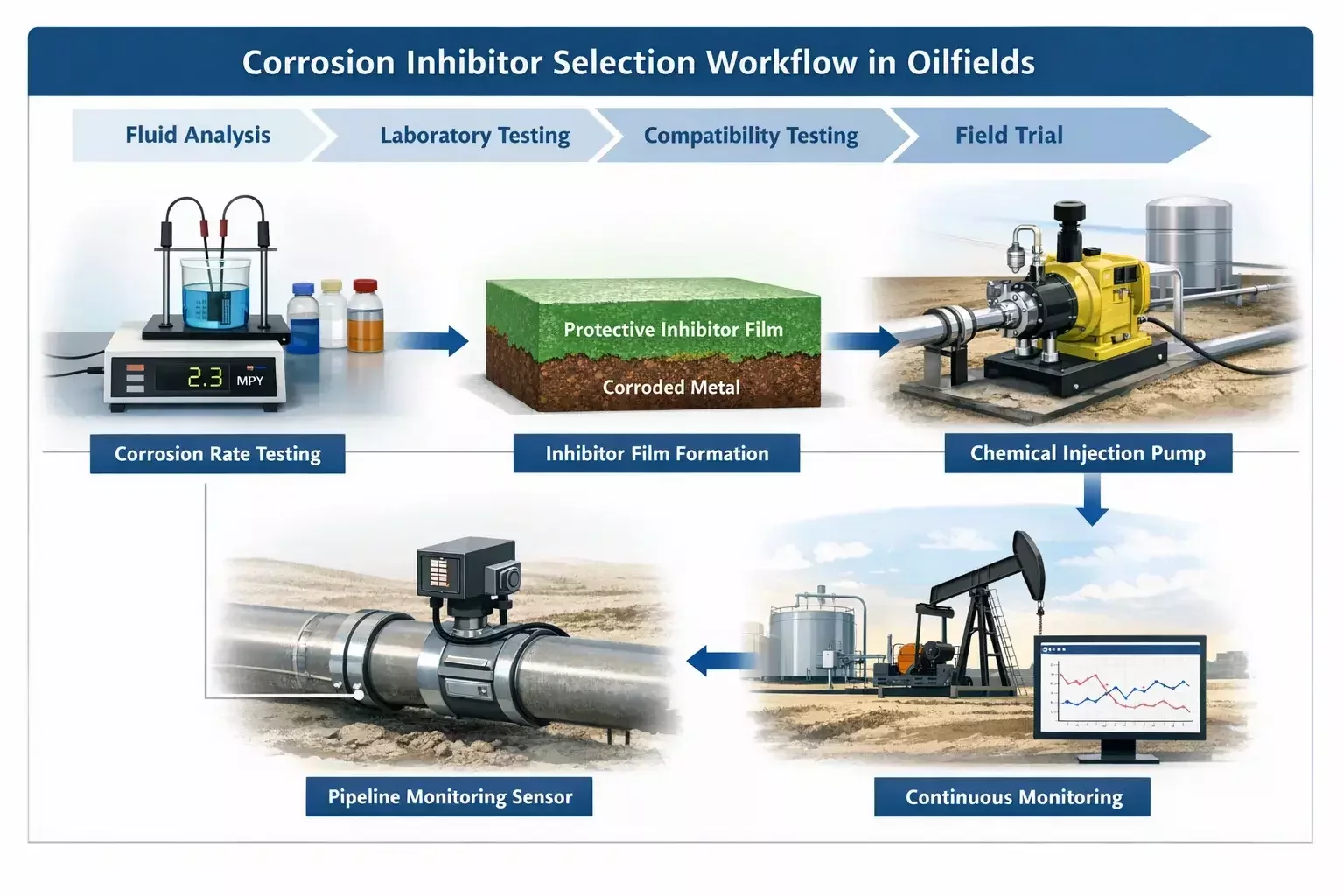
Typically, testing begins with produced fluid analysis, where water samples from the reservoir are examined to determine parameters such as salinity, pH, dissolved gases, organic acids, and mineral composition. These characteristics help identify the primary corrosion mechanisms present in the system and guide the selection of suitable inhibitor chemistries.
Once fluid characteristics are understood, corrosion inhibitors are tested using electrochemical and weight-loss methods. In weight-loss testing, metal coupons are immersed in simulated production fluids with and without inhibitors. After a defined exposure period, the coupons are examined to determine the corrosion rate and the effectiveness of the inhibitor in reducing metal loss.
Electrochemical techniques such as linear polarization resistance (LPR) and electrochemical impedance spectroscopy (EIS) provide more detailed information about corrosion mechanisms and inhibitor performance. These techniques allow engineers to observe how quickly corrosion reactions occur and how effectively inhibitors disrupt those reactions.
Compatibility testing is also essential because corrosion inhibitors must function alongside other production chemicals used in oilfield operations. Scale inhibitors, demulsifiers, biocides, and hydrate inhibitors are often present in the same production system. If chemical interactions occur between these treatments, their performance may be reduced or unexpected operational problems may arise.
For this reason, corrosion inhibitors are typically evaluated through chemical compatibility testing, ensuring that the inhibitor remains stable and effective when combined with other production chemicals.
Key Selection Factors for Offshore Corrosion Inhibitors
Offshore oilfields operate under conditions that demand highly specialized corrosion inhibitor formulations. The extreme environmental exposure, combined with limited maintenance access, means that inhibitors must deliver long-lasting protection with minimal operational intervention.
One of the most important factors influencing offshore inhibitor selection is film persistence. Offshore pipelines and subsea equipment often experience turbulent multiphase flow, which can strip protective films from metal surfaces. Effective offshore inhibitors must therefore form durable adsorption layers capable of resisting shear forces and maintaining coverage over extended periods.
Another key requirement is thermal stability. Offshore wells frequently operate under high-pressure and high-temperature conditions, particularly in deepwater developments. Inhibitor molecules must remain chemically stable under these temperatures to ensure consistent protection throughout the production system.
Offshore corrosion inhibitors must also demonstrate strong partitioning behavior, meaning they must distribute effectively between oil and water phases in multiphase production systems. Because corrosion typically occurs in the aqueous phase, inhibitors must be able to migrate into the water layer and reach metal surfaces where corrosion reactions occur.
Environmental compliance is another critical factor. Offshore chemical treatments must meet strict environmental guidelines to ensure that discharged chemicals do not harm marine ecosystems. As a result, many offshore inhibitors are designed to be biodegradable and possess low aquatic toxicity.
Due to the logistical challenges associated with offshore operations, inhibitor injection systems must also operate reliably over extended periods. Offshore corrosion control programs often rely on continuous injection systems that maintain consistent inhibitor concentrations within production fluids.
Corrosion Inhibitor Strategies for Onshore Oilfields
While offshore environments require inhibitors capable of withstanding marine conditions and high operational constraints, onshore corrosion inhibitor programs are typically designed with greater operational flexibility.
Onshore oilfields often consist of extensive pipeline networks connecting multiple wells to centralized processing facilities. Because these systems cover large distances and may experience varying flow conditions, corrosion inhibitors must be able to protect pipelines under fluctuating operating environments.
One common strategy used in onshore systems is batch inhibitor treatment, where concentrated inhibitor formulations are periodically injected into pipelines. These treatments allow inhibitors to coat internal surfaces and form protective films without requiring continuous chemical injection.
In addition to batch treatments, many onshore systems also utilize continuous low-dose injection to maintain baseline corrosion protection. The combination of batch and continuous treatments allows operators to adapt corrosion management strategies depending on the severity of corrosion risks within specific pipeline segments.
Onshore oilfields also benefit from greater accessibility for monitoring and maintenance activities. Operators can perform regular pipeline inspections, pigging operations, and corrosion monitoring using probes or corrosion coupons. These monitoring techniques provide valuable data that can be used to adjust inhibitor dosages and treatment strategies over time.
Another important consideration in onshore inhibitor selection is cost efficiency. Because onshore infrastructure may involve hundreds of kilometers of pipeline, chemical treatment programs must balance corrosion protection with operational costs. Inhibitors selected for onshore systems must therefore provide reliable protection while remaining economically viable for large-scale application.
Field Trials and Performance Monitoring
Even after laboratory testing identifies promising inhibitor formulations, field validation remains essential before full-scale implementation. Oilfield conditions can vary significantly from laboratory simulations, making field trials necessary to confirm inhibitor performance under real operating environments.
During field trials, corrosion inhibitors are injected into the production system while corrosion monitoring devices measure changes in corrosion rates over time. These monitoring tools may include corrosion probes, electrical resistance sensors, and weight-loss coupons placed within pipelines.
Data collected during field trials helps engineers determine whether the inhibitor is effectively reducing corrosion rates to acceptable levels. If corrosion protection is insufficient, inhibitor concentrations or formulations may be adjusted until optimal performance is achieved.
In both offshore and onshore oilfields, corrosion monitoring is a continuous process. Production conditions change over time as reservoirs mature, water cut increases, and production rates fluctuate. As these changes occur, corrosion risks may also evolve, requiring adjustments to inhibitor programs.
By integrating laboratory testing, field trials, and ongoing monitoring, oilfield operators can develop corrosion inhibitor strategies that provide reliable long-term protection for critical infrastructure.
Key Differences in Corrosion Inhibitor Selection
While corrosion inhibitors are used in both offshore and onshore oilfields, the strategy behind selecting them differs significantly due to environmental exposure, infrastructure design, and operational constraints.
In offshore oilfields, corrosion inhibitor programs must prioritize long-term reliability and environmental compatibility. Offshore installations operate in harsh marine environments where equipment is continuously exposed to saltwater, high humidity, and chloride-rich atmospheric conditions. These factors significantly accelerate corrosion processes, requiring inhibitors that can maintain strong protective films on metal surfaces even under turbulent multiphase flow conditions.
Additionally, offshore infrastructure often includes subsea pipelines, risers, and deepwater production systems that are difficult and costly to access. Because maintenance and repairs are complex and expensive, corrosion inhibitor formulations used offshore must be capable of providing stable and durable protection with minimal operational intervention. Continuous chemical injection systems are typically used to ensure consistent inhibitor concentrations throughout production facilities.
In contrast, onshore oilfields generally provide greater accessibility for monitoring and maintenance. Pipelines, gathering systems, and processing facilities can be inspected more frequently, allowing operators to adjust corrosion inhibitor programs based on real-time monitoring data. This flexibility enables the use of a wider range of treatment strategies, including both continuous injection and batch inhibitor treatments.
Another important difference lies in environmental regulations. Offshore chemical treatments are often subject to strict environmental guidelines that limit the discharge of potentially harmful substances into marine ecosystems. As a result, corrosion inhibitors used in offshore environments must meet environmental performance standards such as biodegradability and low aquatic toxicity.
Onshore inhibitor programs may face environmental restrictions depending on regional regulations, but they generally have fewer limitations compared to offshore operations. This allows operators to prioritize inhibitor performance under challenging reservoir conditions without the same level of regulatory constraint.
Integrating Corrosion Inhibitors into Comprehensive Integrity Management Programs
Corrosion inhibitor selection is only one component of a broader corrosion management strategy used in oil and gas operations. To achieve effective asset protection, operators typically integrate chemical treatment programs with mechanical and monitoring technologies.
Pipeline inspection tools, corrosion probes, and inline inspection systems allow engineers to evaluate corrosion rates and identify areas where corrosion risk may be increasing. Data obtained from these monitoring tools provides valuable feedback that helps optimize inhibitor dosing and treatment frequency.
In many modern oilfields, corrosion management programs also incorporate predictive modeling and digital monitoring technologies. Advanced monitoring systems can track parameters such as fluid composition, temperature, pressure, and flow velocity in real time. These data inputs allow engineers to predict corrosion behavior and adjust inhibitor programs before serious damage occurs.
Another important aspect of corrosion management is ensuring compatibility between corrosion inhibitors and other oilfield chemicals used in production operations. Production systems commonly employ scale inhibitors, demulsifiers, biocides, and hydrate inhibitors. If these chemicals interact negatively with corrosion inhibitors, their effectiveness may be reduced.
For this reason, chemical treatment programs are typically designed as integrated chemical management systems, where each chemical formulation is evaluated for compatibility and performance under shared operating conditions.
Emerging Technologies in Corrosion Control
As oil and gas operations expand into deeper waters and more challenging reservoirs, corrosion management technologies continue to evolve. Research and development efforts are focused on improving inhibitor performance while reducing environmental impact.
One area of innovation involves the development of environmentally acceptable corrosion inhibitors, particularly for offshore applications where environmental protection regulations are strict. These inhibitors are designed to maintain strong corrosion protection while exhibiting improved biodegradability and lower toxicity.
Another emerging area is the use of nanotechnology-based corrosion inhibitors, where nanoscale materials enhance film formation and metal surface coverage. These advanced formulations can potentially improve corrosion protection efficiency while reducing chemical dosage requirements.
Digital technologies are also transforming corrosion monitoring practices. Sensors integrated with digital monitoring platforms can provide real-time corrosion data, enabling proactive corrosion management strategies rather than reactive maintenance.
These technological advancements are expected to improve corrosion control efficiency while helping operators reduce operational risks and maintenance costs in both offshore and onshore oilfields.
Conclusion
Corrosion is an unavoidable challenge in oil and gas production, but effective corrosion management strategies can significantly reduce its impact on operational safety and infrastructure reliability. Corrosion inhibitors remain one of the most important tools used by operators to protect pipelines, tubing, and processing equipment from chemical degradation.
However, selecting the appropriate corrosion inhibitor requires a thorough understanding of the operating environment and production conditions. Offshore oilfields face harsh marine exposure, high salinity, and strict environmental regulations, which demand inhibitors that are both durable and environmentally compliant. Continuous injection systems and robust film-forming chemistries are typically required to ensure long-term protection in these environments.
Onshore oilfields, while less exposed to marine conditions, present their own set of challenges related to variable reservoir chemistry, extensive pipeline networks, and microbial corrosion risks. Greater infrastructure accessibility allows operators to implement flexible treatment strategies, including batch treatments and routine corrosion monitoring.
Ultimately, corrosion inhibitor selection must be based on detailed fluid analysis, laboratory testing, field trials, and continuous monitoring. When integrated into a comprehensive integrity management program, corrosion inhibitors help ensure safe, efficient, and sustainable oilfield operations.
As the energy industry continues to evolve, advances in corrosion inhibitor technology and monitoring systems will play an increasingly important role in protecting critical infrastructure and maintaining reliable energy production worldwide.
FAQs
1. What are corrosion inhibitors in oil and gas operations?
Corrosion inhibitors are chemical compounds added to production fluids to reduce the corrosion rate of metal equipment such as pipelines, tubing, and processing systems. They typically form protective films on metal surfaces that prevent corrosive fluids from reacting with the metal.
2. Why is corrosion more severe in offshore oilfields?
Offshore environments expose equipment to high salinity, humid marine atmospheres, and chloride-rich seawater. These conditions accelerate electrochemical reactions that cause corrosion, making offshore corrosion management more challenging.
3. How do corrosion inhibitors work in oilfield systems?
Most corrosion inhibitors function by adsorbing onto metal surfaces and forming a protective barrier. This barrier isolates the metal from corrosive agents such as carbon dioxide, hydrogen sulfide, and acidic fluids.
4. What factors influence corrosion inhibitor selection in oilfields?
Key factors include fluid chemistry, temperature, pressure, flow velocity, water salinity, presence of corrosive gases, compatibility with other chemicals, and environmental regulations.
5. Why are environmental regulations important for offshore corrosion inhibitors?
Offshore operations must protect marine ecosystems, so corrosion inhibitors must often meet strict environmental standards such as biodegradability and low toxicity to aquatic organisms.
6. What types of corrosion are common in oilfield operations?
Common types include CO₂ corrosion (sweet corrosion), H₂S corrosion (sour corrosion), oxygen corrosion, and microbiologically influenced corrosion (MIC) caused by bacteria.
7. How are corrosion inhibitors tested before field use?
Corrosion inhibitors are evaluated through laboratory testing methods such as weight-loss corrosion tests, electrochemical testing, and compatibility testing with other oilfield chemicals.
8. What is the difference between batch treatment and continuous inhibitor injection?
Batch treatment involves periodically injecting concentrated corrosion inhibitors into pipelines, while continuous injection delivers a steady dosage of inhibitor into production fluids for constant protection.
9. Why is corrosion monitoring important in oilfields?
Monitoring helps operators measure corrosion rates and evaluate the effectiveness of inhibitor programs. Tools such as corrosion probes, coupons, and inline inspection devices provide valuable performance data.
10. How are corrosion inhibitors integrated with other oilfield chemicals?
Corrosion inhibitors must be compatible with chemicals like scale inhibitors, demulsifiers, and biocides to ensure that the overall chemical treatment program works effectively without interference.



